
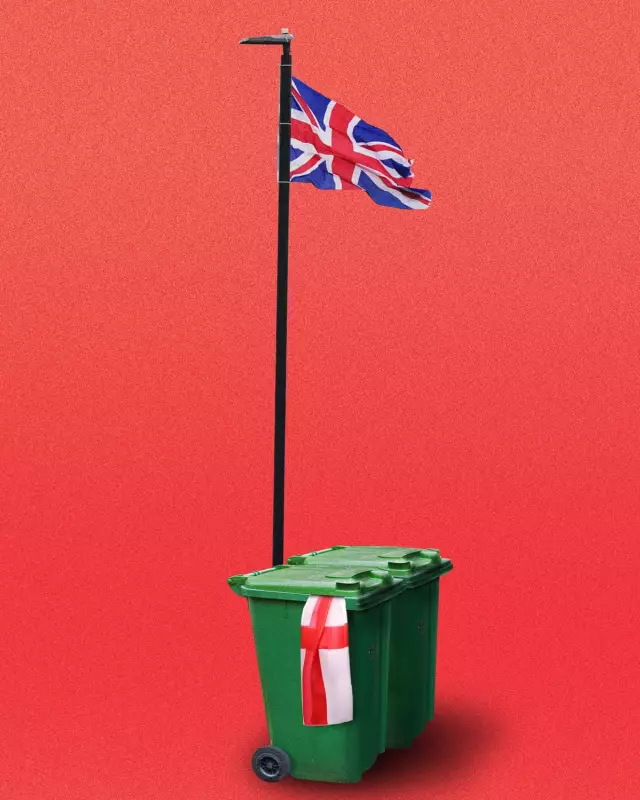
Beneath the festive lights and community posters of a Birmingham suburb, a hidden conflict is raging. Residents of Stirchley, voted the best place to live in the Midlands last year, are locked in a fractious and often ugly dispute over the flying of flags, a scene being replicated in towns and cities across England.
A Battle for the Skyline
Since September, members of a group called Raise The Colours (RTC) have visited Stirchley on at least four occasions. Wearing branded high-visibility gear and using a cherrypicker, they have hung hundreds of Saint George and Union flags from lamp-posts. They describe the campaign as an effort to "fill the skyline with unity and patriotism".
In response, a loose coalition of around 150 local residents has repeatedly taken the flags down. These objectors view the banners not as symbols of unity, but as territory-marking by an anti-immigrant movement. They report being subjected to systematic harassment and intimidation for their protests.
"We don't want a battle here," said David, a 65-year-old management consultant and father who asked for his full identity to be protected. "We want to go on with our lives... But equally, we won't retreat from our streets."
Harassment, Vandalism, and Organised Resistance
The conflict has taken a dark turn. Those removing flags are routinely filmed, with clips posted on social media. Two independent Stirchley businesses whose owners challenged flag-erectors were vandalised with flour and eggs. A third business was targeted with hundreds of negative Google reviews after being mentioned by RTC and far-right activist Tommy Robinson on social media platform X.
This pattern extends beyond Birmingham. In Norwich, a 68-year-old man named Ian said he was assaulted last month while trying to remove a flag in the early hours. He reported being surrounded, having his face smashed into the pavement, and possibly stamped on. Norfolk police told him they could not investigate due to a lack of CCTV evidence.
In response, organised resistance has emerged. One man, part of an anti-flag group in Norfolk, described working in small teams for safety, coordinating via the secure app Signal. They have even developed a device with an extendable pole and brush to remove flags placed at the top of very high lamp-posts. "It always feels a bit scary," he admitted.
A National Issue with Local Consequences
While flag-flying has faded from the national political agenda since the summer, it remains a deeply divisive local issue. Councils are caught in the middle. Some, like Sheffield City Council, state that flags on lamp-posts are illegal but will only remove them "in a timely manner" if they are not an immediate safety risk.
Others cite worker safety. Birmingham City Council suggested it does not intend to remove flags, as previous efforts "have unfortunately been met with hostility and abuse". This has left residents feeling abandoned. "They are not going to do it. We have to do it ourselves," said Allie, a 30-year-old web designer in Stirchley.
In Sheffield, Anne, 66, compared the disputes in her Walkley neighbourhood to "a mini Battle of Cable Street", referencing the 1936 clash where Londoners resisted a fascist march. She believes the flags are a deliberate tactic to find and galvanise a local support base. A spokesperson for Reform UK said an unofficial local page, Reform Sheffield East, was behind flags in the area, and that the party sees such flags as "symbols of unity and inclusion".
Back in Stirchley, the flags persist, though they have changed. The Saint George and Union flags have largely been replaced by Remembrance-themed banners erected by RTC at the tops of the highest street lamps. While commemorating war dead is widely supported, local opponents see them as another provocation, noting they are not endorsed by the Royal British Legion.
With RTC claiming to have raised over £115,000 for more flags and outreach, and community groups vowing to continue their resistance, the quiet war over England's lamp-posts shows no sign of ending. As Green councillor James Harvey warned from Norfolk, the fear is that without authoritative intervention, "it's only a matter of time before there is a larger or more serious confrontation".




