
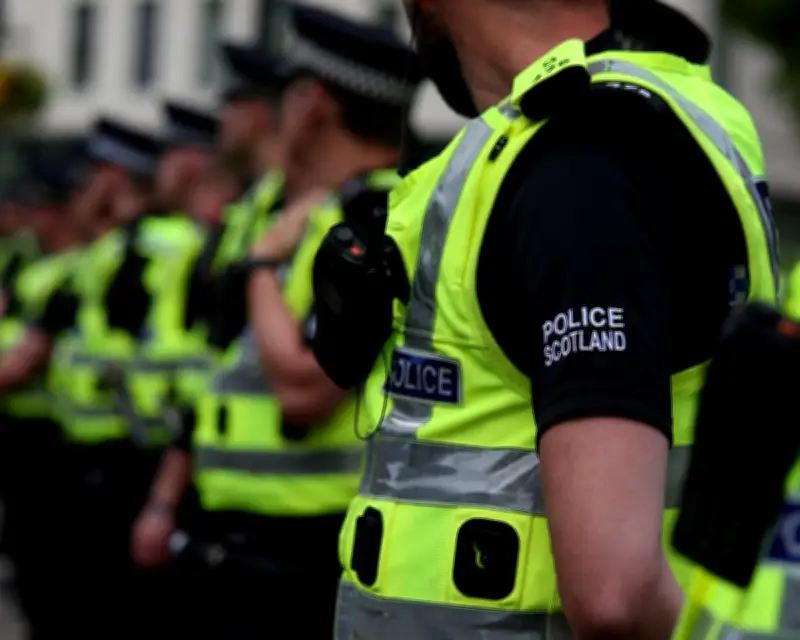
Five Police Scotland officers have been injured during recent protests in three areas of Glasgow, as police warn about misinformation spreading online. The disturbances, which took place in Cranhill, Castlemilk, and Royston, were sparked by false claims about sex offenders, with one case involving mistaken identity.
Protests orchestrated by outsiders
Police Scotland stated that the disorder was "clearly been orchestrated by individuals who are not from Glasgow." Large gatherings in Cranhill on Tuesday and Castlemilk on Thursday followed online speculation that men accused of serious crimes were living there. The first protest targeted a man charged with assault in connection with an alleged rape in Glasgow city centre, who had recently moved to Cranhill. The second was a case of mistaken identity, targeting someone who had not been charged with any offence.
Last week, similar disorder occurred in Royston over an alleged sexual assault. In all cases, no one has been found guilty of the underlying attacks. Two men have been arrested for attacking police, and five officers were injured across the three protests.
Misinformation and hate crime
Alan Waddell, Police Scotland assistant chief constable, said that misinformation was being spread by bad actors, often from outside Glasgow, who were "tapping into fears within the community about perceived sex offenders … of an ethnic background." He highlighted a planned protest this weekend outside a Glasgow care home based on untrue rumours that it would be closed and turned into accommodation for asylum seekers.
"I spoke in relation to a protest that turned into disorder a few weeks ago, and I was really clear that people had been targeted in Glasgow because of the colour of their skin," Waddell said. "Some of this that we’re seeing just now feels like that’s been amplified and built upon. We’ve really got to call that out and challenge that."
Call for lawful protest
Waddell urged the public to factcheck online claims before attending protests. "The public in Scotland know how to protest, and that’s lawfully and peacefully," he said. "If you want to do that, we’ll find a way to work with you and facilitate that. But if you’re enticed to go to one that’s been generated online [with] a clear focus on disrupting and causing disorder or moving towards violence, don’t go. Or sense-check who’s put out the information on it, because ultimately you’ll be held accountable for your actions."
David Kennedy of the Scottish Police Federation called the scenes "disgraceful." He said, "For certain individuals, it’s about violence, it’s not about protest." He added that people in Scotland were being "manipulated" by outside influences and that hate crime and disorder were not a legitimate form of protest. Kennedy described the disorder as "frightening" for officers, who were physically attacked with missiles thrown at them. "To be confronted with this level of violence, is not something we see in Scotland," he said.
Impact on communities
The protests have caused disruption in Glasgow neighbourhoods, with police warning that further disorder is planned based on false information. Police Scotland emphasised that protest is part of Scotland's fabric but must remain lawful. The force continues to investigate the incidents and urges anyone with information to come forward.




