
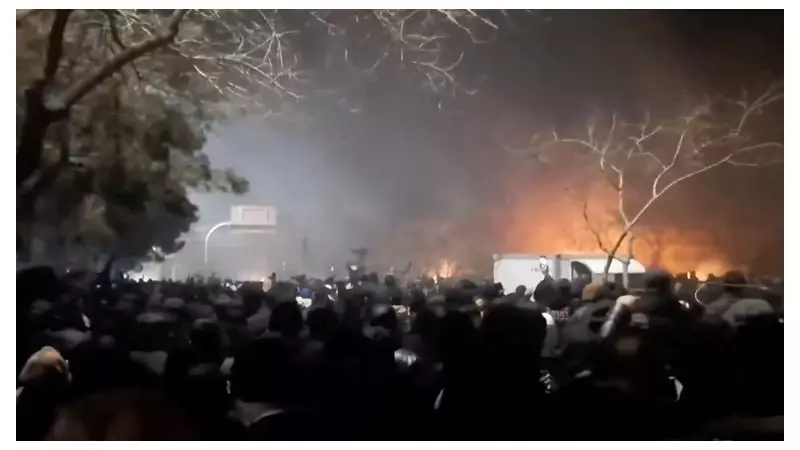
A US-based human rights organisation has reported that the death toll from ongoing anti-government protests in Iran has surged to more than 500, as the country's president accused foreign-linked "terrorists" of instigating the unrest.
Escalating Violence and Death Toll
The Human Rights Activists News Agency (HRANA), a non-governmental group, stated on Sunday, 11 January 2026, that at least 538 people have been killed during the demonstrations. This marks a sharp increase from the 116 deaths recorded by the end of the previous day, Saturday.
According to the agency, which gathers information from activists both inside and outside Iran, the victims include 490 protesters and 48 security personnel. In a disturbing update, HRANA detailed that most fatalities were caused by live ammunition or pellet gunfire, often fired at close range.
The protests, which began in late December over a severe devaluation of the Iranian rial, have now entered their third week. A widespread internet blackout remains in effect across all 31 of Iran's provinces, as the unrest has evolved into the most significant challenge to the regime in years.
Official Responses and International Reactions
In his first public address on the crisis, Iranian President Masoud Pezeshkian told state media that "terrorists" connected to foreign powers were responsible for killing people, burning mosques, and attacking public property. He claimed Iran's enemies aimed to "sow chaos and disorder" by "ordering riots".
Despite these accusations, President Pezeshkian asserted that the government was ready to listen to its people and was determined to resolve economic grievances. He urged citizens to distance themselves from what he called "rioters and terrorists".
Meanwhile, Tehran's prosecutor-general declared that demonstrators would be tried as "enemies of god", a charge that carries the death penalty. This stark warning came as international scrutiny intensified.
Former US President Donald Trump stated America was "ready to help" the protesters, warning Tehran he would hit it "very hard" if it started "killing people". In response, Iranian parliamentary speaker Mohammad Baqer Qalibaf suggested that any US attack would make Israeli and regional American bases "legitimate targets", with MPs chanting "Death to America!".
Diplomatic Moves and Regional Tensions
The situation has prompted high-level diplomatic discussions. US Foreign Secretary Marco Rubio and Israeli Prime Minister Benjamin Netanyahu held a phone call on Saturday to discuss the protests and the possibility of American intervention.
While a US official confirmed the conversation took place, they did not disclose its content. However, sources told Reuters that Israel is now on high alert for potential US action in Iran.
Prime Minister Netanyahu publicly praised the "demonstrations for freedom," expressing hope that the "Persian nation will soon be freed from the yoke of tyranny." These developments indicate the protests are rapidly becoming a focal point for heightened geopolitical tensions in the region.




