Constitutional Challenge Targets NSW Protest Restrictions in Court of Appeal
Lawyers representing three activist groups have presented arguments before the New South Wales Court of Appeal, challenging protest restrictions implemented by the Minns government. The groups contend that the legislation, passed following the Bondi terror incident, undermines its own stated objectives and imposes unconstitutional burdens on political communication.
Legal Arguments Against Protest Limitations
David Hume SC, representing the Blak Caucus, Palestine Action Group, and Jews Against the Occupation '48, argued that the restrictions make social cohesion "worse" rather than enhancing it as intended. The groups filed their constitutional challenge in early January, asserting that the laws "impermissibly burden the implied constitutional freedom of communication on government and political matters."
Hume questioned the legitimacy of limiting protests specifically to enhance social cohesion under constitutional provisions. He told the court that the state needed to provide evidence demonstrating why preventing all protests was "rational" to achieve this aim and how it improved upon existing systems.
Form 1 System Controversy
The legislation restricts use of the Form 1 system, which typically protects protest organizers from certain offences, for up to three months following a terrorist attack. This optional permit system allows organizers to negotiate with police and gain immunity from charges like obstructing traffic in designated areas.
Hume argued that eliminating this system in designated areas was counterproductive because it removed important functions including:
- A structured negotiation process between protesters and police
- Independent court oversight rather than police discretion
- Incentives for protesters to adhere to negotiated agreements
He noted that the Form 1 system originated after the violent police response to the first Mardi Gras in 1978 and served to "ensure that protesters have an opportunity to let off steam, contributed to peaceful resolution of disputes, and enhanced social cohesion."
Government Defense and Police Powers
Brendan Lim SC, representing the state government, defended the legislation as a "confined rolling back" of legal protections in response to community safety concerns following a terrorist attack. He argued the law's purpose was not to discourage protests but to place "sensible limits" on public assemblies during heightened security periods.
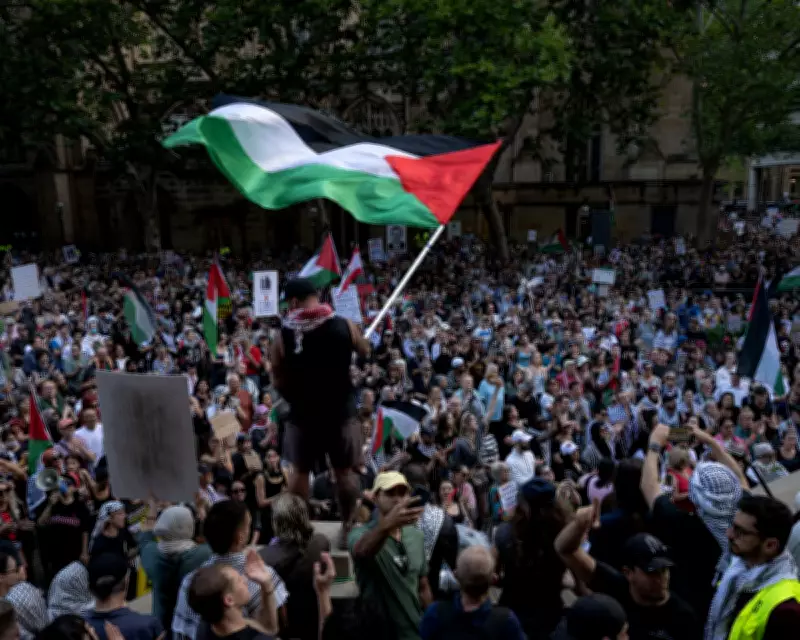
The court heard that NSW Police Commissioner Mal Lanyon had extended the public assembly restriction declaration multiple times, citing ongoing community safety concerns rather than specific intelligence threats. These restrictions affected parts of Sydney's CBD during protests against Israeli President Isaac Herzog's visit in early February, which turned violent and prompted a police watchdog investigation.
Judicial Scrutiny and Political Divisions
Justice Stephen Free questioned the government's position, noting that Attorney General Michael Daley had stated the law was intended to "signal to the community that assembling in public spaces in the designated area is discouraged." This appeared to contradict Lim's assertion that the purpose was "not to make people stay home."
The legislation has exposed divisions within the Labor Party, with four backbenchers attending the anti-Herzog rally despite no cabinet members opposing the law. Numerous Labor branches have passed motions calling for repeal of the legislation, and at least a dozen have questioned police conduct during recent protests.
Hume characterized the new laws as giving police "a relatively broad and uncontrollable power to require protesters to cease protesting and disperse," creating a situation where "the executive gets to decide whether there can be a protest against the executive." He argued existing criminal law already addressed the harms the state was concerned about, making the additional restrictions unnecessary and overly broad.