
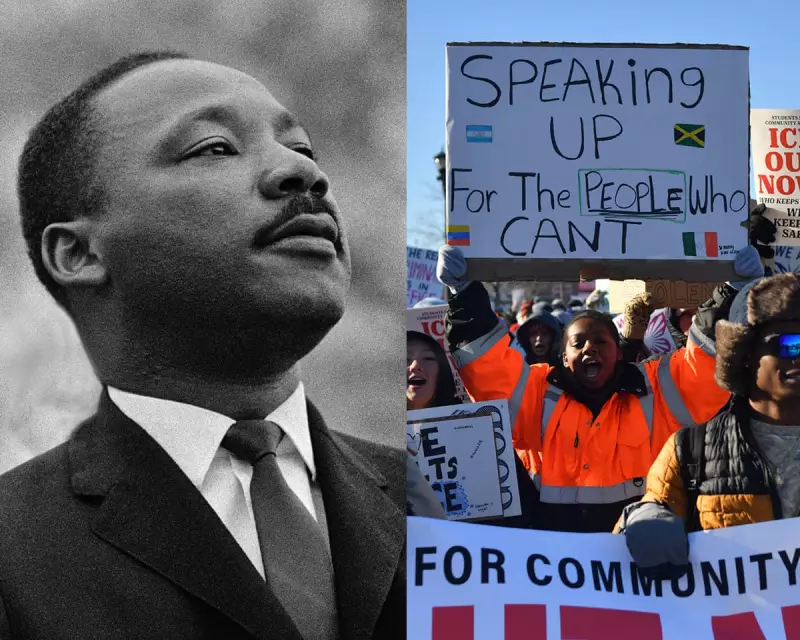
This year's commemoration of Dr Martin Luther King Jr's legacy arrives as the United States confronts a profound national crisis, with protests spreading from Minneapolis across the country. The annual holiday, often a moment for reflection, now forces a stark reckoning with contemporary state violence and a troubling political landscape.
A Legacy Tested by Modern Repression
While civil rights activists in the 1950s and 60s faced brutal state opposition, Americans today contend with a federal executive power more formidable than notorious segregationists like Alabama Governor George Wallace. The landscape of protest has shifted dramatically, with militarised and masked federal police forces, supported by a compromised Justice Department, deploying far deadlier weaponry against demonstrators.
Historically, leaders like King sought federal intervention to combat localised racial violence in the South. Now, the dynamic is reversed. Local officials and ordinary citizens, galvanised by federal aggression, are resisting government crackdowns on immigrants and communities. In a single week, ICE agents killed American mother Renee Good and shot a Venezuelan man during a traffic stop, while detaining citizens and sowing terror in neighbourhoods and schools.
King's Radical, Unifying Vision
On 4 April 1967, exactly one year before his assassination, Dr King delivered his pivotal "Beyond Vietnam" speech at New York's Riverside Church to over 3,000 people. His condemnation of the war drew fierce criticism, alienating President Lyndon Johnson and even causing friction with the NAACP, which believed he should focus solely on domestic civil rights.
The press lambasted him; The Washington Post claimed he was diminishing his usefulness. Yet King defiantly argued for a "worldwide fellowship" and an "all-embracing and unconditional love for all mankind". He warned against worshipping "the god of hate", stating history is cluttered with the wreckage of those who pursued that path.
The 'Urgency of Now' on Today's Streets
In Minneapolis, Portland, Chicago, and beyond, people are courageously enacting this neighbourly responsibility and unconditional love in direct opposition to a federal government wreaking havoc. King's words resonate with renewed force: "These are revolutionary times. All over the globe, men are revolting against old systems of exploitation and oppression."
His mandate remains clear: to recapture the revolutionary spirit and declare eternal hostility to poverty, racism, and militarism—the triple threats that defined his era and ominously shape our own. The challenge now is to move beyond empty annual platitudes and harness the "urgency of now" he championed.
King's closing call from 1967 offers a guiding choice: to transform the world's "jangling discords into a beautiful symphony of brotherhood" and speed the day when "justice will roll down like waters, and righteousness like a mighty stream". The alternative, visible on our streets and screens, is an unconscionable path the nation must reject.




