
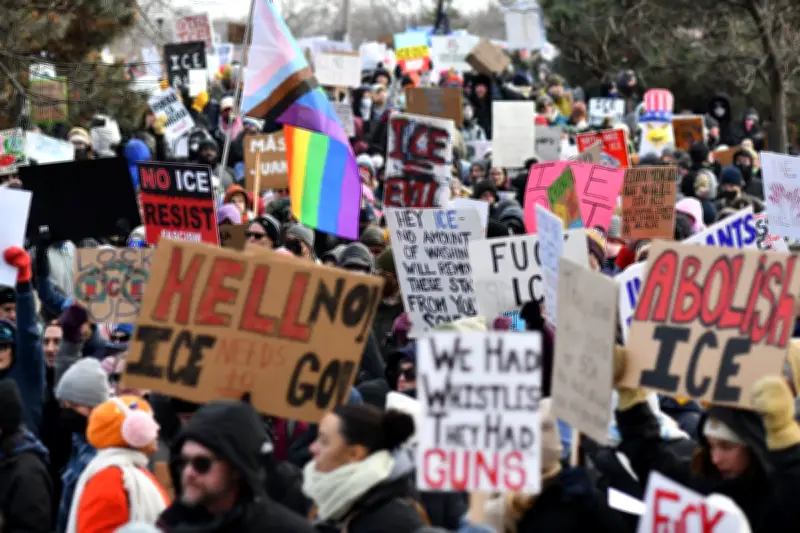
The Trump administration is charging 15 Minneapolis protesters with conspiracy for resisting Immigration and Customs Enforcement (ICE) operations earlier this year. Known as the 'Minnesota 15,' the group is primarily linked through Direct Action MN, a loose collective that provided community defense during the ICE surge in January. The 94-page indictment alleges they coordinated with rapid response groups to alert people to ICE agents and organized blockades at the city's ICE headquarters. Prosecutors have characterized the group as affiliated with 'antifa,' which the Trump administration named a domestic terror organization last fall.
Charges and Context
The charges stem not from one specific incident but from a pattern of resistance. The defendants include teachers, nurses, and electricians, according to Kelly Petersen, a Minneapolis organizer. 'They just have to keep going to work, knowing that they did what 100,000 other people did, and that they got charged for it,' she said. The case is the latest attempt by Trump's Department of Justice to criminalize resistance, following similar charges in Chicago and Spokane, Washington. The Chicago case was tossed for prosecutorial misconduct, while Spokane protesters face up to six years in prison. In Prairieland, Texas, eight protesters were convicted of providing 'material support to terrorists' and received sentences ranging from 30 to 100 years.
Legal Experts Weigh In
Legal experts say the Minneapolis case is akin to Prairieland in its use of conspiracy law to target so-called antifa. 'Conspiracy is usually called the prosecutor's darling because it doesn't take a lot of evidence to prove,' said Xavier de Janon, a Prairieland defense lawyer. The principal conspiracy charge carries a maximum of six years, with two defendants also charged with destruction of government property carrying a 10-year maximum. However, the allegations are less severe than in Prairieland, where a protester shot an officer. 'There was no violence committed. No one was hurt,' said Jordan Kushner, a lawyer on the Minnesota 15 case.
Resistance Continues
Despite the charges, organizers are not backing down. 'They're trying to stop us and silence us and scare us,' said Treasure Thoreson, one of the defendants. 'I'm not going to let them scare me.' Emmett Doyle, another defendant, performed an Irish protest ballad after pleading not guilty. 'That song has been a source of inspiration for me, in finding courage to face this ordeal,' he said. The government maintains its investigative methods are lawful, but tools such as geofencing, social media monitoring, and encrypted messaging app Signal have been used in protest prosecutions. 'You have to assume that it is all being recorded and can all get read back to you in an indictment,' said an organizer who asked his last name not be used.
Broader Implications
The case has drawn comparisons to the Prairieland prosecution, where cooperating defendants received lighter sentences. 'If the government gets anyone to cooperate and talk [in Minneapolis], the government won,' de Janon said. However, the Minneapolis 15 face a more liberal jury pool shaped by the aftermath of George Floyd's murder. 'It'll be much tougher for Minnesota to get a jury that's overwhelmingly receptive to what the government is doing,' Kushner said. Organizers remain defiant: 'My community's not going to be intimidated,' Doyle said. ICE agents remain in Minneapolis, and as long as they do, people will be out protesting and protecting their neighbors.




