
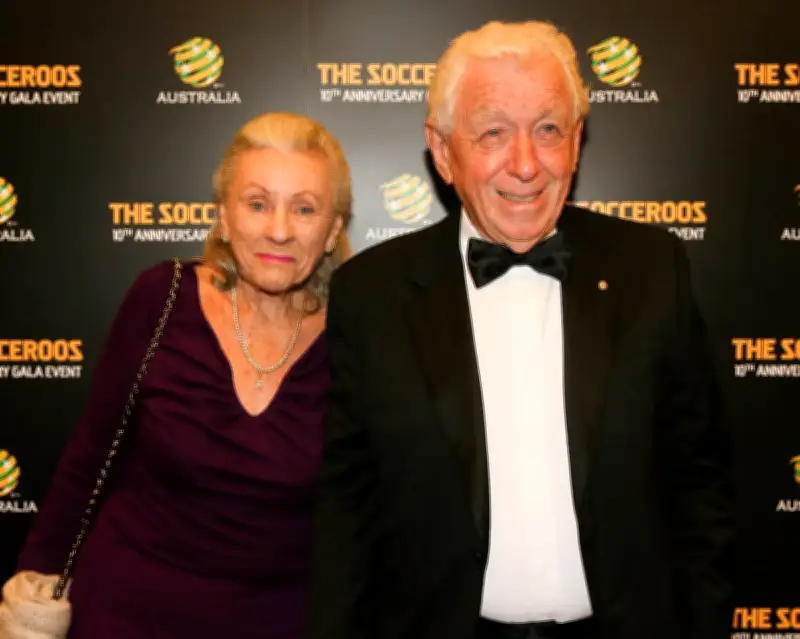
The antisemitism royal commission heard on Monday that social media has enabled horrific antisemitic attacks on individuals ranging from schoolchildren to one of Australia's most prominent families. Former Westfield co-chief executive Steven Lowy testified that his family faced more than 15,000 serious online attacks in a single year.
Lowy family security measures
The Lowy Family Group maintains its own security team to monitor threats. Of the 15,000 attacks in the 12 months to February, the team identified 200 "persons of interest" and referred approximately 30 to 40 cases to police. The commission was shown examples targeting Steven Lowy, his wife Judy Lowy, and his father Frank Lowy—a Holocaust survivor and billionaire retail mogul—including death threats, calls for execution, and antisemitic tropes and memes.
Steven Lowy warned that online threats could lead to real-world violence. He argued that social media platforms should be subject to the same laws as traditional media, facing prosecution for harmful content.
Impact on children and families
The commission heard from the mother of a 12-year-old girl who described her daughter being abused, bullied online, and physically threatened by other children. The perpetrators drew a swastika on her desk and subjected her to Nazi salutes. Another anonymous witness recounted the abuse his 14-year-old son experienced on Discord, describing "horrifying" threats including references to "fairly grotesque sexual violence." The father noted that things can "get out of control really quickly" in online chats and group chats.
Bondi attack aftermath
Arsen Ostrovsky, head of the Australia, Israel and Jewish Affairs Council's Sydney office, was injured in the December Bondi terror attack. A picture he shared of his bloodied head was immediately used to spread conspiracy theories, with images manipulated to claim he was a "crisis actor." Ostrovsky described a "relentless tsunami" of hate, saying he was "literally being prepped to go into surgery" when he learned about deepfake images and memes being generated. "There were images, videos and material suggesting everything from that this was a false flag attack … that this wasn't real blood, that it was ketchup. There were images of me holding a what looked like a Academy Award trophy, and many of these images, videos and material, are still online today," he said.
Doxing and creative community
Israeli-Australian author Lee Kofman testified that she created a WhatsApp group in 2023 for Jewish creatives as a "safe space" after the October 7 attack on Israel. A reporter shared some contents of the chat to a third party, leading to widespread dissemination on social media and prompting the federal government to create new anti-doxing laws. Kofman, a left-wing Zionist supporting Palestinian rights and a two-state solution, said group members were portrayed as a "sinister cabal," resulting in lost work for her and others.
Traditional media under scrutiny
Over the next two weeks, commissioner Virginia Bell will hear evidence on "the dissemination of antisemitic content and other forms of hateful speech in the online environment, as well as antisemitism in traditional media and broadcasting." The commission heard that representatives from the ABC and SBS will be called as witnesses after complaints about their coverage of the Middle East. Counsel assisting Richard Lancaster SC said some submissions are "highly critical" of the public broadcasters' reporting, claiming "inaccurate or unbalanced" coverage. The special envoy to combat antisemitism, Jillian Segal, will speak on these concerns.
Platform responses and future hearings
Lancaster noted that not all social media platforms responded well to inquiries. Facebook, Google, LinkedIn, and TikTok engaged "meaningfully," but X and Telegram did not respond, Reddit and Twitch gave limited responses, and Gab was "openly hostile," stating it will "publish what it likes, when it likes." Lancaster raised the "potential for the online environment to function as an incubator of antisemitic violence," calling social media "perhaps the most significant vector for the spread of antisemitism and hate in the community." Academic experts, Meta representatives, and the Australian Communications and Media Authority will also attend the commission.




