
Diversity Concerns in Latest Middle-earth Adaptation
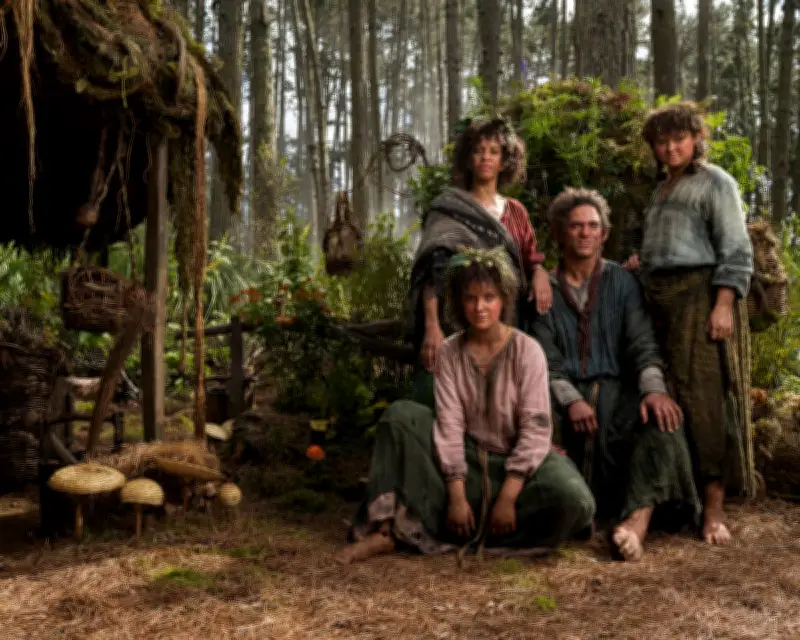
There is trouble in Middle-earth again. All actors announced for the upcoming film The Hunt for Gollum, set for release next year, are white. The cast includes Kate Winslet, Jamie Dornan, Anya Taylor-Joy, and Leo Woodall, joining a group already criticised for lacking diversity. Director Andy Serkis, who also plays Gollum, defended the casting by citing Tolkien's Norse mythology influences, stating, "The Shire feels very white." This justification comes despite Serkis's own recent adaptation of Animal Farm, which altered George Orwell's original ending to a hopeful one, demonstrating flexibility with source material.
The 2022 Amazon series The Rings of Power, a prequel to The Hobbit, achieved 25 million global viewers on its first day and featured actors of colour. Their absence in The Hunt for Gollum is seen as a backward step. Elon Musk's criticism of Lupita Nyong'o playing Helen of Troy in Christopher Nolan's The Odyssey reflects a broader pushback against inclusivity in casting.
Historical Context and Criticism
Objections to diverse casting in Tolkien's imaginary world, populated by hobbits, elves, and talking trees, seem absurd. Yet questions over racial stereotypes and hierarchies—fair elves versus dark orcs—have long accompanied Tolkien's work. C.S. Lewis defended his friend against such readings in a 1955 review. Attitudes towards inclusivity have shifted profoundly since Tolkien began The Hobbit in 1930 and even since Peter Jackson's first film 25 years ago.
The Lord of the Rings has become one of the most influential stories of the 20th century, recently voted No 1 in Guardian readers' list of 100 greatest novels. Tolkien resisted allegorical interpretations, writing, "I cordially dislike allegory in all its manifestations." However, his tale of underdog triumph, written after two world wars, has been appropriated by various movements. Today, its Christian sensibility, suspicion of industrial modernity, and attachment to home resonate with parts of the far right, including admirers like Giorgia Meloni and JD Vance. Vance's former venture-capital firm Narya and Peter Thiel's company Palantir take names from Tolkien's works.
The Story's Enduring Message
The Lord of the Rings should not become a weapon in culture wars. Its message is that evil can only be defeated when different peoples unite. It is a drama of friendship, courage, and the dangers of power. The books and films have been beloved companions for young readers on their journeys to adulthood. The Shire represents the safety of childhood, a place of beauty and innocence. Many readers feel more hobbit than human.
As Nolan's The Odyssey proves, great art can be reinterpreted for a new era. Children of all races already see themselves in Middle-earth. Cinema should reflect this. As Bilbo Baggins says to Frodo: "Don't adventures ever have an end? I suppose not. Someone else always has to carry on the story." We owe it to Tolkien and future generations to take his story in the right direction.




