
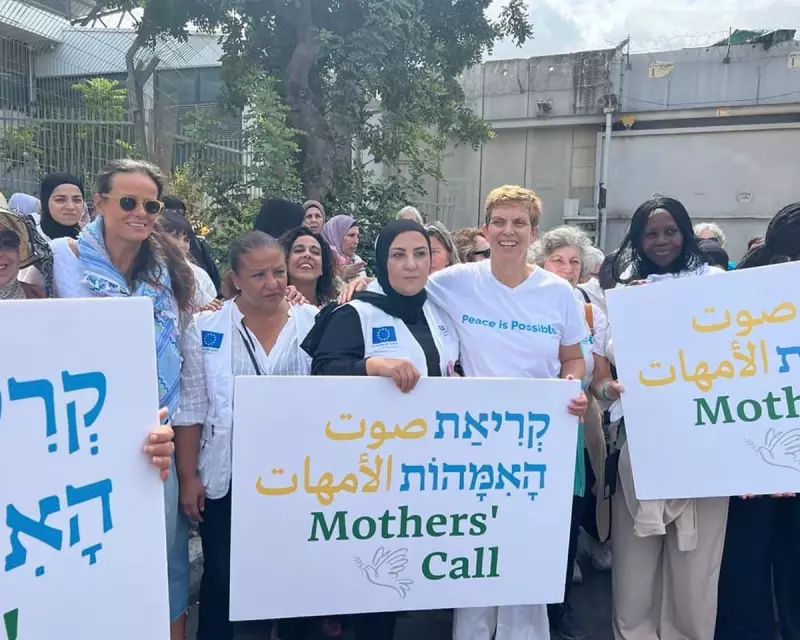
In a powerful and unprecedented move, two women from the heart of the Israeli-Palestinian conflict have joined voices to demand an end to the violence. Yael Admi, an Israeli mother, and Reem Al-Hajajreh, a Palestinian mother, issued a stark joint New Year's message for 2026, pleading for leaders to stop the bloodshed that has claimed so many of their children.
A Shared Grief Forges an Unlikely Alliance
The initiative, which emerged from separate but parallel tragedies, represents a raw cry from the grassroots. Yael Admi's son, Uri, was killed while serving as a soldier in the Israeli military. Across the divide, Reem Al-Hajajreh's son, Alaa, was shot dead by Israeli forces during a protest in the occupied West Bank. From the depths of personal devastation, these two women found a common language: the universal anguish of a parent who has lost a child.
Their coordinated appeal, released on the first day of January 2026, bypasses traditional political rhetoric. Instead, it focuses on the human cost that extends beyond borders and narratives. Both mothers explicitly state that no political victory or military objective is worth the endless cycle of killing and mourning. They challenge the very premise that security for one side must come at the expense of the other's suffering.
The Personal Cost of Enduring Conflict
The details of their losses underscore the relentless nature of the conflict. Uri Admi was just 20 years old when he died. Alaa Al-Hajajreh was 22. Their stories, while rooted in different circumstances, mirror each other in the profound void left for their families. The mothers' statement avoids assigning blame for specific incidents, choosing instead to highlight the systemic failure to protect young lives and build a sustainable peace.
This joint action is not presented as a formal political roadmap or a detailed negotiation plan. It is, fundamentally, a moral intervention. Admi and Al-Hajajreh are leveraging their most painful credentials—their status as bereaved mothers—to shame the political establishment on both sides. They argue that leaders have become entrenched in strategies of retaliation and domination, losing sight of the fundamental duty to safeguard human life.
A Plea for Leaders to Choose a Different Path
The core of their 2026 message is a direct address to those in power. They implore Israeli and Palestinian officials, as well as the international community, to prioritise ceasefire talks and confidence-building measures over further military escalation. The mothers warn that without a decisive shift towards dialogue, the new year will simply replay the horrors of the past, consuming another generation.
Reactions to their appeal have been mixed but significant. It has resonated deeply with other families who have suffered similar losses, creating a burgeoning network of cross-border solidarity. However, it has also faced criticism from hardliners on both sides, who view such cooperation as a betrayal of national causes. Despite this, the voice of Admi and Al-Hajajreh has amplified a growing, if often silenced, public sentiment for peace.
The ultimate impact of this maternal alliance remains to be seen. It stands as a potent symbol, proving that human connection can fracture the most rigid ideological divides. Whether it can translate symbolic power into political pressure is the unanswered question for 2026. For now, the united front of an Israeli and a Palestinian mother serves as a stark reminder of what is truly at stake every day the conflict continues: not land or flags, but the lives of sons and daughters.




