
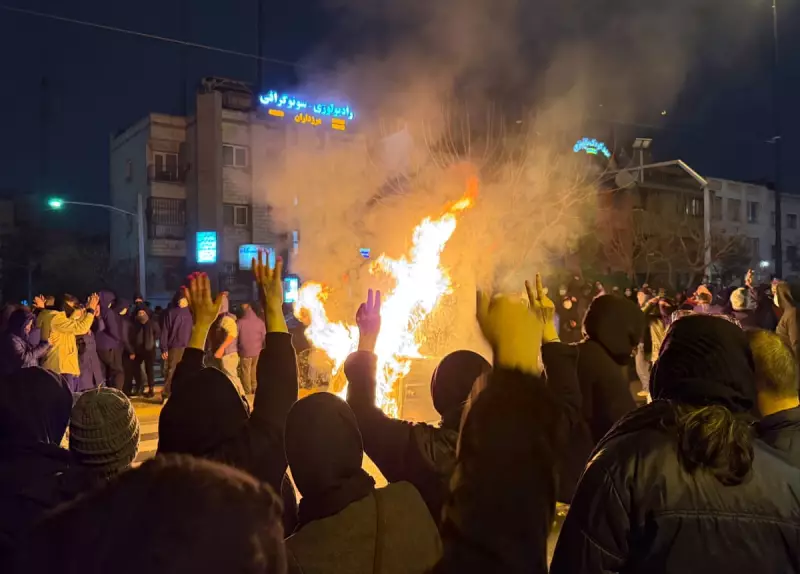
An Iranian Australian man living in Brisbane has described the harrowing process of retrieving the body of a family member killed during recent anti-government protests in Iran, revealing she was identified after a relative searched through hundreds of other victims.
A Fatal Protest in Karaj
Payam*, who sought asylum in Australia at age 17, received a devastating call from a cousin last week. The news confirmed that a family member, Eli*, had been shot dead. The incident occurred on 8 January in the city of Karaj, located roughly 44 kilometres from Tehran.
According to accounts relayed to Payam, Eli was standing beside her older sister during a demonstration when she was killed instantly. "She passed away straight away there," Payam stated, adding that her sister is now enduring severe emotional trauma.
The Grim Search Among Hundreds
The ordeal did not end with Eli's death. Payam explained that another relative was forced to undertake a gruesome search to locate her body. Authorities directed the family to a facility where they had to examine a vast number of casualties.
"She found her after 700 bodies," Payam said, recounting his family's experience. He described a scene of exhaustion and horror, with the relative unable to stop crying as she looked at the faces of those who had been shot, surrounded by blood, having to inspect every single one.
A Costly and Coercive Retrieval
Payam claims the Iranian authorities presented the grieving immediate family with a cruel ultimatum. They were given only two options to retrieve Eli's body.
The first was to pay a fee equivalent to $9,000. The second was to sign a document falsely stating that Eli was a supporter of the regime who had been killed by civilians, in which case they would not be charged. The family ultimately borrowed money to pay the substantial sum.
"I can’t really explain how we feel about that. It’s really the anger and hate about the regime because they keep doing these things to people in Iran," Payam expressed. "It just makes us more angry and more wanting to help from outside of Iran."
A Community in Anguish and an Information Blackout
Payam's story reflects the pain within Australia's Iranian diaspora, many of whom are mourning loved ones killed in the regime's crackdown. The protests, initially fuelled by economic crisis and political mismanagement, rapidly evolved into a broader movement chanting "death to the dictator."
Other Iranian Australians have told media they still have no news of missing family members, more than 11 days after authorities imposed a nationwide communication blackout to suppress the unrest. Payam himself fears for his sisters who still live in Iran and have participated in demonstrations.
He described a generation united in desire for change: "They want freedom as well as a good life, not waking up every day and see something doubled [in price] overnight." The family's tragedy in Karaj occurred on the same day and in the same city where protester Erfan Soltani – the first to receive a death sentence in the current wave of unrest – was arrested.
For Payam and his family in Brisbane, the grief is compounded by distance and fear. "We can’t sleep properly at night. We just keep waking up in the middle of the night, keep looking at the news," he said, a sentiment echoing through a dispersed community connected by loss and a hope for a different future in Iran.
*Names have been changed to protect the safety of family members remaining in Iran.




