
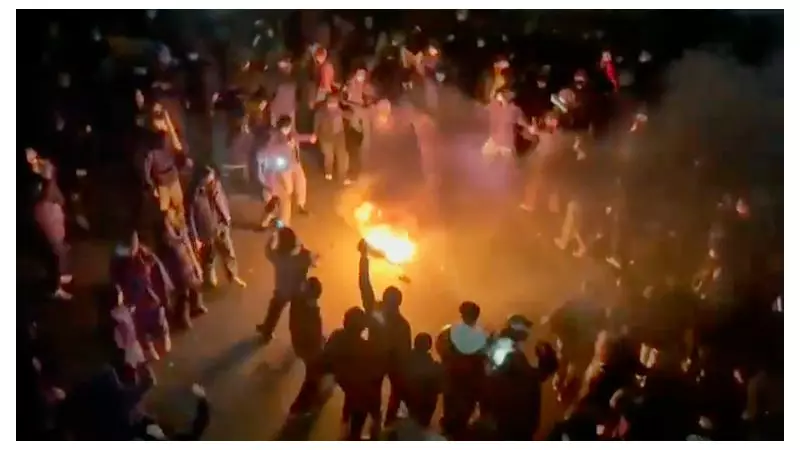
The death toll from ongoing anti-government protests in Iran has surged to more than 500, according to a leading human rights monitor, as former US President Donald Trump states that Washington is considering a forceful response to the escalating crisis.
Rising Casualties and Communication Blackout
The US-based Human Rights Activists News Agency (HRANA) reported on Sunday, 12 January 2026, that at least 544 people have now been killed during the widespread disorder. This figure marks a sharp increase from the 116 deaths recorded just a day earlier, on Saturday.
The organisation further stated it has received an additional 579 reports of fatalities that are still under investigation. If confirmed, this would bring the total number of dead to 1,123. The group attributes most deaths to security forces firing live ammunition or pellet guns, often at close range.
Details from within Iran remain scarce due to a severe communications blackout imposed across all 31 provinces. The protests, which began in late December over a sharp devaluation of the national rial currency, are now in their third week and have evolved into the most significant challenge to the regime in years.
International Reactions and Threats
The rising violence has drawn sharp international commentary and threats. Donald Trump confirmed that he and his national security team are weighing a range of potential responses against Iran. "The military is looking at it, and we're looking at some very strong options," Trump told reporters on Sunday night.
When questioned about potential Iranian retaliation, he was unequivocal: "If they do that, we will hit them at levels that they've never been hit before." These remarks followed similar comments he made on Friday, warning the US would strike Tehran "very hard" if the government intensified its crackdown.
In a related development, US Foreign Secretary Marco Rubio discussed the situation with Israeli Prime Minister Benjamin Netanyahu. While a US official confirmed the call, Israeli sources told Reuters the conversation included the possibility of American intervention. Israel is reportedly on high alert for such an event.
Netanyahu himself praised the "demonstrations for freedom," expressing hope that the Iranian people would soon be "freed from the yoke of tyranny."
Iran's Domestic Stance and Warnings
Tehran has responded with defiance and its own warnings. Mohammad Baagher Qalibaf, the Speaker of the Iranian parliament, stated that US military assets and Israel would become "legitimate targets" if America used force. "We do not consider ourselves limited to reacting after the action," he warned, as MPs chanted "Death to America!" in the background.
Iranian state media has portrayed a different narrative of the violence. Television broadcasts showed dozens of body bags at a coroner's office in Tehran, claiming the dead were victims of "armed terrorists." Footage also showed distressed families gathered outside the Kahrizak Forensic Medical Centre, waiting to identify bodies.
President Masoud Pezeshkian, addressing the protests for the first time in a regime-linked interview, blamed "terrorists" connected to foreign powers for killing people and destroying property. He accused Iran's enemies of seeking to "sow chaos and disorder." However, he also claimed the establishment was ready to listen to its people and resolve economic grievances, while urging citizens to shun "rioters and terrorists."
Alongside the tragic loss of life, HRANA reports that more than 10,681 individuals have been arrested and transferred to prisons since the protests began, highlighting the scale of the state's response to the unrest.




