
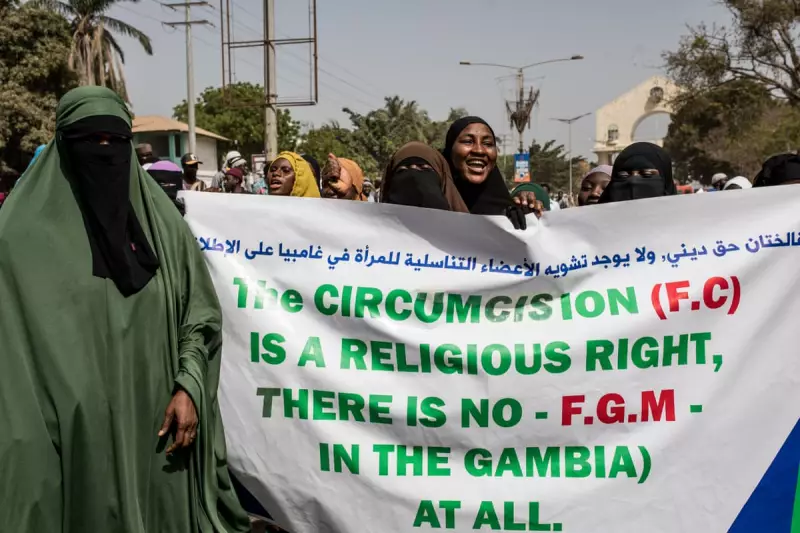
The Supreme Court of The Gambia is currently hearing a landmark case that seeks to overturn the country's ban on female genital mutilation (FGM). The legal challenge, brought by a group of Muslim leaders and an MP, represents a critical moment for women's rights in a nation where an estimated 75% of women aged 15 to 49 have undergone the practice, typically as infants.
A Legal and Cultural Battle Intensifies
The court case, which is due to resume this month, follows a failed 2024 parliamentary attempt to decriminalise FGM. The bill was tabled by MP Almameh Gibba, who is also one of the plaintiffs in the current Supreme Court action. This legal push comes in the wake of tragic events, including the deaths of two babies from bleeding after undergoing FGM in The Gambia last year.
Activists view this as a clear signal of a dangerous regression. Fatou Baldeh, founder of the Gambian rights organisation Women in Liberation & Leadership, stated, "If this issue is still being debated at a national level, it shows us that women's rights are really regressing. This is not an isolated issue – it's part of a global regression on women's rights."
The Arguments For and Against
The plaintiffs argue that the 2015 law, which criminalises FGM with penalties of up to three years in prison or a £500 fine, violates constitutional rights to cultural and religious freedom. In December, a prominent Muslim leader, Abdoulie Fatty, testified that what he termed "female circumcision" was a part of Islam and not harmful. When questioned about the infant fatalities, he responded, "We are Muslims and if someone dies, it’s God’s will."
However, medical and human rights perspectives stand firmly against the practice. FGM involves the partial or total removal of external female genitalia, often performed without anaesthesia using non-sterile instruments. It can lead to severe long-term health issues, including infertility, and is recognised by the UN as a grave human rights violation.
Despite being banned in 2015, enforcement only began in 2023 with the first convictions. Three women were fined or sentenced for cutting eight girls. This enforcement, however, sparked the significant backlash that has now reached the nation's highest court.
Part of a Wider Global Trend
The situation in The Gambia is not occurring in a vacuum. It is seen by observers as a component of a broader international anti-women's rights movement. This trend is evident in regions worldwide:
- In Sierra Leone, a recent ECOWAS court ruling condemned FGM as "one of the worst forms of violence against women," yet the country's new Child Rights Act did not ban it.
- In Afghanistan, the Taliban has systematically dismantled women's rights.
- In the United States and Iran, access to abortion and contraception faces increasing restrictions, and women are key targets of repression.
Furthermore, a report by Equality Now highlights new legislative proposals in countries like Bolivia and Uruguay that threaten to weaken protections against sexual violence, while civil society organisations face growing pressure in nations such as India and Kyrgyzstan.
As The Gambia's Supreme Court deliberates, the outcome will resonate far beyond its borders. It will serve as a stark indicator of whether the hard-won protections for women and girls can withstand a rising tide of cultural and religious pushback, or if the global fight for gender equality is facing one of its most severe tests.




