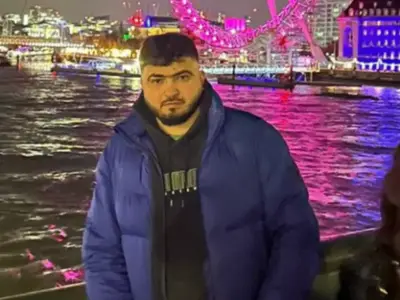
A new Channel 4 documentary, England 'Til I Die, chronicles the transformation of Crowborough, an affluent Sussex commuter town, into a hotspot of far-right agitation over the course of a year. The film follows Liam Tomsett, a telecommunications manager and father-of-two, who became a leading figure in local protests against the housing of 600 asylum seekers at nearby army camps.
A Sudden Turn to Activism
Liam, who describes himself as a 'patriot', said his involvement began almost overnight. 'Last summer, I was just changing jobs, moving house, newly single, and going to the odd protest,' he told the documentary. His catalyst was hearing on the radio that army camps near Crowborough would house asylum seekers. 'I was on the way to work and I heard on the radio… I thought something's got to be done about it,' he said.
Together with his friend Gary, Liam set up the protest group 'Crowborough Says No' and began organising rallies and direct action. The group blocked contractors from working at the asylum centre, leading to confrontations that turned violent. 'We're trying to make people feel uncomfortable about being there. That if you are working there, you are part of the problem,' Liam said in the film, adding, 'it all went a bit tits up.' He was arrested and charged with common assault and possession of an offensive weapon, but the charges were later dropped.

From Council Meetings to Online Echo Chambers
Documentary maker Jamie Roberts, known for The Jihadis Next Door and Angry, White and Proud, noted that the story did not begin with violence. 'This story doesn't start with violence and intimidation. It starts heated at a council meeting. It's a broad church, with people from all walks of life and all across the political spectrum who are concerned,' he told Metro. However, as events unfolded, a vacuum opened, and far-right groups like 'Raise the Colours' and 'citizen journalists' amplified the division online.
Jamie highlighted the surprising popularity of live streamers in this space. 'The thing that really surprised me is how popular these live streamers are. Some of them get a lot more viewers than mainstream television, and they're famous. They are just a guy with a camera who rocks up in a car, and more people are watching his live stream than are watching Sky News. It's huge,' he explained.
Personal Cost and Community Division
Liam's personal life suffered as he became a hero in the echo chamber. 'Six weeks ago life was very easy. I bought a new place. Got a nice job. Had a few quid in the bank. Don't take anything for granted as things can change very, very quickly,' he said. His new partner, Shana, told the documentary: 'He was suspended from his job. His friends are non-existent.' Liam admitted, 'It's taken over. I've got two grown-up children. I've not been there enough for them. I've lost my father. I don't think I've had time to grieve.'
The film shows protesters harassing asylum seekers, with Liam engaging in confrontations. When asked about intimidating three men outside a church, he said: 'I wouldn't say I was intimidating them. I was engaging them in conversation. We weren't chasing them. We were walking with them. If they were scared, how do you think the women and children feel walking home at night? They are not wanted. End of. How do we know they haven't committed a crime?' He was later arrested again for harassing a business owner who wanted to provide training to asylum seekers, but was released with no further action.
Broader Impact and National Echoes
One resident described Liam as 'a local thug' who 'loves to scream in people's faces,' while local barman George said the community is 'terrified' and 'a little bit scared, and a little bit tired.' The documentary also captures Shana's fears, as she said: 'It's always in your algorithm. We are dwindling. Which is scary. White British people [are] being taken over by Muslims very, very rapidly.' Liam added: 'There is an agenda to replace us. By powers bigger than Government. By globalists,' though he could not explain who the globalists are.

Jamie attributes the division to isolation, social media echo chambers, and economic anxiety. 'Liam lost his father at the start of the process, and then, since Covid, he worked at home. The social media ecosystem and the algorithm that drives content towards people creates a bubble where everyone confirms each other's beliefs, and there's similarly held misinformation that gets spread around without context or fact-checking or oversight,' he said. The pattern is being echoed across the country, with violence erupting in Dover, Essex, Norfolk, Portsmouth and elsewhere. As Jamie noted, 'It's a network with clear goals. They are very organised, and currently they're succeeding.'