
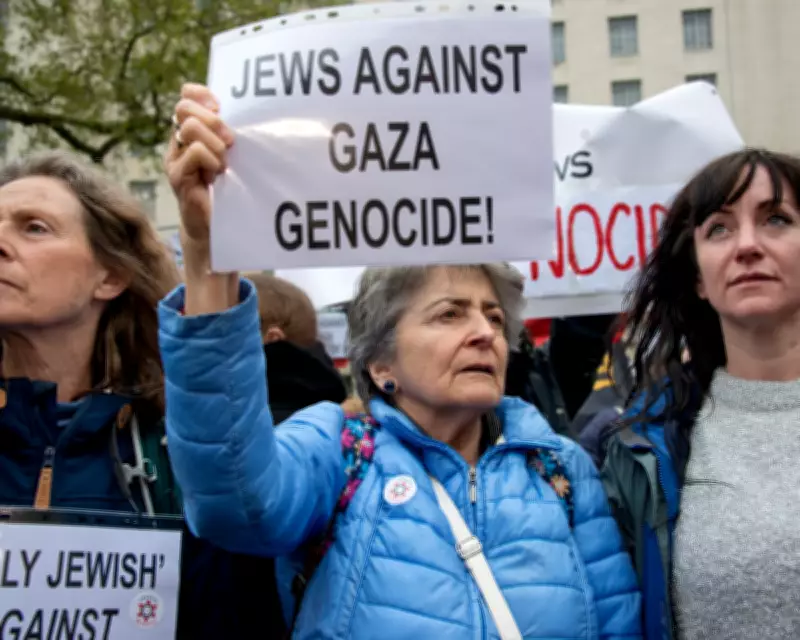
In response to recent articles about the Golders Green stabbings and potential bans on pro-Palestinian protests, Jewish readers have voiced strong opposition to such measures, arguing that they would not address the root causes of antisemitism and could instead undermine democratic freedoms.
Banning Protests Will Not Make Jews Safer
Jamie Lachman, a professor of child and family global health at the University of Oxford, writes: "Banning protests will not make Jews safer. I am Jewish and I no longer feel safe walking the streets of north London where I live. But I don't blame the pro-Palestine marches. I blame the Israeli government."
Lachman expresses anger and shame at the Israeli government's actions, which he believes constitute crimes against humanity, including the war in Gaza, strikes on Iran, and the invasion of Lebanon. He argues that these actions make Jews less safe by fueling global outrage and blurring the line between Jewish identity and Israeli government policies that many Jews do not support. He concludes that effective safety measures should focus on policing hate crimes, investing in community security, and fostering dialogue.
Jewish Participation in Pro-Palestine Marches
Elliott Green, professor of development studies at the London School of Economics, responds to Jonathan Freedland's column by highlighting his own participation in pro-Palestine demonstrations. He writes: "I am proud to have contributed to combatting antisemitism in the UK. Despite the efforts of many Israeli politicians to claim worldwide Jewish support for their murderous actions, many Jews continue to adhere to core traditional Jewish values of altruism, truth, justice and peace." Green argues that Jewish presence at these marches shows that Jews are not inherent supporters of state violence and that anger about Israeli policies should not be directed at British Jews.
Blurring the Line Between Anti-Israel and Anti-Jewish
Caryl Churchill, a longtime supporter of the Palestine Solidarity Campaign, notes that antisemitic racism has risen with Israel's attacks on Gaza. She emphasizes that the Jewish community is distinct from the Israeli government and should not be held responsible for its actions. She warns that blaming pro-Palestine marches for antisemitic attacks reinforces the mistaken idea that being against Israel equates to being anti-Jewish, and that opposing these marches contributes to antisemitism rather than combating it.
A Systemic Failure in Identifying Threats
Caroline Wells, founder of Iris Anticipa, responds to Dave Rich's article by pointing out a systemic failure in how authorities handle signals of potential violence. She notes that Essa Suleiman, the attacker in Golders Green, was referred to Prevent in 2020 and had a history of serious violence and mental health issues, but these signals were held in separate systems with separate rules. She argues that a whole-society approach to incitement must be matched by a whole-system response to identify those most likely to act on it, requiring legal and regulatory changes to allow information sharing and pattern recognition.
Conclusion
The readers collectively argue that banning protests is not the solution to rising antisemitism. Instead, they call for a focus on combating hate crimes, addressing the actions of the Israeli government that fuel global outrage, and improving systems to identify and intervene with potential perpetrators of violence. They stress the importance of protecting democratic freedoms and distinguishing between criticism of Israeli policies and antisemitism.




