
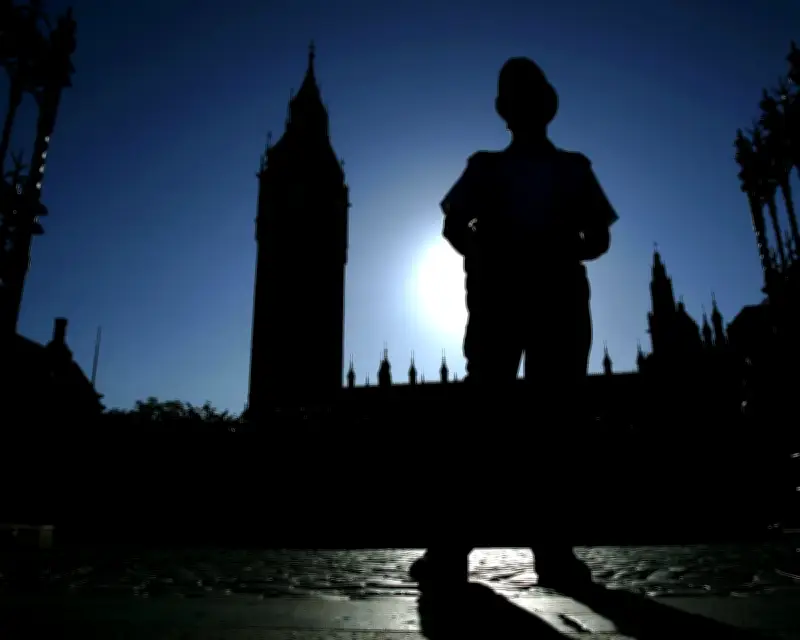
Ann Widdecombe's death sparks debate on political culture
The killing of Ann Widdecombe, the former Conservative MP and Reform UK spokesperson, has prompted a national conversation about the state of political discourse and the safety of public figures. Widdecombe, 78, was found dead in her Dartmoor home, and a man has been arrested on suspicion of murder. Her death marks the third killing of a British politician in a decade, following Jo Cox in 2016 and Sir David Amess in 2021.
A life lived without fear
Widdecombe, known for her outspoken views and distinctive style, had dismissed concerns about her safety. She rejected friends' advice to install electric gates, despite living alone as a high-profile elderly woman. She had survived the Brighton hotel bombing that targeted Margaret Thatcher in 1984, but her security mindset was shaped by an earlier era when politicians were seen as symbols of the state rather than targets of personal hatred. She posed for press photos outside her bungalow, which bore the name 'Widdecombe's Rest', making her easy to locate.
Political violence and the crossing of a Rubicon
According to Gaby Hinsliff, a Guardian columnist, Widdecombe's death should make Britain ask what sort of political culture it wants. 'The hallmark of a civilised country is that political differences are settled through votes not violence,' Hinsliff wrote. The killing of three politicians in 10 years is 'ominously like the crossing of a Rubicon.' After Jo Cox's murder, politicians united in soul-searching about the culture enabling such horrors. However, after Widdecombe's death, offers of solidarity from Keir Starmer and Kemi Badenoch to Nigel Farage were rebuffed, with senior Reform UK figures accusing the establishment of wanting them dead. Richard Tice said, 'It's as though someone in the establishment wants us dead.' Farage reportedly rejected security arrangements similar to Badenoch's, claiming his own were more comprehensive.
Reform UK's stance on free speech and security
Reform UK has refused to acknowledge that words have consequences, according to Hinsliff. The party opposes regulating online platforms that amplify hate, instead proposing round-the-clock protection for every MP at a cost of billions. But this would not have saved Widdecombe, who left Parliament 16 years ago. Hinsliff questioned: 'At what point does the pool of people potentially at risk become too large for them all to have bodyguards?'
Dehumanising politicians: a dangerous trend
Hinsliff noted that online reactions to Widdecombe's death included a 'handful of ghouls publicly glorying in it' and many who struggle to separate a human being from a cartoon villain. She argued: 'Dehumanising politicians – treating them as abstract forces of evil – is the first step to justifying their elimination. It matters to keep putting the person back into the picture.'
Remembering Ann Widdecombe: formidable and vulnerable
Hinsliff, who knew Widdecombe in the late 1990s, described her as 'unusually straightforward' and 'formidable but also in some ways strangely vulnerable.' Despite profound disagreements on abortion, Europe, gay rights, and feminism, Hinsliff acknowledged Widdecombe's honesty and acceptance of democratic outcomes. Widdecombe's Catholic faith anchored her beliefs, making her a proponent of rehabilitation in prisons but an opponent of LGBTQ+ rights. Hinsliff concluded: 'I cannot say I will miss her politics. But I would miss more than I can say a democratic culture in which every woman has the right to argue her case, to have others argue back just as forcefully – and then to live out their old age in safety and in peace.'




