
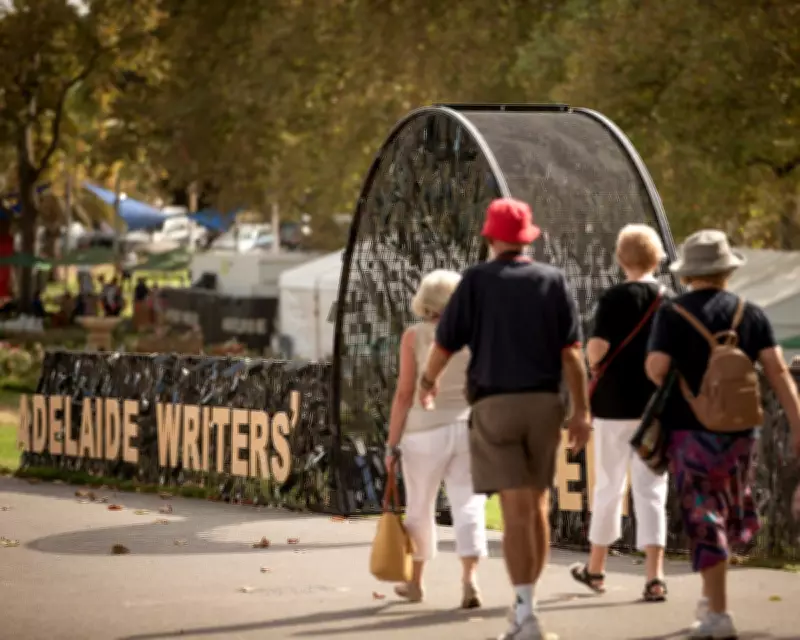
Adelaide writers' week was sacrificed to save the 2026 Adelaide festival, an event that contributes more than $60m to South Australia's economy each year, according to internal documents obtained under freedom of information.
After the 8 January announcement by the Adelaide festival board that controversial Palestinian Australian academic Randa Abdel-Fattah had been removed from the AWW program, a wave of withdrawals began not only among fellow writers and academics but also among headline acts for Australia's longest running and most prestigious international arts festival.
Internal Briefings Warned of Crisis
Internal briefings prepared for an extraordinary board meeting on 12 January warned of a "cascade of withdrawals" that could see the entire 2026 Adelaide festival collapse. The meeting took place two days after three board members resigned in protest and the day after chair Tracey Whiting stood down.
The briefings revealed that major Australian theatre and dance companies programmed for the festival wrote to artistic director Matthew Lutton, warning they were "considering their positions" after the AWW boycotts began. While local withdrawals were already in motion, management braced for a second wave of cancellations from international acts as allegations of censorship and government interference spread.
If an announcement cancelling the 2026 AWW was made within 18 hours, the briefing stated, it "may prevent artists from withdrawing from the 2026 Adelaide festival program and will avoid a cascade of withdrawals in the coming days, thereby mitigating reputational and financial damage."
Any delays would "significantly increase the risk that the reputational damage from Adelaide Writers' Week is transferred to Adelaide Festival."
Furthermore, the briefing warned that future Adelaide festivals could be at risk. "Currently, when invitations are extended to national and international artists, they accept without hesitation, as they do not consider the possibility that their values may not align with those of Adelaide Festival. However, if artists were to withdraw from Adelaide Festival, expressing concerns about its values, this could create significant friction in future years."
Board Meeting and Director's Resignation
At the extraordinary board meeting, AWW director Louise Adler informed the three remaining board members, Lutton, and Adelaide festival CEO Julian Hobba that out of 165 AWW sessions, only 12 remained intact. She urged the board to issue a full public apology to Abdel-Fattah and cancel the 2026 event, which was by then unsalvageable, and concentrate on rebuilding for a 2027 return. Adler then walked out of the meeting, and her detailed resignation statement appeared in the Guardian the following day.
The board continued its deliberations and ultimately decided to axe AWW 2026.
Government Pressure
While SA Premier Peter Malinauskas has publicly denied his office exerted undue pressure on the festival's independence, the FoI documents suggest his 2 January letter to the board was the primary catalyst for the crisis. Minutes from previous meetings show that as late as 20 December, the board stood by its decision to include Abdel-Fattah, noting she had "a long and distinguished career in academia" and her cancellation "would risk placing her in the same category as individuals associated with hate-speech or hate-crime activity, which she is not."
However, three days after Malinauskas wrote to the board stating, "I am of the view that Dr Abdel-Fattah's appearance should be removed from the Program," the board complied, "in light of recent national events, and Government correspondence." Minutes from the 5 January meeting show the board agreed that "Government involvement materially changes the risk profile and that failure to act could jeopardise current and future funding, and the Festival's broader viability."
Economic Impact
Despite receiving $9.8m in state and federal funding, the Adelaide festival recoups almost all of that investment through more than $4m in ticket sales and more than $3m in sponsorship and philanthropy. It contributed $62.6m in gross expenditure to the South Australian economy in 2025. In contrast, the AWW is the Adelaide Festival Corporation's loss leader, driving foot traffic and hospitality spending but contributing virtually nothing to the festival's box office bottom line. It recorded more than 160,000 attendances in 2025, but the vast majority of its sessions are free.




