
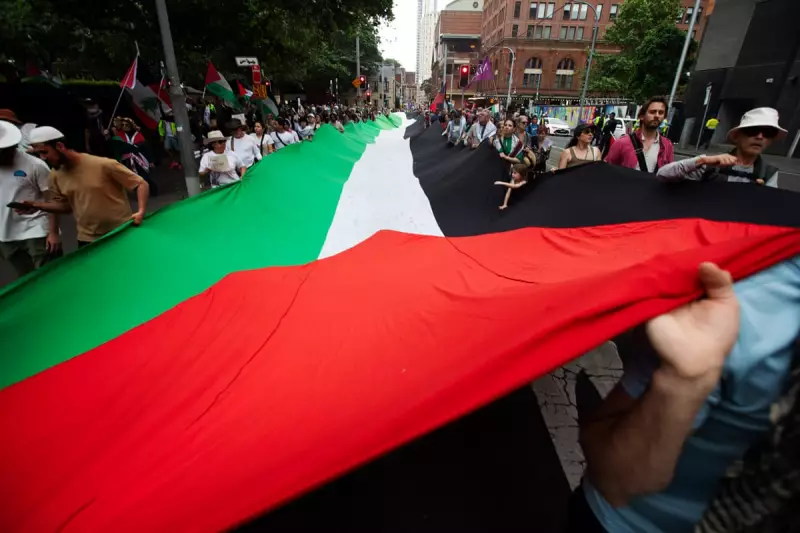
A major constitutional challenge has been filed in the New South Wales Supreme Court against controversial new state laws that grant police sweeping powers to restrict protest actions in the wake of terrorist incidents.
Coalition of Groups Mounts Legal Fight
The legal action was lodged on Wednesday by a coalition comprising the Blak Caucus, the Palestine Action Group (PAG), and Jews Against the Occupation ‘48. The applicants argue that the legislation, rushed through parliament last month following the December Bondi attack, is constitutionally invalid.
In their court summons, the groups contend the laws “impermissibly burden the implied constitutional freedom of communication on government and political matters.” The laws prevent police from authorising protests after a Public Assembly Restriction Declaration (PARD) is issued, a power that can be invoked for up to 90 days following a declared terrorist incident.
Police Powers and Invasion Day Concerns
The challenge follows an announcement by NSW Police Commissioner Mal Lanyon on Tuesday that a 14-day declaration made on Christmas Eve for Sydney’s CBD, south-west, and north-west policing areas would be extended until 20 January. Commissioner Lanyon cited ongoing community safety concerns, though he confirmed no new intelligence prompted the extension.
This move has sparked fears that the declaration could impact planned Invasion Day rallies on 26 January. When questioned about this possibility, Commissioner Lanyon stated it was “very premature to consider that.”
While the government and police maintain the laws do not prohibit peaceful, static assemblies, the challengers argue the legislation effectively bans all protests. The laws also grant police enhanced move-on powers at unauthorised gatherings. Authorised protests provide legal protection from prosecution for offences like obstructing traffic, a safeguard removed under the new regime.
Government Confidence and Legal Precedent
NSW Premier Chris Minns has described civil liberties concerns as “overblown” and expressed confidence the laws would withstand a constitutional test. He acknowledged the government was aware of the potential for a challenge.
This is not the first legal battle over protest laws for the Minns government. In October, the NSW Supreme Court ruled that a separate law granting police move-on powers “in or near” places of worship was unconstitutional, following a challenge by the Palestine Action Group.
The president of the NSW Council for Civil Liberties, Timothy Roberts, warned the laws create an “extraordinary chilling effect, sitting in the shadow of police discretion about what protests are and aren’t appropriate.”
A preliminary hearing to set a court date for the constitutional challenge is scheduled for Thursday in Sydney.




