Alarm is growing in the United States over a series of social media posts published by official government departments, with critics pointing to disturbing similarities with slogans used in Nazi Germany.
Eerie Echoes of the Past
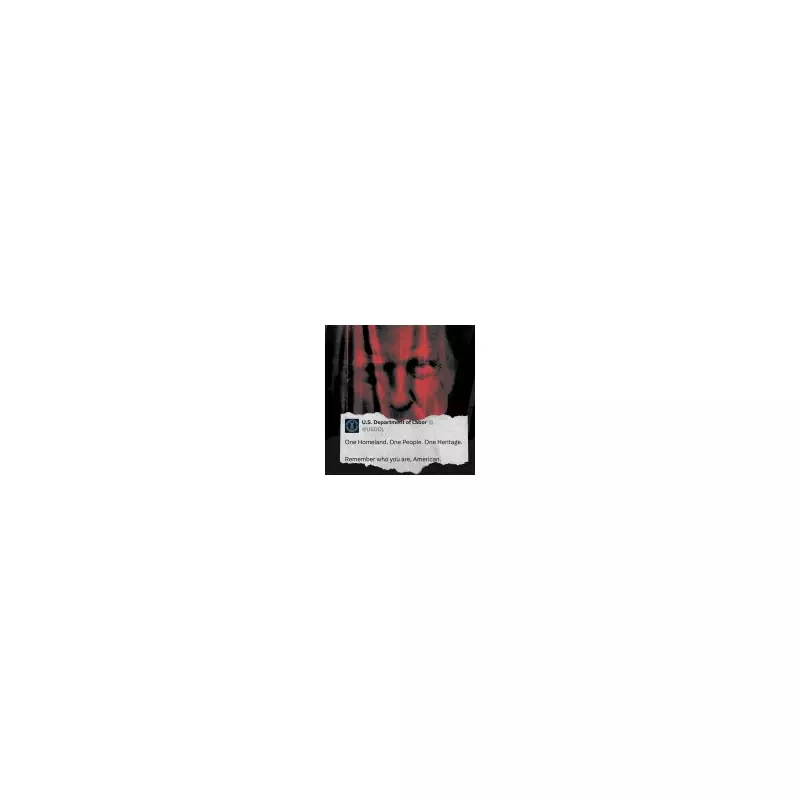
This weekend, the US Department of Labour posted a message on its social media account that has sparked widespread controversy. The post featured a statue of President George Washington alongside the words: 'One Homeland. One People. One Heritage. Remember who you are, American.'
While seemingly patriotic at first glance, historians and observers were quick to note its chilling resemblance to a central Nazi propaganda slogan: 'Ein Volk, ein Reich, ein Führer', which translates to 'One people, One Nation, One Leader.' This phrase was ubiquitously plastered on posters featuring Adolf Hitler throughout Nazi Germany.

White Nationalist Links in Recruitment
The controversy does not end with the Department of Labour. An investigation by the Southern Poverty Law Centre has uncovered evidence that the Department of Homeland Security (DHS) has used white nationalist rhetoric in its recruitment advertising.
One particularly stark advertisement for Immigration and Customs Enforcement (ICE) featured an image of a cowboy overlaid with the phrase 'We'll have our home again'. This line is taken directly from a song performed by a neo-Nazi group in North America.
Despite the furore, the DHS has not removed the contentious post. A department spokesperson responded to criticism by stating: 'Calling everything you dislike "Nazi propaganda" is tiresome.' They added that DHS would continue using all tools to communicate and keep Americans informed on its 'historic effort to Make America Safe Again.'
Experts Warn of a 'Dark Path'
Historian and propaganda academic Ian Garner told Metro that this alleged use of neo-Nazi aligned language on official channels is evidence of the White House deliberately seeking to be 'edgy'. He argues the strategy is designed to provoke and energise political bases.
'We see this time and again with the way the White House communicates. It tends to choose the most controversial images and messaging,' Garner explained. He traced the approach back to former President Donald Trump, whose own posts are often 'designed to be inflammatory and as outrageous as possible.'
Garner warns that this tactic has serious consequences. 'By using fascist or Nazi-coded language, you normalise it. You make it acceptable,' he said. 'We know there are neo-fascist groups, voters, and violent actors in the United States; when they see this language, they only become more enthusiastic.'
He concluded with a grave prognosis: 'Consequently, even more extreme versions of these messages become normalised... Once something becomes acceptable in political discourse, it becomes thinkable. Once it is thinkable, it becomes possible—and ultimately, it becomes much more likely to actually happen.' He described the evidence as showing the US is heading down a 'dark path'.
The posts, dated January 13, 2026, and the subsequent defence from officials, have ignited a fierce debate about the boundaries of political communication and the dangerous normalisation of extremist language within mainstream government discourse.