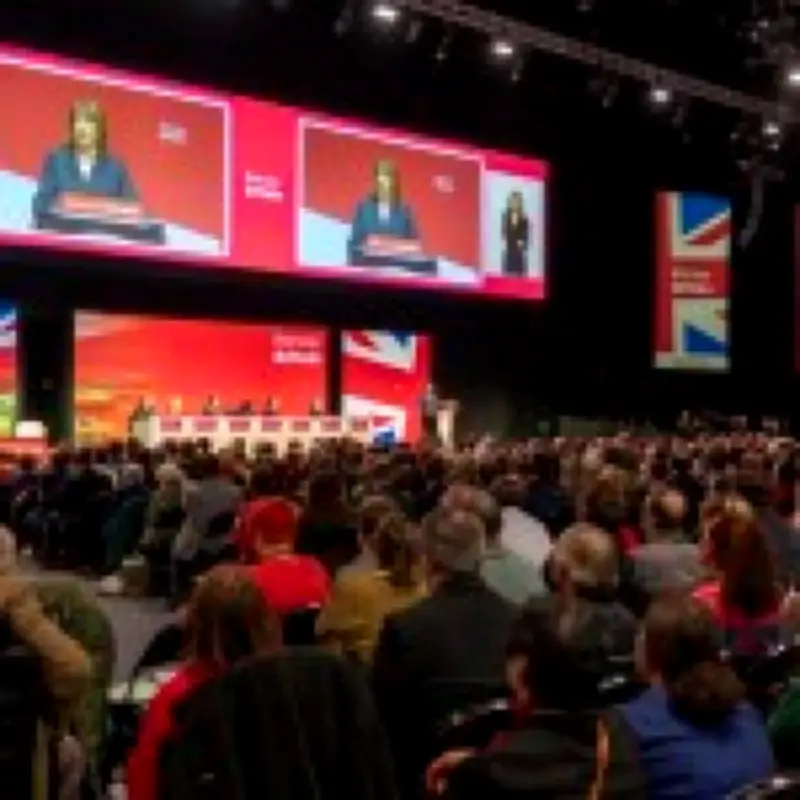
Major Labour unions are boycotting the party's women's conference this year in protest at the exclusion of trans women, Metro can reveal. Unison, Aslef, Usdaw, and the Musicians' Union will not attend Labour Women's Conference in September over the decision to ban trans women from formal proceedings at the event. The furious unions are among Labour's largest financial backers and say the women's event in Liverpool breaches their views on trans inclusion.
Background to the ban
Labour cancelled their women's conference last year after the party received legal advice in the wake of the Supreme Court ruling that 'women' in the Equality Act referred to biological sex. Prior to that ruling, Labour allowed people who self-identified as a woman, including trans women, to attend. In December last year, the party's National Executive Committee voted to ban trans women from taking part in formal proceedings at the women's conference, including main hall speeches and policy debates. Trans women will still be able to attend fringe events, which will be open to everyone regardless of their sex.
Union reactions
Unison, which has given Labour £43.8m in the last 25 years, confirms they will not be attending the women's conference in protest at the exclusion of trans delegates. A spokesperson for the union, which represents over 1.3 million workers, said: 'The union's decided against sending a delegation to Labour women's conference this year. This is because the party's restrictions on access run counter to UNISON's policy on trans equality.'

Shop workers union Usdaw also confirmed to Metro that they would be boycotting the conference. A spokesperson for the union said: 'The union's decided against sending a delegation to Labour women's conference this year. This is because the party has excluded trans women which runs counter to Usdaw's policy on trans equality.' Usdaw gave Labour more than £500,000 before the 2024 general election, the second largest union donation behind Unison, which gave close to £1.5m.
Train drivers union Aslef, which donated £100,000 during the 2024 election campaign, is also refusing to attend Labour Women's conference. The party needs a good relationship with the body while in government, after Aslef caused two years of train disruption in a pay dispute which ended in September 2024. The Musicians' Union will also not send a delegation to the women's conference. Their spokesperson told Metro the union has a 'long standing position of trans inclusion'. Metro has been told that other Labour affiliated unions are unhappy with the conference policy, but the other seven bodies declined multiple requests for comment.
Backlash from LGBT+ campaign groups
The move to exclude trans women from formal business has sparked backlash from LGBTQ+ campaign groups inside and outside the party. Labour for Trans Rights told Metro they are 'extremely disappointed' by the ban. They added: 'For decades, trans women members have had a home in Labour's structures, and it's not acceptable that they're being so blatantly excluded. The trade union movement – including the Labour-affiliated unions – have been incredible allies to the trans community. We hope that they'll continue to use their influence in the Party to shift the new government towards a far more inclusive position.'
Many public bodies, including political parties, have been scrambling to draw up new guidance on transgender inclusion after the Supreme Court ruled last year. Judges ruled that references to 'sex', 'man,' and 'woman' in the Equality Act 2010 refer exclusively to biological sex at birth and that a GRC does not make a person legally a woman in respect of single-sex spaces. The ruling also means that Labour have decided their All Women Shortlists can only include biological women. Metro uncovered last week that trans civil servants will be told to use toilets based on their biological sex and colleagues could be investigated for misgendering them.

The Trans+ Solidarity Alliance said it was 'really sad to see community and democratic spaces that have proudly included trans people for years feel forced to make decisions like this and betray their own values.' Their director Alexandra Parmar-Yee added: 'Clearly there's no real justification for banning trans women from a conference, this is just one example of a broken legal framework for trans equality. For trans people, access to everyday public life is becoming harder and less safe – while organisations like businesses, charities and the NHS are getting caught in the crossfire of endless legal cases. Andy Burnham can fix this, putting this issue to bed with a fair and workable approach, but if he doesn't act this will end up being Labour's legacy on LGBTQ+ rights for generations to come.'
A Labour Party spokesperson said: 'Labour is committed to advancing women in politics and to providing opportunities for all members to network, debate and contribute. Labour's Women's Conference reflects our commitment to addressing the underrepresentation of women in the Party, inclusion for all, and compliance with the law.'