Ukrainian Children's Lives Shaped by War: 'Fear of Dying Pushes You to Live'
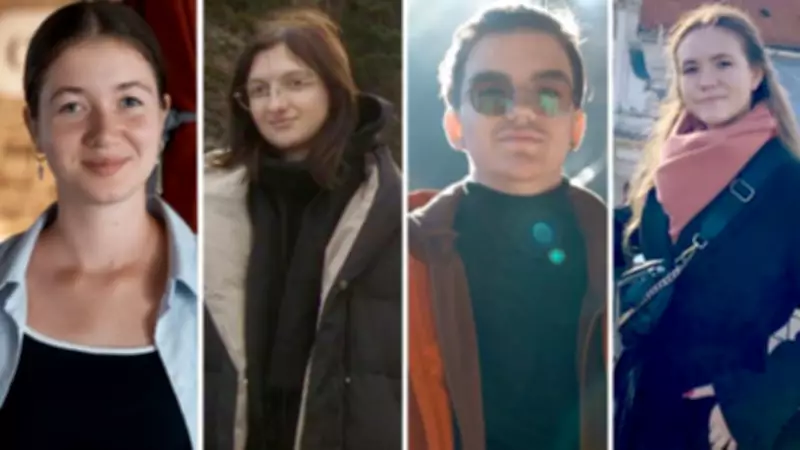
On the fourth anniversary of Russia's full-scale invasion of Ukraine, the stories of teenagers growing up under the shadow of conflict offer a poignant glimpse into stolen childhoods and enduring resilience. In partnership with the Ukrainian charity Voices of Children, Sky News has documented the experiences of young Ukrainians navigating a world defined by war, displacement, and loss.
Oleksandra's Journey: From Bakhmut to Displacement
Oleksandra, aged 17, was born and raised in Bakhmut, Donetsk region, until the invasion uprooted her life. Over the past four years, she has moved four times, losing her home and the ability to see friends in person. "I have been studying online for four-and-a-half years," she explains, highlighting the disruption to education.
Her grandfather refused to leave Bakhmut and died there from a blood clot shortly after the invasion began. "I was unable to say goodbye to him or go to the funeral," Oleksandra recalls, her voice tinged with sorrow. Her house was destroyed, but she notes, "I lost my home the moment my grandfather died. Home is about memories, and memories are about family." This sense of displacement persists, as she rarely feels at home anywhere now.

Daily life revolves around survival routines: checking power outage schedules, attending online classes from 8:45 AM to 3:55 PM, and monitoring air raid alerts before bed. "I've got used to the fact that my peers communicate exclusively via the internet," she says, warning that without this contact, isolation could become overwhelming. Her strength comes from her younger brother, family support, and dreams of university and a future filled with love and purpose.
Marko's Perspective: War as a Catalyst for Living
Marko, a 14-year-old from Kryvyi Rih, describes war days as repetitive and fear-driven. "It means waking up without any sense of control, during an air-raid alert before classes," he shares, noting the choice between cold school shelters or staying home. This constant fear, however, has paradoxically fueled his desire to live fully. "The fear of dying pushes you to live, to grow, to develop in every possible way," he reflects, emphasizing that war feels like his only chance to achieve a lifetime's worth of experiences.
Since the invasion began on February 25, 2022, war has become an inescapable backdrop, even during moments like his birthday on July 16, 2025, which he spent in a basement under shelling. "That night is etched in my memory, filled with a mix of emotions," he recounts. The hardest part is accepting that life will never return to normal and grappling with the injustice of ongoing deaths. Yet, he finds motivation in the chance to live for others, grow, and dream of an uncertain but desired future.
Sofia's Silence: Grief and Hope by the Sea
Sofia, from Odesa, was 15 when the war started and will turn 20 this year. Her father was killed on the frontline, and she honors him daily during the national minute of silence at 9 AM. "I never imagined I would learn what silence truly is," she muses, describing it as layered with despair and pain that makes breathing difficult. In that moment, she quietly thanks her father, feeling his memory trapped in time.
Leaving adolescence behind feels particularly hard, as she laments, "Nothing costs as much as a childhood stolen by force." To cope with grief, she returns to the Odesa shore, letting the sea absorb her anxiety. "Despair gives way to hope," she concludes, finding solace in nature's enduring presence.
Mariia's Identity Crisis: A Home Lost to Conflict
Mariia, aged 19, expresses confusion about her origins after multiple relocations. Her childhood spanned Kamianske, Feodosia in Crimea, Lviv, and now Kyiv for university. "I don't know where my home is anymore," she admits, haunted by a broken promise to return to Feodosia. Recently, she revisited the city via Google Maps, experiencing a bittersweet mix of nostalgia and pain.

She and her mother acknowledge that even if they return to Crimea, it won't be the same place of her memories. "With those thoughts comes despair first, but then, gradually, acceptance," Mariia says, highlighting the emotional toll of displacement and the slow journey toward healing.
These stories underscore the profound impact of war on Ukraine's youth, where fear intertwines with resilience, and stolen childhoods give way to fragile hopes for a peaceful future.