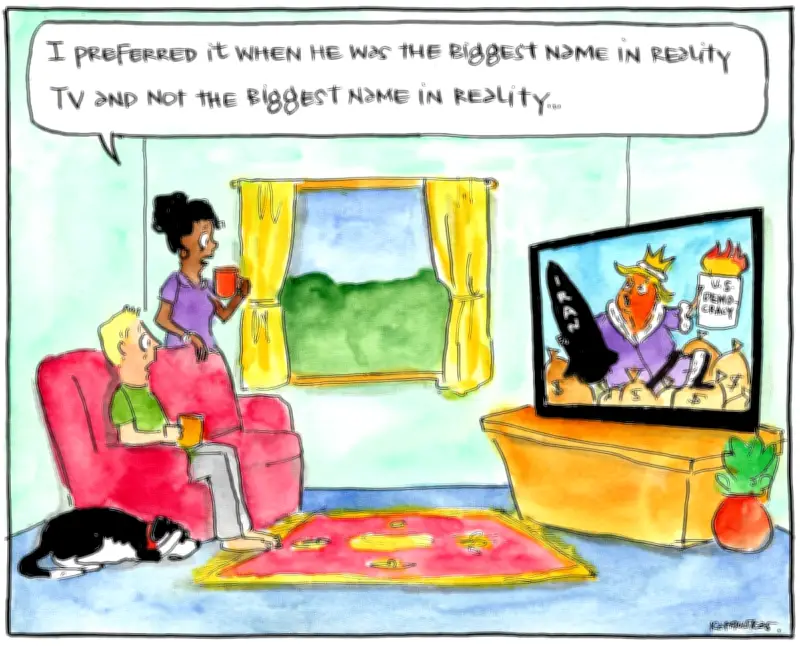
The Trump Effect on Reality Perception
Donald Trump's rise to power and his presidency have profoundly reshaped the way many people view reality, truth, and facts. According to a 2023 Pew Research Center study, 53% of Americans now say that the news media deliberately misleads them, a sharp increase from 30% in 2016. This shift is largely attributed to Trump's repeated attacks on the media as "fake news" and his promotion of alternative narratives.
Post-Truth Politics and Alternative Facts
Trump's administration popularized the term "alternative facts," coined by his advisor Kellyanne Conway in 2017. This concept has been linked to a broader erosion of trust in traditional sources of information. A 2022 study by the University of Oxford found that exposure to Trump's tweets significantly increased belief in conspiracy theories among his followers, with 45% of respondents agreeing that the 2020 election was stolen, despite no evidence.
Impact on Media Consumption
The media landscape has fragmented, with partisan outlets like Fox News, OANN, and Newsmax gaining viewership. According to Nielsen ratings, Fox News averaged 2.4 million prime-time viewers in 2020, up 20% from 2016. Meanwhile, trust in mainstream media has declined, with Gallup reporting in 2023 that only 32% of Americans have a great deal or fair amount of trust in the media.

Long-Term Consequences
This shift has had tangible effects on public policy and social discourse. For example, vaccine hesitancy during the COVID-19 pandemic was higher among Trump supporters, with a Kaiser Family Foundation survey in 2021 showing that 47% of Republicans said they would not get vaccinated, compared to 12% of Democrats. The erosion of shared reality poses challenges for democratic governance and social cohesion.