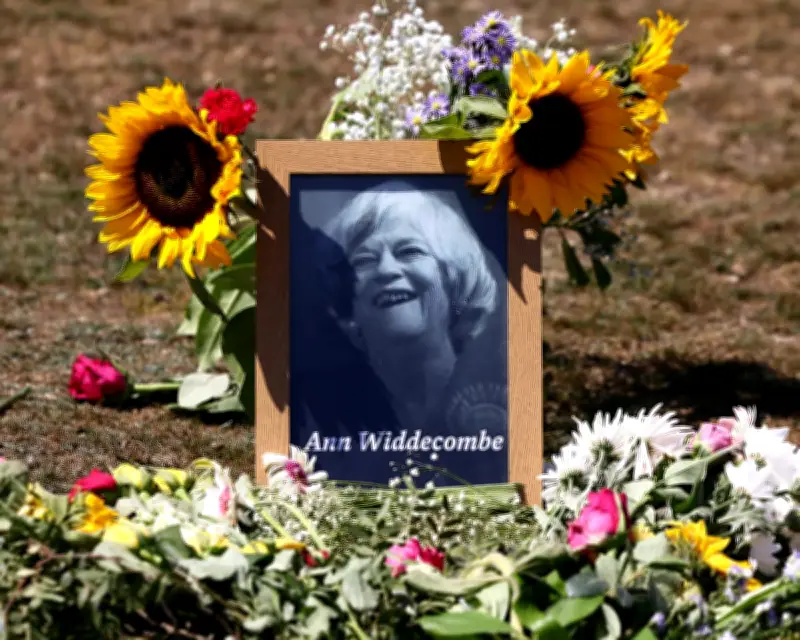
The body of Ann Widdecombe, a former UK government minister turned TV personality and Reform UK spokesperson, was found at her home in Devon, England, on 9 July. The 78-year-old had suffered catastrophic blunt-force injuries. Two days later, a man was arrested in South Yorkshire, believed to have driven 270 miles to her home. Police are investigating whether a leftwing or single-issue motive may lie behind the killing.
Rising attacks on politicians across the West
The murder has reignited debate on political violence in the UK, ten years after the murder of Labour MP Jo Cox by a far-right extremist and five years after Conservative MP David Amess was stabbed to death by an Islamic State supporter. MPs across the spectrum report a tide of abuse and threats. Attacks against elected officials are rising not just in Britain but across the West, with experts pointing to dehumanising rhetoric, declining institutional trust and widespread disinformation as key drivers.
In the US, police recorded more than 9,600 threats against members of Congress in 2021. In 2022, the husband of former House speaker Nancy Pelosi was attacked with a hammer by a rightwing conspiracy theorist, and New York gubernatorial candidate Lee Zeldin was attacked with a sharp object. In 2024, Donald Trump faced two assassination attempts. Last year, the home of Pennsylvania governor Josh Shapiro was firebombed; a gunman killed a Minnesota lawmaker and her husband and wounded another couple; and far-right youth figurehead Charlie Kirk was shot dead.

Continental Europe sees similar surge
In May 2024, Slovakia's prime minister Robert Fico was shot multiple times by a 71-year-old man while greeting supporters; he survived after surgery. The following month, Danish prime minister Mette Fredriksen was assaulted in central Copenhagen, suffering minor injuries but significant psychological shock. Germany recorded 5,140 politically motivated offences against politicians in 2025, nearly double the 2,790 in 2023, targeting MEPs, senators and far-right AfD candidates. In France, an interior ministry unit recorded about 2,500 incidents in 2025 and over 1,500 in the first five months of 2026 alone; local mayors accounted for 64% of victims. About 65% of French incidents involved death threats or verbal abuse, 10% property damage and 10% physical violence.
According to conflict monitoring group Acled, violence and intimidatory acts targeting local officials jumped 46% across Europe from 2024 to 2025, with the highest proportion of serious incidents in Italy.
Experts warn violence becomes 'inevitable'
Academics Andrea Ruggeri, Ursula Daxecker and Neeraj Prasad argued in a recent analysis that violence risks becoming 'part of the political process' due to a 'toxic mix of elite rhetoric, weakened party structures and spiralling polarisation'. When leaders 'normalise hostility', influencers 'amplify fear' and parties 'outsource mobilisation to extremists', they wrote, 'political violence ceases to be unthinkable and becomes inevitable'.
Europol's most recent TE-SAT terrorism report noted that while jihadist terrorism remains the most persistent threat, the lines between established terrorist ideologies and other violent extremism are blurring. Modern attackers are often radicalised in 'nihilistic' digital communities where violence is 'gamified' and marked by 'ideological fluidity' combining conspiracy theories, anti-system narratives and personal grievance. Common to many lone actors is a deep-seated hostility towards 'the establishment', state authority and the democratic process, making mayors, MPs and ministers targets as symbols of the system.

Security challenges and political fallout
Because lone actors act independently, they do not generate the communications or logistical footprint that security agencies typically intercept, making prevention extremely difficult. In the UK, the Reform party has been accused of exploiting Widdecombe's death to claim its MPs are not protected enough, despite the party's own inflammatory rhetoric. The UK, like most countries, has increased security for politicians in recent years, but individual MPs do not have security details unless facing a specific threat. France and Germany have established networks linking local police to MPs' constituency offices and increased penalties for violence against elected officials. Former German justice minister Nancy Faeser described the trend as 'an escalation of democratic contempt' increasingly turning into physical violence, demanding perpetrators feel 'the full force of the law'.