Eight anti-ICE protesters in Texas have been sentenced to 30 to 100 years in federal prison after leftist zines were used as evidence of terrorism, drawing condemnation from civil liberties advocates who say the case sets a dangerous precedent for free speech and protest.
Harsh sentences for Prairieland defendants
All eight defendants convicted in connection with a July 2023 protest at the Prairieland Immigration and Customs Enforcement (ICE) detention facility in Texas received unusually harsh sentences. Elizabeth Soto was sentenced to 50 years; her husband Ines Soto faces sentencing on July 1. Other defendants received 30 to 100 years, effectively life in prison. The charges included providing material support to terrorists, conspiracy to riot, and ambushing a law enforcement officer.
The protest involved a nighttime noise demonstration with fireworks, graffiti, slashed tires on a government van, and a broken security camera. One protester, Benjamin “Champagne” Song, fired a rifle, hitting a police officer in the shoulder. The officer survived. Song received 100 years for attempted murder of a government employee.

Zines as evidence of terrorism
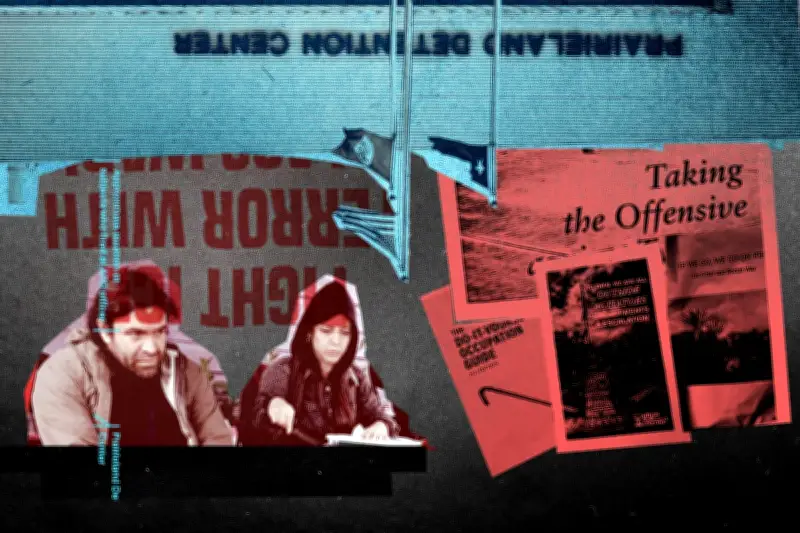
Federal prosecutors argued that the defendants were part of a “North Texas Antifa cell” and used leftist literature, including zines, as evidence of their terrorist intent. The government seized a standard office printer, paper cutter, and book binder from the Sotos’ home, calling it a “printing press” used to produce anarchist zines for the “Emma Goldman book club.” FBI agents testified that the zines covered topics like materialist feminism and AI eradication, but were not illegal.
“Zines are a foundational First Amendment document,” said Xavier de Janon, attorney for Elizabeth Soto. “Zines discussing ideas of revolution, mutual aid, ideas of a world after capitalism, should not be able to be criminalized in and of themselves.”
First Amendment concerns
Legal experts say the case represents an unprecedented attack on free speech. Chip Gibbons, policy director at Defending Rights and Dissent, said, “It is not only an attempt at chilling speech, but an indication that the [Trump administration is] going to continue going after protests extremely hard.”
The Trump administration has categorized “antifa” as a domestic terrorist organization. Its counterterrorism strategy describes “anarchists and anti-fascists” as violent left-wing extremists and equates “pro-transgender ideology” to terrorism. At least three of the nine convicted defendants are trans; many have been incorrectly named in legal filings.
Treatment of defendants
Defendants were held in solitary confinement for weeks, subjected to repeated strip-searches, and denied dietary restrictions. Trans women Autumn Hill and Meagan Morris are held in men’s facilities, vulnerable to sexual abuse, and Morris was denied hormone treatments. The Johnson County sheriff’s department did not respond to requests for comment.
“They’re just anti-intellectual,” said Lydia Koza, Hill’s wife. “Oh, these defendants read, that’s so fucking scary. You shouldn’t trust people who read.”
Broader crackdown on protest
The Prairieland case is part of a broader federal crackdown on anti-ICE protesters. A ProPublica and Frontline investigation found over a third of more than 300 anti-ICE protest cases “crumbled.” But in Spokane, Washington, three people were convicted last month of conspiring to impede a federal officer over an ICE protest. Last week, 15 people in Minneapolis were charged with conspiracy to obstruct ICE operations.
Shayana Kadidal of the Center for Constitutional Rights said the combination of property damage and injuring an officer allowed the government to build a conspiracy case. “It strikes me as excessive,” he said.
Community response
Supporters have formed the Dallas-Fort Worth Support Committee, writing character letters and fundraising. A local bookstore sells zines about the case and patches reading “Zines are not a crime!” and “Song did nothing wrong.” A zine distributor sells a packet of zines from the government’s exhibit files titled “The Government Doesn’t Want You To Read These Zines.”

Defendant Savanna Batten, sentenced to 50 years, said, “It’s crazy that we live in a world where it’s not safe to ask what books you’re reading.”