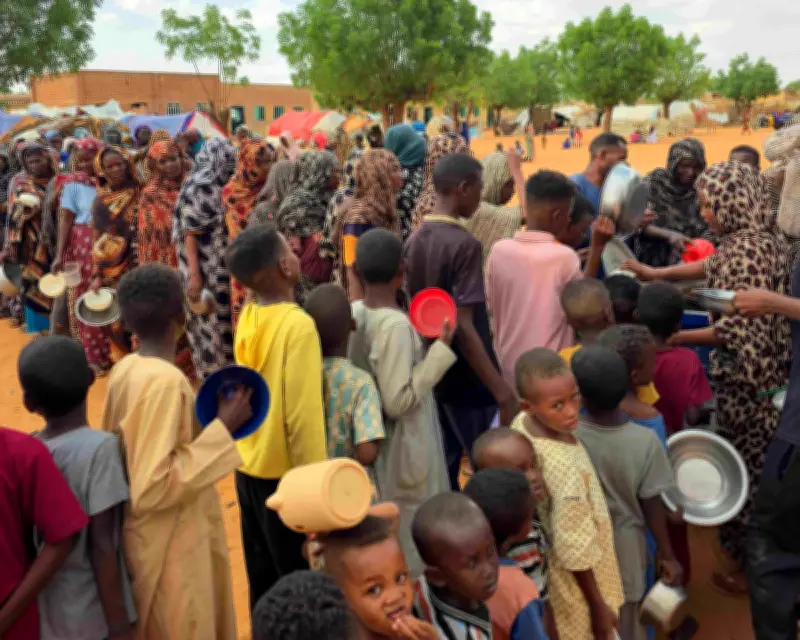
The UN rights chief, Volker Türk, issued a stark warning on Friday, declaring a "red alert" as the strategically important Sudanese city of El Obeid in north Kordofan faces imminent catastrophe. Near-siege conditions are tightening, relentless drone attacks continue, and the paramilitary Rapid Support Forces (RSF) along with allies are massing around the city.
History repeats as world looks away
Two decades after the genocide in Darfur prompted global cries of "never again," similar atrocities are unfolding in Sudan with little international attention. Last year, the starvation siege of El Fasher in north Darfur deepened, leading to tens of thousands of deaths in a massacre described by one witness as "a scene out of a horror movie." UN investigators reported "the hallmarks of genocide," including explicit calls to eliminate non-Arab communities. Civilians fleeing were raped and murdered, as were those who stayed. Before El Fasher, a killing spree in Geneina by RSF-allied forces occurred.
War's devastating toll
After more than three years of war in Sudan, hundreds of thousands have been killed, 15 million have fled their homes, and the conflict is spilling into neighboring states. Both sides—the Sudanese Armed Forces led by Gen Abdel Fattah al-Burhan and the RSF led by Gen Mohamed Hamdan Dagalo, known as Hemedti—have committed war crimes. Their relentless ambition brooks no compromise, yet the war of attrition might exhaust them if not for outside actors fueling the conflict, drawn by gold, gum arabic, and potential geopolitical advantage.

UAE's critical role
Many states pursue their interests while Sudanese civilians suffer, but the UAE's role is particularly critical. While it denies backing the RSF, rights groups and diplomats say it is their key supporter. The US and UK voice concern for Sudan but have studiously ignored the UAE's role, which has pledged to invest $1.4tn in the US. An Emirati royal has also put $500m into the Trump family's cryptocurrency business. A human rights investigator told British MPs last month that the UK had evidence linking Ethiopia and the Emirates to the RSF in 2024, but officials said they would not divulge it publicly following "significant" UAE pressure. There is evidence of British military equipment being used by the RSF.
Pressure campaigns and precedent
The UAE's sensitivity to reputational damage suggests that pressure can work. It has invested heavily to establish itself as a celebrity playground, home for influencers, and attractive tourist destination—an image dented by the fallout of the war on Iran. In the US, the co-chairs of Congress's bipartisan Tom Lantos Human Rights Commission have written to corporations including the National Basketball Association and Walt Disney, urging them to cut ties with the UAE over Sudan. Two decades ago, the celebrity-studded Save Darfur campaign raised global awareness of the genocide. Stars now have more direct access to audiences, and unwelcome attention might make the UAE wonder whether supporting the RSF is worth the damage to its glossy presentation. There is precedent: two years ago, US rapper Macklemore cancelled a concert in Dubai over the war. But that such a pressure campaign is necessary is an indictment of governments' cowardice at a time when, as Mr Türk said, their phones should be "running hot" to prevent atrocities.