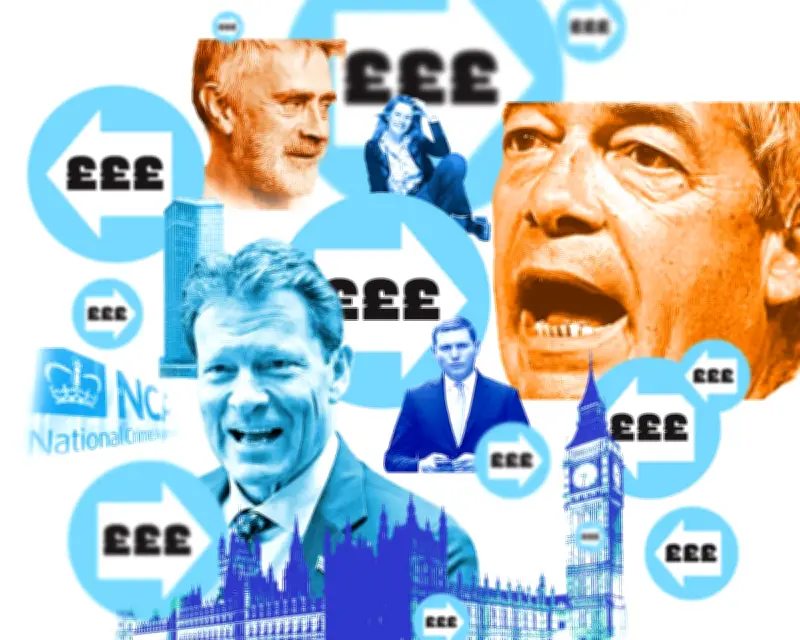
Bankers have filed multiple suspicious activity reports (SARs) to the National Crime Agency (NCA) over loans and donations involving senior Reform UK figures, including party leader Nigel Farage, deputy leader Richard Tice, and major donors, a Guardian investigation has found.
SARs filed over £1m donation and loans
At least four SARs were raised. One concerns a £1m donation to Britain Means Business, a Reform UK fundraising vehicle, half of which was transferred by Tice to the party. The donation appeared to come from aristocrat and donor Fiona Cottrell, but bank staff were not satisfied the funds originated from her. The NCA has sought foreign help to trace the source.
Two other SARs relate to a loan from George Cottrell, Fiona Cottrell's son and a convicted fraudster, to Tice. The loan was made shortly before Tice finalized a property purchase and made a party donation, and was not repaid until after those transactions, sources said.

Farage's £5m gift also flagged
A fourth SAR involves the £5m gift from Thailand-based cryptocurrency billionaire Christopher Harborne to Farage, first revealed by the Guardian in April. Farage has described the gift as needed for lifetime security and a reward for "getting Brexit done."
Regulated individuals such as bankers must file SARs if they suspect money laundering. SARs are not proof of wrongdoing but markers for investigation.
Political fallout and byelection
Farage resigned his Clacton seat on Tuesday, triggering a byelection on 6 August, where he will run unopposed except by novelty candidate Count Binface. Labour chair Anna Turley called the revelations "deeply serious" and urged Farage to cooperate with the NCA.
Prime Minister Keir Starmer and Conservative leader Kemi Badenoch have also called for transparency. The filing of SARs raises questions about whether Electoral Commission rules and the MPs' code of conduct are being followed.
Concerns over NCA resources
Sources said they spoke to the Guardian in the public interest, noting that an NCA investigation could take years due to resource constraints, potentially not concluding before the next general election due by July 2029.
Several flagged figures are treated by banks as politically exposed persons, subject to enhanced due diligence. An NCA spokesperson declined to comment, citing confidentiality rules. Reform UK declined to comment; Fiona Cottrell and George Cottrell's lawyers did not respond to detailed questions.