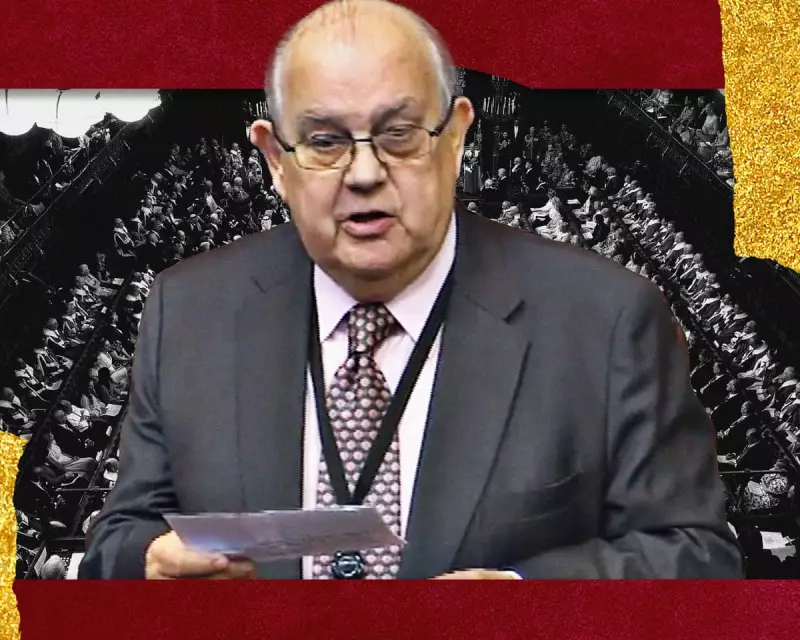
Lord Evans of Watford, a Labour peer recently suspended from the House of Lords for breaching lobbying rules, is now embroiled in a separate, high-stakes legal battle. He faces allegations in a US lawsuit that he received at least $1 million as part of an allegedly corrupt deal involving the sale of assets based in Kazakhstan.
A Peer Under Fire on Multiple Fronts
The 82-year-old peer was suspended from the House of Lords for five months last week after an investigation by the parliamentary standards watchdog. The probe was triggered by undercover reporting from the Guardian, which exposed Lord Evans offering to introduce fake property developers to fellow parliamentarians for a fee.
Now, court documents reveal a parallel legal drama. Lord Evans and two other directors of UK investment firm Jusan Technologies Ltd are being sued by a former executive, Yerbol Orynbayev. The lawsuit alleges they "systematically looted" a US charity by approving the sale of Kazakh assets worth $1.6 billion to an oligarch for just $75 million.

The Core of the Legal Allegations
Orynbayev, a former deputy prime minister of Kazakhstan, claims in his filing that Lord Evans and his fellow directors personally enriched themselves with "millions in illicit side payments." The court papers specify that David Evans received a $1 million bonus for approving the 2023 deal, on top of an annual $250,000 salary and other substantial bonuses.
The lawsuit asserts that the directors were appointed partly to foster "better relations" with the Kazakh government. Orynbayev states he established the US charity to protect educational projects in Kazakhstan from political interference, only for its assets to be stripped in a "sham" transaction.
Fierce Denials and Counter-Claims
Lord Evans and the other Jusan directors have vehemently rejected all accusations. A spokesperson for the group labelled the lawsuits "meritless," arguing that Orynbayev is a "disgruntled" shareholder unhappy about his falling share value.
They accuse him of hypocrisy, stating he originally supported the deals he now calls corrupt. The directors contend that a 2022 campaign by the Kazakh government to seize the assets left them "frozen" and effectively worthless, a context they say Orynbayev ignores.
The complex dispute is being fought in both UK and US courts. A UK judge, in a 2024 preliminary ruling, noted that Orynbayev's evidence appeared "slanted and partial," making his claims seem "much less credible." The judge also suggested the assets' maximum value was closer to $150 million, not $1.6 billion.
However, the judge acknowledged the circumstances of the sale and the issue of director remuneration had "not been fully explored" and remained open questions.
Political Fallout and a Damning Record
While this legal battle continues, Lord Evans's political standing has collapsed. He has lost the Labour whip and will serve his five-month suspension from the Lords. The standards watchdog found he used his position to persuade other peers to speak at commercial events from which he stood to gain financially.
One of the longest-serving peers, ennobled by Tony Blair in 1998, Evans has spoken in the Lords chamber only twice in the past 15 years. His recorded comments to undercover reporters—that it was "great being a Labour peer" because "we've got our mates who now have senior jobs"—have cemented a damaging picture of influence-peddling.
The twin scandals—a cash-for-access sting and a multi-million dollar international lawsuit—present one of the most serious crises faced by a sitting peer in recent years, raising profound questions about standards and accountability in the upper house.