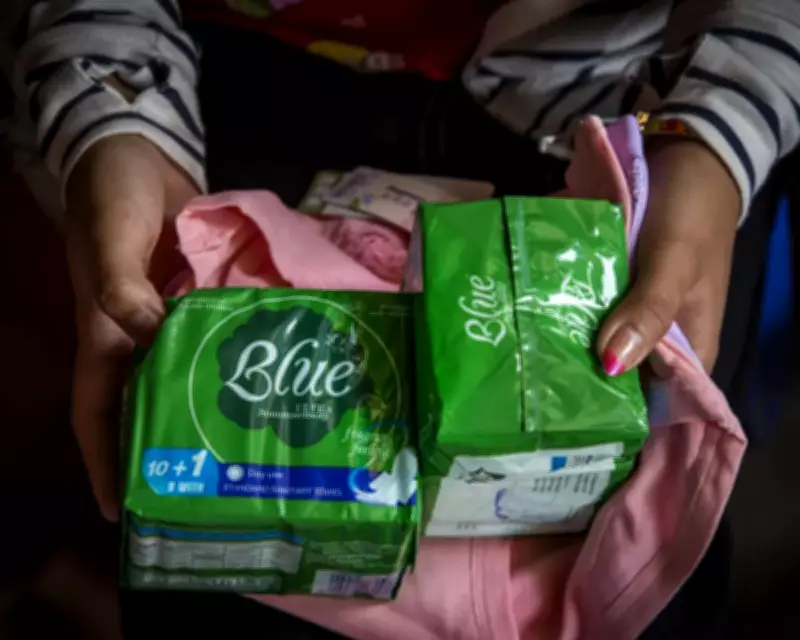
Myanmar's Military Expands Ban on Sanitary Products, Sparking Humanitarian Crisis
In a shocking development that has drawn international condemnation, Myanmar's military regime has significantly expanded its prohibition on the distribution of menstrual hygiene products across the conflict-ridden nation. Authorities claim that sanitary pads are being utilized by resistance fighters for medical purposes, a justification that activists and medical experts have dismissed as both absurd and dangerously misogynistic.
Civil War Context and the "Four Cuts" Strategy
Myanmar has been engulfed in a brutal civil war since 2021, when the military overthrew the democratically elected government and initiated a violent campaign against dissidents. The country has witnessed widespread artillery fire, the systematic burning of townships, and arbitrary arrests becoming commonplace. The sanitary product ban is believed to be part of the military's broader "four cuts" strategy, designed to deprive insurgent forces of essential supplies and cripple their operational capabilities.
Thinzar Shunlei Yi, a director at the women's rights collective Sisters2Sisters, explained the military's reasoning: "The regime alleges that menstrual products are being used by the People's Defence Force for medical applications, including as padding in boots to absorb sweat and blood." While no official communication has been issued by the military government, the blockade reportedly began in August in specific regions controlled by opposition forces, with a complete prohibition on transporting pads across the bridge connecting Sagaing with Mandalay, Myanmar's second-largest city.
Economic Impact and Black Market Exploitation
The humanitarian consequences of this ban have been devastating. With legitimate distribution channels severed, women have been forced to turn to the black market, where prices have skyrocketed. According to Thinzar Shunlei Yi, the cost of a single pack of sanitary pads has tripled from 3,000 kyat (approximately £1) to an astonishing 9,000 kyat. This price now exceeds Myanmar's minimum daily wage of 7,800 kyat, placing these essential items financially out of reach for the vast majority of women.
This economic barrier has compelled many to resort to unsafe alternatives, such as rags, leaves, or even newspaper, which significantly increase health risks. Henriette Ceyrac, founder of the now-defunct period education organization Pan Ka Lay in Myanmar, warned: "These makeshift solutions can cause urinary tract infections, reproductive tract infections, and considerable discomfort and pain."
Medical and Humanitarian Fallout
Medical professionals have unequivocally rejected the military's justification for the ban. Meredith Bunn, founder of the medical aid charity Skills for Humanity, stated: "Anyone with combat medicine experience knows that sanitary towels are entirely unsuitable for treating gunshot wounds or lacerations. They wouldn't stay in place, lack sufficient absorbency for serious bleeding, and fail to maintain a sterile environment." Bunn attributed the policy to "completely uneducated, misogynistic fools within the military."
The collapse of Myanmar's healthcare system has exacerbated the crisis, making medical attention scarce. Sisters2Sisters reports receiving frequent requests for antibiotics to treat urinary tract infections resulting from poor menstrual hygiene. Many women are now so distressed and uncomfortable that they are opting to remain indoors during their periods, effectively withdrawing from public life and political activities.
Gender-Based Violence and Control Tactics
Activists argue that the ban constitutes a deliberate form of gender-based violence designed to further restrict women's mobility and autonomy. Henriette Ceyrac noted: "It makes strategic sense for the military to want to limit women's movement even more. This is fundamentally gender-based violence." Meredith Bunn believes the policy is a calculated military tactic aimed specifically at female fighters, while also serving to control civilian populations and victimize those in displacement camps. Since 2021, over 3.5 million people have been forced into temporary shelters.
Humanitarian organizations are attempting to distribute reusable pads, but these efforts face significant challenges. Without reliable access to clean washing water, even reusable products can lead to infections and irritation. "The lack of proper menstrual equipment and facilities for hygiene maintenance can cause serious health issues," Bunn emphasized, explaining why disposable products were traditionally preferred.
Cultural Stigma and International Response
The crisis is further compounded by deep-seated cultural taboos surrounding menstruation in Myanmar. Alternative products like menstrual cups and tampons are rare, and as Ceyrac observed, "Women are often frowned upon for seeking information or being knowledgeable about these matters. The entire process is shrouded in shame, and women are encouraged to conceal any evidence of menstruation."
Local advocacy groups have alerted United Nations agencies to the situation, condemning the ban on such a basic commodity as a clear violation of human rights. The international community continues to monitor the escalating humanitarian disaster, as Myanmar's women face unprecedented challenges to their health, dignity, and fundamental rights amidst ongoing conflict and oppression.