Mexico's Disappearance Crisis: A 200% Surge Over Ten Years Devastates Families
On a bright August morning in 2022, Ángel Montenegro, a 31-year-old construction worker, was waiting for a bus in Cuautla after a night out with friends. A white van pulled up, and several men dragged Montenegro and a co-worker inside. The co-worker was released shortly after, but Montenegro vanished, leaving behind only his cap and a tennis shoe at the bus stop. His mother, Patricia García, has spent over three torturous years searching for him, joining a collective of women who probe fields with metal rods for buried bodies.
Over 130,000 Missing as Cartels Expand Control
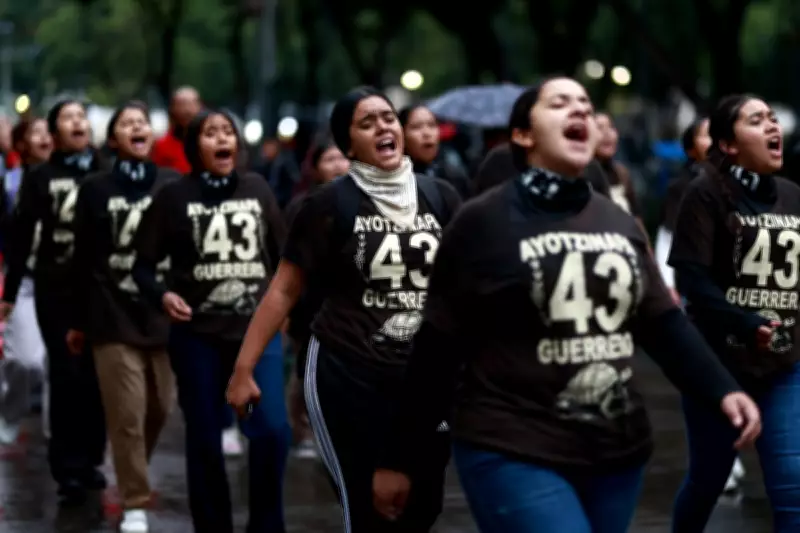
Montenegro is one of more than 130,000 people considered missing or disappeared in Mexico, a crisis that has devastated tens of thousands of families nationwide. A new report by the public policy analysis firm México Evalúa reveals that disappearances have increased by more than 200% over the past decade, highlighting a problem that has become uncontrollable at the national level. Armando Vargas, a security analyst at México Evalúa, states that these disappearances capture the lethal violence engulfing Mexico.
The surge reflects the increasing takeover by criminal groups of vast swathes of the country and their diversification into activities beyond drug smuggling. Forced recruitment, organ trafficking, sex- and human-trafficking, and migrant smuggling often involve abducting people and making them vanish. To avoid authorities, cartels bury corpses in unmarked graves, burn them to ash, or dissolve them in acid, effectively invisibilizing the violence.

Government Inaction and Institutional Neglect
Despite the crisis, the Mexican government has struggled to keep pace with cartel expansion. In 2018, a National Search Commission was launched to track the disappeared, but it was poorly funded. Ahead of the 2024 elections, then-President Andrés Manuel López Obrador conducted an opaque review of the register, reducing the number of disappeared to just 12,377, sparking outrage among activists and human rights experts. Current President Claudia Sheinbaum has dismissed concerns, promising a new report, but analysts argue the official numbers are likely an undercount due to high violence rates and weak government response.
Investigations are often slow and ineffective, marred by corruption and incompetence. In 2022, over 96% of crimes in Mexico went unsolved, according to the United Nations. This lack of substantial action has forced families like García's to search independently, enduring gruesome work and emotional tolls.
Families Shattered by Endless Searches
García's search has led her to fields where her son's phone last pinged, uncovering multiple bodies but never finding Montenegro. She describes the experience as leaving her in broken pieces, like a shattered vase glued back together with visible cracks. The crisis continues to grow, with criminal power advancing in parallel with institutional neglect, leaving Mexico grappling with a human rights catastrophe that shows no signs of abating.