Meta executives faced intense questioning at Australia's royal commission into antisemitism and social cohesion on Monday, as evidence emerged that a decision to reduce censorship on Facebook and Instagram may have unleashed more hateful content.
Policy shift and its aftermath
In January 2025, following Donald Trump's re-election in the US, Meta announced it would reduce censorship, eliminate factcheckers, and focus enforcement only on illegal and serious violations, relying on user reports for lesser breaches. CEO Mark Zuckerberg described it as a trade-off: catching less bad stuff but reducing accidental takedowns of innocent posts.
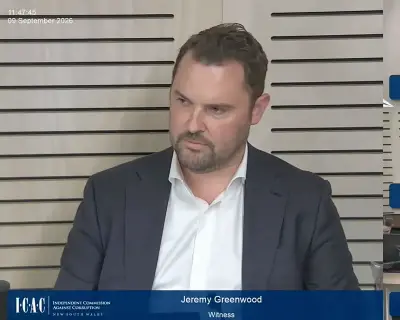
Benjamin Good, Meta's global director of core policy, told the inquiry that processes had improved since then, prioritizing removal of content causing offline harm, such as terrorism threats or child exploitation. However, counsel assisting Richard Lancaster argued that complaints indicated the changes allowed more antisemitic content, and it was unrealistic to think moderators hadn't altered their approach.

Internal guidance and allowed offensive content
The inquiry was shown Meta's internal FAQ, which stated that offensive comments like 'gay people are sinners' would be allowed, as would false claims such as 'immigrants are criminals' or 'white people are all Nazis'. Even 'black people are more violent than whites' is acceptable, but not 'black people are all drug dealers' because that imputes specific criminal behavior. The document clarified: 'It is not Meta's role to police offensiveness.'
Good emphasized the risk of over-enforcement, citing examples where Jewish communities had content removed when speaking out against atrocities. 'Over-enforcement poses significant risk to the communities that we try to protect,' he said.
Statistics and enforcement drop
Lancaster challenged Meta's statistics, noting a steep drop in hateful conduct enforcement actions. Graphs showed a 79% decline. Good said the prevalence of hateful conduct policy violations remained at 0.02% since 2022, but Lancaster countered that 0.02% of hundreds of billions of pieces of content is a very large absolute number. Commissioner Virginia Bell pressed for a plausible explanation for the 79% drop other than the January policy change. Good said the ecosystem was complex and he couldn't attribute it solely to policy changes.
The internal document noted Meta still prohibits dehumanizing speech, calls for harm, harmful stereotypes, slurs, and calls for exclusion based on protected characteristics.
Expansion of hate speech policies
Good highlighted that Meta had cracked down on the use of 'Zionists' as a proxy for Jewish people, prohibiting claims like 'Zionists control the media' after consulting experts on antisemitism. He said many users used the term to evade enforcement against anti-Jewish conspiracy theories.
Earlier, Facebook Australia's public policy director, Mia Garlick, appeared before the inquiry, confirming that Australia still uses factcheckers for misinformation but may adopt the 'community notes' function used elsewhere.