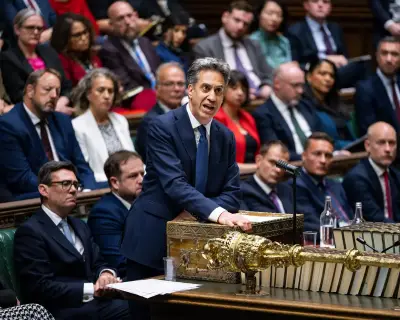
Lindsey Graham, the Republican senator from South Carolina who was a key ally of Donald Trump and an ardent supporter of Ukraine, has died suddenly at the age of 71. He had just returned from Kyiv after meeting with Ukrainian President Volodymyr Zelenskyy on his 10th visit since the 2022 Russian invasion.
Legacy of Bipartisan Deal-Making and Hawkish Foreign Policy
Graham served four terms (24 years) representing South Carolina, making him a powerful figure on key Senate committees including foreign relations, judiciary (which he chaired from 2019 to 2021), and budget (which he chaired from 2025). He was known as a pragmatic deal-maker within the Senate, where his hawkish foreign policy choices aligned with those of John McCain and Joe Lieberman, earning them the nickname the "Three Amigos." He was also close to Joe Biden, with whom he negotiated bipartisan legislation.
A neoconservative self-described "Reagan Republican," Graham began working in 2009 with Lieberman and Democrat John Kerry on a compromise climate change bill, though he eventually pulled out over a temporary failure of his bipartisan immigration control negotiations with Democrat Chuck Schumer. Graham's instincts were stoutly Republican, opposing gun control, healthcare, gay marriage, and reproductive rights.

Transformation from Trump Critic to Ally
But his greatest legacy might be as an example of the sea-changes brought about by the era of Donald Trump. At first, Graham was anti-Trump. In 2015, as he contemplated his own presidential run, he called Trump a "jackass" for making denigrating comments about McCain's time as a PoW in Vietnam. He also described Trump as a "race-baiting xenophobic religious bigot" and warned Republicans that if they nominated Trump the party "would get destroyed." Most famously, he called Trump a "kook," saying "I think he's crazy. I think he is unfit for office." Trump reciprocated, calling Graham a lightweight and even giving out his private phone number so his followers could protest against his anti-Maga positions.
Graham's run was short-lived, and Trump was elected president in 2016, despite Graham's personal vote going to neither him nor Hillary Clinton, but to Evan McMullin. All that changed in March 2017 when Graham had lunch with Trump and emerged joking that he had given the president his new phone number. "Trump is committed to rebuilding our military, which is music to my ears," Graham tweeted. "(He's) in deal-making mode and I hope Congress is like-minded." Trump turned on the charm, and they became golfing partners.
Political Tightrope and Key Role in Supreme Court Nominations
From that point Graham walked a political tightrope between his reputation as an "institutionalist" and Trump's version of his party, whose Maga followers often thought him too willing to compromise with the enemy Democrats. "There is a dark side to Trump ... but I am sticking with him," Graham told the BBC in 2023. It required flexibility. When Trump attacked Biden, Graham called the Democrat "one of the finest people I know," but did nothing to rein in the personal slurs.
More importantly, when Supreme Court Justice Antonin Scalia died in February 2016, Graham, on the Senate Judiciary Committee, played a key role in helping Senate Majority Leader Mitch McConnell stop any consideration of President Barack Obama's nominee to replace Scalia, Merrick Garland, saying such nominations should never be made in an election year – even though the election was nine months off. He then said that if a similar situation arose, "you can use my words against me." Of course it did, when Ruth Bader Ginsburg died in September 2020. By then chair of the Judiciary Committee, Graham hurried through Trump's nominee, Amy Coney Barrett, who was sworn in on 27 October, just over a week before the election won by Biden.

Early Life and Military Career
The law and war were Graham's political calling cards. He was born in Central, South Carolina, where his father, FJ, and mother, Millie, ran a restaurant and bar called the Sanitary Cafe. He became the first member of his family to attend college, with a military ROTC scholarship to the University of South Carolina. He gained his BA in psychology in 1977. A year earlier, his mother had died; soon after Lindsey graduated his father also died, leaving him as the guardian of his sister, Darline, eight years younger. The ROTC allowed him to remain at South Carolina, where he earned his JD law degree in 1981. He was commissioned a lieutenant in the Judge Advocate General's Corps of the US Air Force as a military defence attorney. From 1984 until 1989 he was chief prosecutor in Europe, based at Rhein-Main airbase in Germany.
Graham returned to South Carolina and went into private practice, then served as an assistant county attorney, and then city attorney of Central (1990-94). During the Gulf War he returned to active service as a judge advocate at McEntire Joint National Guard station in South Carolina.
Political Rise and Stance on Israel and Iran
In 1992 he was elected a state representative in the South Carolina House; in 1994, with the backing of the conservative senator Strom Thurmond, and helped by the mid-term "Republican Revolution" that year, Graham replaced the retiring incumbent Democrat Butler Derrick. In his second term, he led a revolt against House Speaker Newt Gingrich, and also filed the first impeachment papers against President Bill Clinton. When Thurmond retired in 2002, just ahead of his 100th birthday, Graham was unopposed in winning the Republican nomination to succeed him. He was re-elected three times, always by comfortable margins; challenges within the Republican party for the nominations tended to be fractionalised among multiple candidates. In 2018 his impassioned defence of Trump's Supreme Court nominee Brett Kavanaugh, who faced accusations of rape during his Senate hearing, led some to speculate that Graham saw himself as a successor to the former southern senator Jeff Sessions as attorney general, but Graham remained in place and won re-election easily in 2020.
In the Senate, the Three Amigos were fierce advocates of George W. Bush's second Iraq war, and Graham argued for permanent occupation of Afghanistan. He was, like Lieberman, a staunch defender of Israel, echoing Israeli Prime Minister Benjamin Netanyahu's frequent calls for attacks on Iran's nuclear capabilities and oil infrastructure. When legislators called for a cutback in military aid to Israel, Graham said the war in Gaza was one "they can't afford to lose. This is Hiroshima and Nagasaki on steroids." When Israel was accused of genocide, Graham, on a conference call in 2024 with International Criminal Court prosecutor Karim Ahmad Khan, told him: "This court is for Africa."
Graham had recently won a six-candidate primary to stand for a fifth term in the Senate. He is survived by his sister.