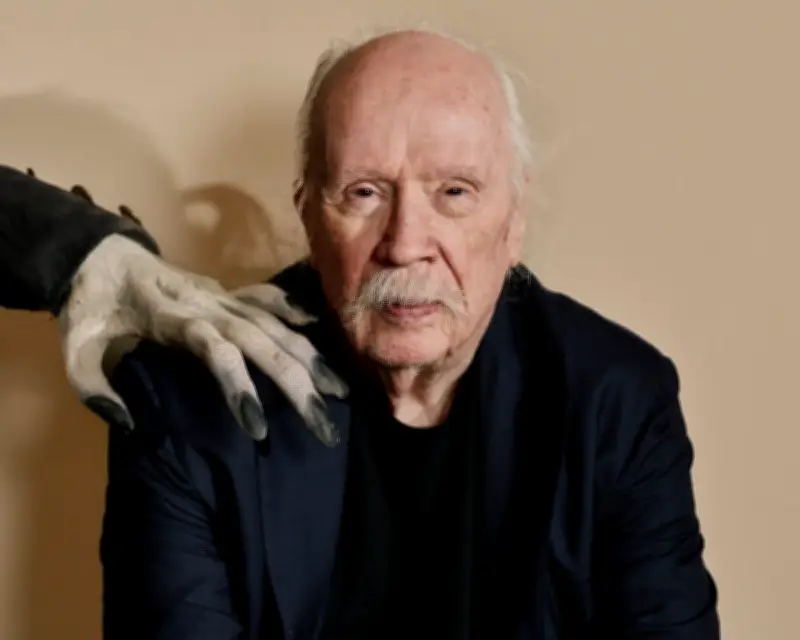
John Carpenter, the legendary horror and sci-fi director, has turned a vivid dream into a graphic novel titled Cathedral, complete with an accompanying soundtrack. The dream, which involved a portal to the underworld beneath a disused church and monstrous demons, felt like one of his own movies. 'I woke up and thought: wow! What an elaborate story,' Carpenter said. 'I rarely have cinematic dreams, but this was one of them.'
Nightmares of Directing
When asked if such dreams are nightmares, Carpenter clarified: 'Nightmares, for me, are personal – something that happened to me. Usually my nightmares are, I’m directing a movie and no one will listen to me. No one will follow my directions. Seriously, that’s what I wake up from.'
Carpenter's film career wound down after the 1990s, following 25 years of defiantly independent filmmaking. He is known for tense, terrifying, and often gory movies like Halloween, The Thing, and Escape from New York. His credo: 'Don’t tell me what to do.' Despite few commercial hits, his films became cult classics.

Why He Stopped Making Movies
At 78, Carpenter reflects on his career. 'Yes and no,' he says about missing filmmaking. 'Yes, because I’ve always loved cinema and the process. But no, working in the studio system in Hollywood is very difficult.' He describes the constant fight for creative control as a 'creative war' that leaves directors looking like they've been in battle. 'There are a lot of drunks who are directors, that’s one way of coping, or taking other drugs.'
Carpenter says he became addicted to moviemaking and needed rehab. 'I was exhausted, and then I took this extended vacation and I got happier the more I was away from the thing I love. I thought: what’s going on here? I was addicted to moviemaking and I needed rehab.'
Early Life and Influences
Growing up in Bowling Green, Kentucky, during the Jim Crow era shaped his views. 'Everything I know about evil I learned in that small town,' he said. His father, a music teacher, encouraged him to create. 'He told me early on: just create something, whether it’s music, writing, painting; whatever it is, create.'
Seeing Forbidden Planet at age eight was transformative. 'I remember walking out and thinking: I’m gonna be a movie director.'
Halloween and Its Legacy
Halloween (1978), made for $325,000, grossed over $70 million and launched the slasher genre. Carpenter aimed to manipulate audiences like a carnival ride. 'I wanted to use the audience, manipulate them like a ride at a carnival and have them scream, jump, not knowing where the thing is.'
When the studio pushed for a sequel, Carpenter reluctantly wrote but did not direct Halloween 2. 'They took it out of my hands, but they had to pay me every time they made a movie. I sit on the couch and a cheque arrives in my hand. What’s wrong with that?'
The Thing and ET
In 1982, Carpenter's The Thing was overshadowed by Steven Spielberg's ET the Extra-Terrestrial. Carpenter recalled seeing ET: 'I remember seeing the boys on their bicycles and the ET wrapped up, and then they go up into the sky magically. And that’s when I threw up.' He prefers his darker take: 'If you really want to know the truth about alien encounters, I think that my movies are more realistic about what will happen.'
They Live and Political Commentary
They Live (1988) targeted Reagan-era consumerism and inequality. The film, featuring sunglasses that reveal subliminal messages and aliens controlling humanity, has become a cultural touchstone. Carpenter calls it 'a documentary, and it didn’t end. It’s still going on now, even worse.'
Slavoj Žižek used the film in his documentary The Pervert’s Guide to Ideology, calling it a metaphor for ideology. Carpenter, who had never heard of Žižek, said: 'It’s actually democracy under pressure from the dictator. I’m a real sucker for American values.'
Current Life and Legacy
Now, Carpenter spends his days playing basketball, watching the news, and playing video games. He tours with his son and godson, performing his film music. 'I’ve had a fantastic time. Now I’m playing music. I mean, it doesn’t get better than this.'

His new album and graphic novel Cathedral are set for release in August 2024. Despite stepping away from filmmaking, his influence persists, cited by directors like Guillermo del Toro and Quentin Tarantino. Carpenter remains humble: 'What does that mean to me? I can’t do anything about that. It’s wonderful, I think it’s fantastic, I don’t know why.'