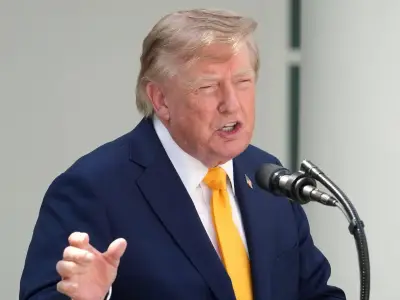
President Donald Trump has repeatedly suggested that infighting within Iran's leadership signals weakness, but a closer look reveals a nation united by a strategy born of war. Decades of conflict, from the Iran-Iraq war to proxy battles across the Middle East, have forged a cohesive decision-making process that prioritizes survival and resilience.
The Myth of Infighting
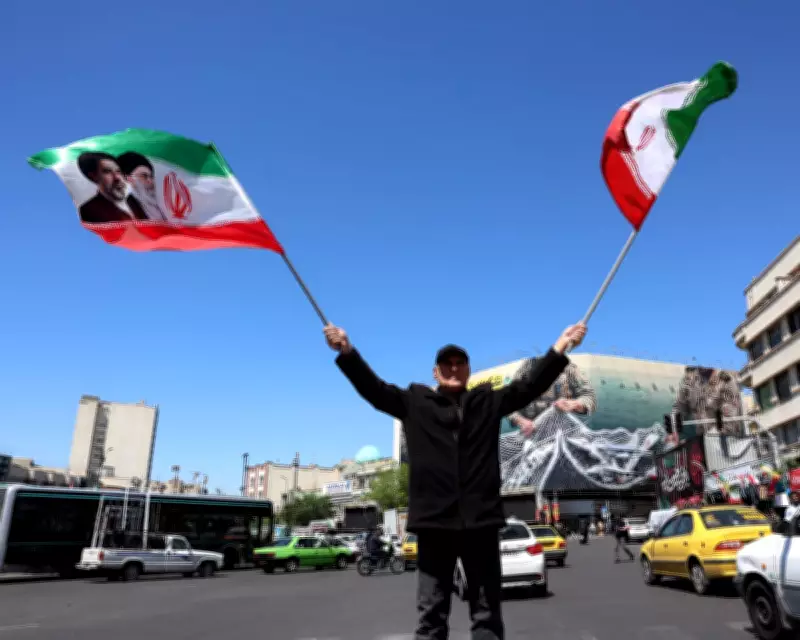
While Western analysts often highlight disagreements between hardliners and moderates, Iran's political system is designed to absorb dissent. The Supreme Leader holds ultimate authority, but consultations with military, economic, and religious leaders ensure broad consensus. Recent protests and economic hardship have not fractured this unity; instead, they have reinforced a narrative of external threats.
War as a Unifying Force
Iran's strategy is rooted in the Iran-Iraq war (1980-1988), which taught the regime that internal division is a luxury it cannot afford. The war led to the creation of the Islamic Revolutionary Guard Corps (IRGC), which now plays a central role in both defense and economic life. This military-industrial complex has weathered sanctions and pressure, adapting to survive.

- Economic resilience: Iran has developed a parallel economy that bypasses sanctions, including a network of front companies and barter trade.
- Regional influence: Through proxies in Lebanon, Syria, Yemen, and Iraq, Iran projects power while avoiding direct confrontation.
- Domestic control: The regime uses a mix of repression and social welfare to maintain stability, even during protests.
Trump's Misreading
Trump's policy of maximum pressure has not achieved its goal of regime collapse. Instead, it has hardened Iran's stance. The assassination of General Qassem Soleimani in 2020 temporarily united the country, with millions mourning his death. The regime skillfully channels nationalism to deflect criticism.
Strategic Patience
Iran's leadership plays a long game. While Trump focuses on short-term gains, Tehran waits for opportunities. The nuclear program is a bargaining chip, not a weapon. Iran's willingness to negotiate is conditional and tactical, not a sign of weakness.
- Nuclear negotiations: Iran uses talks to gain leverage, not to surrender its capabilities.
- Proxy warfare: By fighting through allies, Iran avoids direct military losses while draining adversaries.
- Economic survival: Iran has learned to live with sanctions, reducing its vulnerability to external pressure.
In conclusion, the perception of infighting is a misreading of Iran's political culture. The regime is not monolithic, but it is unified by a survival strategy honed through war. Trump's rhetoric may appeal to his base, but it underestimates the resilience of a nation that has turned adversity into a source of strength.