Gisèle Pelicot Overwhelmed by Emotional Tributes From French Women
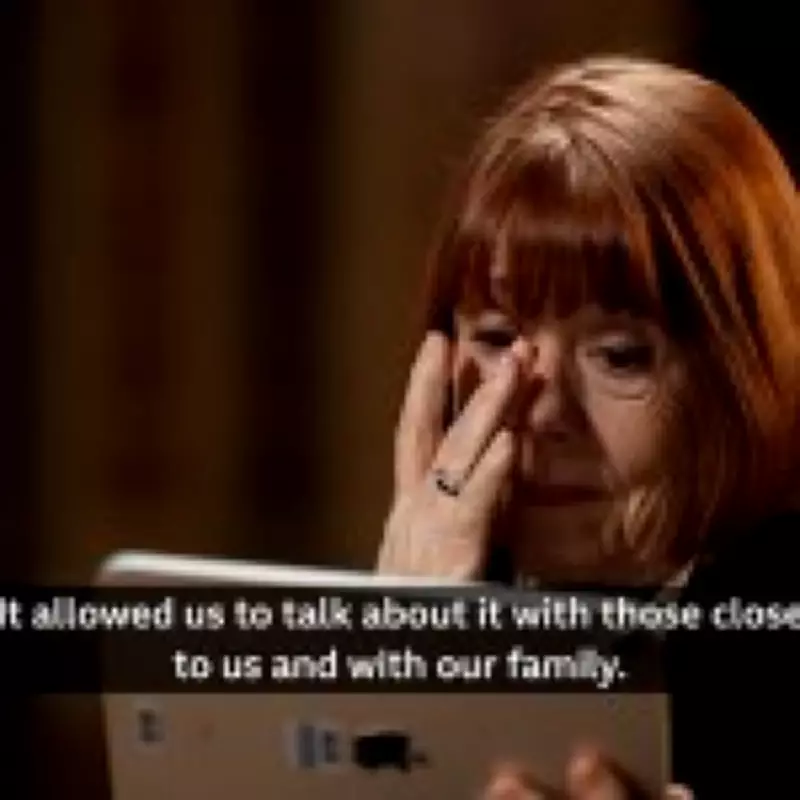
Gisèle Pelicot, the French woman who became a feminist symbol after insisting on a public trial for her ex-husband's horrific crimes, was visibly moved to tears while watching video messages of support from women across France. The emotional clips featured heartfelt testimonials from individuals who expressed profound gratitude for her bravery and determination.
'Thank You for This Battle on Behalf of All Girls'
In a candid interview with BBC Newsnight, Pelicot watched as women delivered powerful messages including 'Thank you for the courage you have given victims' and 'Thank you for this battle on behalf of all girls, including mine.' Another woman declared 'Bravo for your bravery and tenacity. As women, we are proud of you.'
'It touches me enormously because these are the faces I met during the trial,' Pelicot explained, her voice trembling with emotion. 'I saw them putting up posters, I saw their collages, I saw the banners.'

A Public Trial Against All Odds
Pelicot made the extraordinary decision to insist her trial be completely public, with her name published in press reports and explicit videos of her husband's crimes exhibited in court. This unprecedented move sparked widespread support across France, with women marching in solidarity during her court appearances.
'It's not for us to have shame; it's for them,' Pelicot declared defiantly, extending support to fellow survivors. She emphasized that her goal wasn't to create advocates on pedestals, but rather to help victims change their perceptions of their own abuse.
The Horrific Crimes and Their Aftermath
Dominique Pelicot, Gisèle's ex-husband, was found guilty in 2024 of repeatedly drugging and raping his wife for nearly a decade. The court heard how he invited dozens of strangers to sexually assault her while she was unconscious.
Pelicot, who is preparing to release her memoirs, recalled the most difficult moment of her ordeal: making three separate phone calls to each of her children to explain what had happened. 'I was well aware that for my children it was going to be immensely difficult,' she told BBC Newsnight.
Children's Devastating Reactions
She described her daughter Caroline's reaction with particular pain: 'I heard my daughter scream. It was almost inhuman, that scream.' Her eldest son David was in a state of shock, while her youngest child Florian immediately checked on his mother's wellbeing.
Despite not speaking directly to her ex-husband during the trial, Pelicot revealed she still seeks one thing for closure: 'I want to look him directly in the eye and ask him, 'Why did you do that?''
Disassociation and Discovery
Pelicot described viewing photographic evidence of the assaults with profound detachment. 'I don't recognise myself in those photos. I said, 'That's not me.' Then I put on my glasses, and there I discovered this lifeless woman with a man she didn't know on her bed. I think my brain disassociated.'
For four years before police intervention, she maintained a normal life as a wife, mother, and grandmother, completely unaware of the crimes being committed against her.
Breaking French Legal Traditions
Under standard French law, victim names are typically kept confidential in sexual assault cases. Pelicot deliberately broke this convention, insisting on full public exposure of her ex-husband and the approximately fifty men he allegedly invited to rape her.
She permitted journalists to publish her full name and allowed the court to exhibit explicit videos recorded by her husband showing men engaging in sexual acts with her while she was unconscious. Pelicot explained her motivation was solidarity with countless women whose sexual victimization goes unrecognized.
Final Words to Her Abuser
During her court testimony, Pelicot directly addressed her ex-husband with poignant words: 'I always tried to lead you towards the light, but you chose the depths of the human soul. You always have to choose, to decide which path to follow. There is the good and the bad. As for me, I have always chosen to walk toward the good.'
The case has become a landmark in French legal history and a rallying point for feminist movements addressing violence against women across Europe.