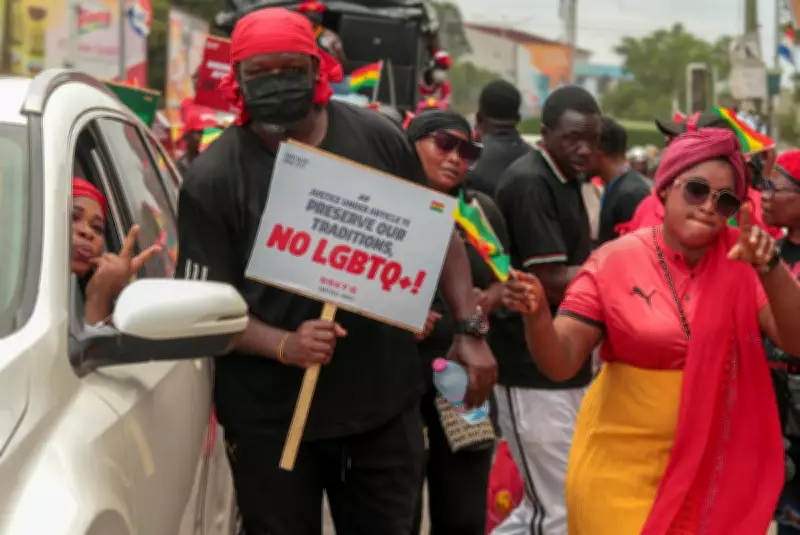
Ghana's LGBTQ community is living in fear after the country's parliament approved a sweeping bill that criminalises the promotion of LGBTQ+ activities and identifying as lesbian, gay, bisexual, transgender or queer, rights groups have warned. The legislation, passed on Friday, mandates prison sentences of three to 10 years. The human sexual rights and family values bill is expected to be signed into law by Ghanaian President John Dramani Mahama.
Fear and Panic Among LGBTQ+ Individuals
Community organisations say LGBTQ+ people are worried they could lose their homes, jobs or access to healthcare, with most already reviewing and deleting their online posts for fear of their identity being revealed. Leila Lariba, director of One Love Sisters Ghana, an organisation that supports lesbian and bisexual women, said: “People are panicking and scared. The new bill affects where you are staying; it can get you evicted; it can lead you to lose your job.” She added, “No matter how safe you think you are, you do not know who’s ready to talk.” Lariba advised people to prioritise safety online and offline, removing content that could put them at risk.
Expansion of Criminal Liability
Same-sex relations were already banned under British colonial law in Ghana but the prohibition was rarely enforced. The new legislation expands criminal liability and is designed to affect both LGBTQ+ people and their allies, such as anyone who provides services, support or advocacy. The bill imposes prison terms of up to three years for identifying as LGBTQ+ and up to 10 years for those found guilty of “promotion of, propagation of, advocacy for, support or funding of” LGBTQ-related activities, as well as provisions requiring people to report suspected LGBTQ+ individuals. Amendments approved by MPs exempt healthcare professionals and lawyers from prosecution for providing services to LGBTQ+ individuals, but activists have pointed out that the stigma created by the legislation was likely to deter people from seeking help, including around HIV testing or discrimination.

Political Context and International Reactions
Ghana's parliament approved similar legislation in 2024, but former President Nana Akufo-Addo left office without signing it. The current bill’s sponsor, the Rev John Ntim Fordjour, claimed the proposed law would protect Ghanaian family and cultural values. However, Ebenezer Peegah, director of Rightify Ghana, an LGBTQ+ rights organisation, said fundamental freedoms were at risk, with the impact extending far beyond same-sex relationships. “This bill is very far-reaching: it criminalises identity; it criminalises services, including the operations of civil society groups and doctors giving care to the LGBTQ community and those that promote same-sex [relations], like journalists [and] sellers of sex toys. It also criminalises even not reporting people,” he said. Peegah noted that just this year, his organisation has handled 80 cases of exposure, abuse or eviction, and members are asking how to leave Ghana.
Regional Impact and Rising Anti-LGBTQ Legislation
The bill comes as Ghana hosts the fourth African inter-parliamentary conference on family values and sovereignty in Accra from 3-6 June. This is the first time the conference is held in Ghana, after three years in Uganda. Uganda's harsh anti-LGBTQ+ legislation, including the death penalty for “aggravated homosexuality”, was signed into law after the inaugural conference in 2023. Ipas, an international reproductive rights organisation, said the conferences have become platforms to influence policies related to sexual and reproductive health rights across Africa. Peegah said the Ghanaian bill was passed as “a gift” to the conference, which will propose an African charter rejecting “harmful gender ideologies”. He stated, “We know that this is not an attack only on LGBT communities in Ghana. It is an attack on the entire LGBT community in Africa.”

Anti-LGBTQ+ legislation has been on the rise across west Africa. Senegal introduced a law in March doubling the maximum prison term to 10 years for same-sex sexual acts and criminalised the “promotion” of homosexuality. Last year Burkina Faso, previously seen as relatively safe for the gay community, passed a law criminalising homosexuality. Rightify is preparing to challenge the Ghanaian decision in court, based on the undue speed at which the bill passed and lack of quorum. The proposed law has also been criticised by international rights organisations, including Human Rights Watch, which said it puts people’s lives at risk while encouraging citizens to surveil and denounce one another.