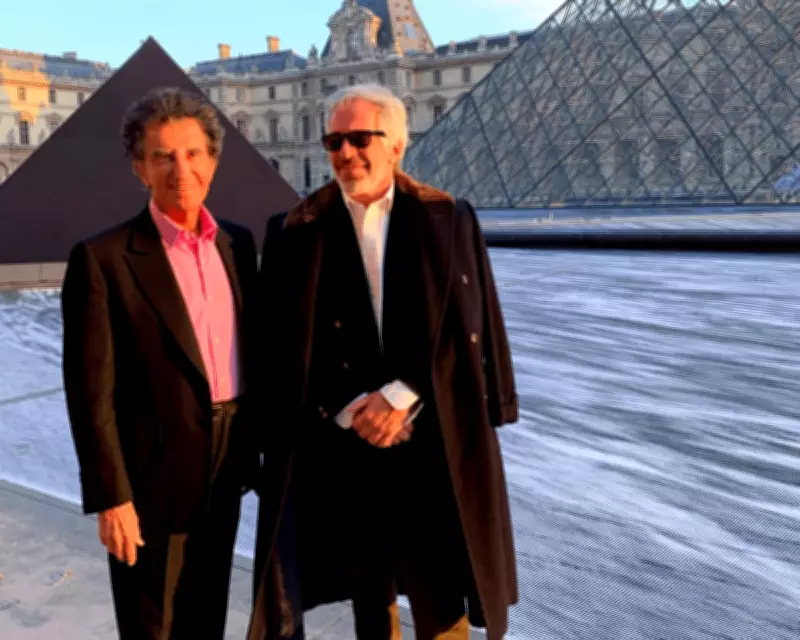
The Jeffrey Epstein scandal has dramatically shattered long-held myths about the French elite, revealing a troubling pattern of moral compromise and financial entanglement among venerable figures once thought to be beyond reproach. As new documents emerge, the facade of a republic built on culture and integrity is crumbling, exposing how easily some succumbed to the allure of private jets, offshore accounts, and influential connections.
Hermès' Quiet Stand: A Rare Act of Moral Courage
In 2016, the French luxury fashion house Hermès took a stand that now serves as a stark contrast to the widespread ethical failures uncovered in the Epstein files. The company withdrew an item from a charity auction after learning it had been purchased by Jeffrey Epstein, with an email revealing that Hermès was "not comfortable" with him as a donor and promptly refunded his payment. This quiet, decisive action highlights how institutions can, when they choose, uphold basic civic standards without fanfare or public declarations. It stands as a lesson in moral housekeeping that many in France's elite failed to follow.
Jack Lang at the Center of the Storm
At the heart of the French controversy is Jack Lang, the 86-year-old former socialist culture minister under François Mitterrand and architect of the Fête de la musique. Until recently, he served as president of the government-funded Institut du monde arabe. The Epstein documents, released by the US Department of Justice, mention Lang hundreds of times, detailing dinners, messages, film projects, birthday parties, and numerous favors. In one particularly revealing 2017 message, Lang thanks Epstein for his "infinite generosity" and requests to borrow a chauffeur-driven car for a dinner hosted by the Aga Khan, using language reminiscent of a courtier rather than a public servant.

When confronted with this correspondence, Lang has claimed good faith, stating he met Epstein about 15 years ago at a dinner hosted by Woody Allen and was unaware of his criminal past, despite Epstein having served a sentence in Florida for offenses involving minors. However, under pressure from the Élysée Palace, Lang has proposed his resignation from the Institut du monde arabe after France's National Financial Prosecutor's Office opened a preliminary investigation into suspected tax-fraud laundering targeting him and his daughter Caroline.
Caroline Lang and the Modern Dimension of the Scandal
Caroline Lang, a seasoned film producer and former Warner Bros executive in France, adds a contemporary layer to the affair. In 2016, she co-founded a US Virgin Islands company with Epstein, entirely financed by him and ostensibly intended to trade works by young French artists. This structure was not declared to French tax authorities. Two days before Epstein's death in 2019, he named her as the beneficiary of $5 million in his will, a sum she insists she knew nothing about and never received.
On French television, Caroline Lang described herself as "staggeringly naive," referring to Epstein as a "generous sponsor" and "a friend, not an intimate." While she faces no criminal charges, the file against her focuses on fiscal and ethical issues, not sexual misconduct. This distinction is crucial, yet it amplifies the unease surrounding the comfort with which some elites accepted material dependence on a man whose wealth was linked to documented abuse.
Patterns of Dependency and Outsourcing Lifestyle Costs
A familiar feature of French public life emerges from the Epstein papers: a politico-cultural caste that outsources the cost of its luxurious lifestyle to "friends." For decades, Jack Lang symbolized the grandeur of the cultural left, but the documents depict him as a habitual user of private jets and chauffeured cars, expenses covered by Epstein, whom he described as "courteous, charming, generous." Caroline Lang updates this pattern for the modern era, leveraging limited-liability companies and tax havens to maintain financial ties.

Epstein's Influence on French Democracy: Money and Politics
Epstein's impact on French democracy extends beyond sexual exploitation into the realms of money and political influence. In 2018 and 2019, Steve Bannon, Donald Trump's former strategist, corresponded with Epstein about shoring up the debt-ridden finances of Marine Le Pen's National Rally party, which at the time relied on loans from a Russian bank. Although there is no evidence Epstein provided funding, this correspondence places France's main far-right party within a transatlantic ecosystem where private finance and ideological alignment blur democratic boundaries.
Adding to the complexity, French authorities recently exposed a Russian-linked disinformation campaign aimed at forging a connection between Emmanuel Macron and Epstein, using fake news websites, doctored screenshots, and social media amplification. This episode demonstrates how Epstein's name has become a narrative tool for hostile states to discredit political figures, further muddying the waters of public trust.
France in a Global Context: A Punctured Self-Image
France is not alone in facing embarrassment from the Epstein files, as similar revelations surface in London, Rome, and Washington. However, the scandal strikes at the core of France's self-image: a republic united by culture, grand institutions, and venerable left-wing figures presumed immune to sordid compromise. The Langs' inability to decline free flights, offshore vehicles, or promised legacies contrasts sharply with Hermès' simple email and refund. This underscores that moral courage is not guaranteed by office, status, or cultural prestige—it is a choice made one email, one decision at a time.
The Epstein scandal serves as a sobering reminder that ethical lapses can permeate even the most esteemed circles, challenging France to reevaluate its elite's accountability and the true cost of compromise.