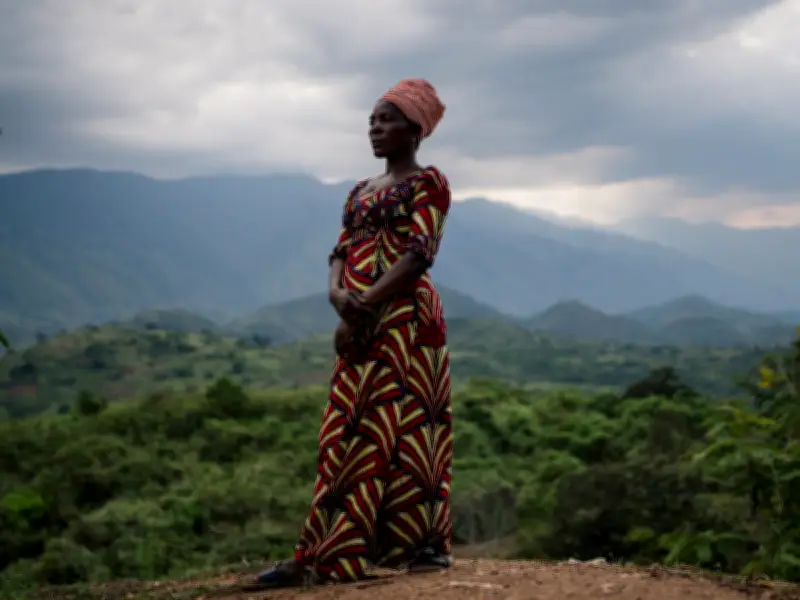
Years of war in the Democratic Republic of the Congo (DRC) have forced millions from their homes, with the Hauts Plateaux region of South Kivu province bearing the brunt of decades of fighting between the army, rebel forces, and ethnic militias. Families like that of Misa Byaombe, a farmer and mother of nine from the village of Rugezi, have been displaced for a year, struggling to survive amidst ongoing violence.
Displacement and loss: personal accounts
Jeanette Iranga, displaced from her home in Ndondo, lost three children during the conflict. 'We knew the war was coming; my husband had joined a defence militia but was killed at the front. Soon the fighting arrived and we fled. My daughter died when she was shot and two of my sons fell sick and passed away. I was held hostage by some troops but managed to escape. I have 11 surviving children … They were all so stressed by the fighting. All we want is to return home, but I am too frightened,' she said.
Nabindu Namwija, a widow, left her village of Tuwetuwe after militia attacks. 'They burnt my house and all of our possessions … I was alone with my four children because my husband had been killed. It was impossible to stay any longer. We arrived with nothing. All I can do is work on other people’s fields in exchange for some food. I want to return to the village; the children are falling sick and it has only been possible to survive with others from my community helping us,' she said at Nakiele health centre, where her daughter Mapenzi was being treated for malaria.

Military operations and mass graves
Congolese troops have been patrolling areas like Lemera, which was occupied by M23 rebels until May. In Sange on the Ruzizi plain, military officers inspected a suspected mass grave after M23 rebels withdrew. The town of Uvira on Lake Tanganyika was occupied by M23 rebels from December to January. More than 1.5 million people have been forced to flee from their homes in South Kivu since the fighting began in 2004, according to reports.
Health crisis amid conflict
Zabibu Lumetala, a midwife at Mukera health centre, treats many recently displaced women and victims of sexual violence. 'My role is to direct births, and we also provide psycho-social care to the women. Many women who have been raped are marginalised within the community and can even try to keep it secret. Babies born of rape are also a sensitive topic. We are working hard to stop families being divided when this occurs, but have a long way to go. With the insecurity now, some women are even too scared to leave the health centre. There has been terrible fighting in the area, and once I was the only member of staff who stayed,' she said.
Zawardi Moambi, a farmer and mother of four, fled to Mukera in June 2025 after the Gumino militia reached her village. 'We ran for two days,' she said. 'On the road, people from other villages let us stay with them and share their food. When we first fled to safety, I had to work in other farmers’ fields in exchange for something to eat. The children are used to life in the cold mountains, so when we came here, all four of them caught malaria quickly.'
Ethnic minorities and ongoing fighting
The Banyamulenge minority, Congolese Tutsi who have lived for generations in the Hauts Plateaux, have also been affected. In Mikenge, a strategic town captured numerous times by both the DRC army and Banyamulenge militias supported by M23 rebels, women repair mud walls and hold Bibles as they pray. A camp for internally displaced civilians sits on a ridge near Mikenge, a testament to the ongoing crisis.