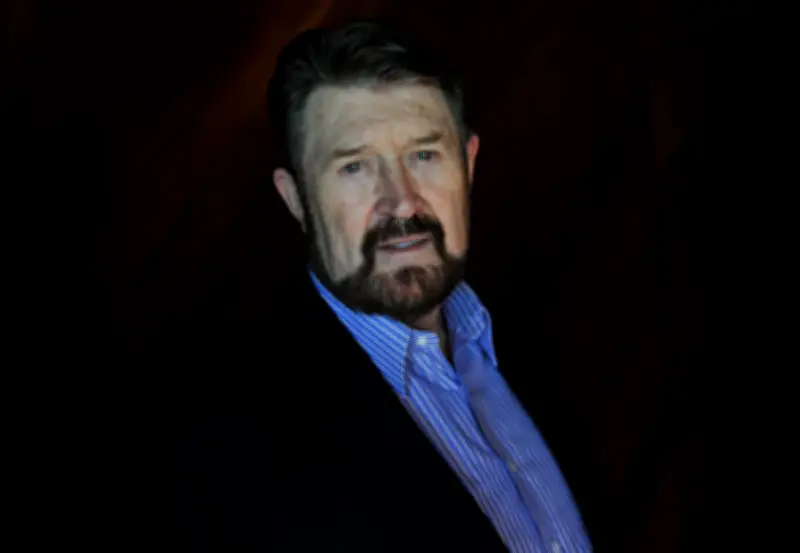
Derryn Hinch, the Australian journalist, broadcaster and former senator, has died aged 82. Known as the "human headline", Hinch was a fearless interrogator who remained candid and controversial throughout his career, which included imprisonment, politics, multiple marriages and serious health challenges.
From cadet journalist to radio star
Derryn Nigel Hinch was born in New Plymouth, New Zealand, on 9 February 1944. He left school at 15 to become a cadet journalist at the Taranaki Herald. In 1963, he moved to Australia and by age 21 was a Fairfax correspondent in New York, covering the moon landing and the assassination of Martin Luther King.
Joining 3AW in 1979, Hinch quickly became the star of Melbourne radio, drawing record ratings with his gregarious personality and candid commentary. He also hosted the Midday Show for 13 years and multiple current affairs programs, including Hinch from 1988 to 1994.

Relentless pursuit of sex offenders
Hinch was twice jailed for breaching suppression orders by naming sex offenders. In 1987, he named a paedophile priest and served 12 days in jail. In 2014, he spent 50 days in jail rather than pay a $100,000 fine. In 2011, he was sentenced to five months of home detention after publishing suppressed names. Hinch revealed in a 2017 television interview that he had been sexually molested as a nine-year-old but insisted it was not the reason for his pursuit.
Political career and Justice party
In 2015, Hinch formed the Justice party on a law-and-order platform, including a public register for convicted sex offenders. He secured a Victorian Senate seat in 2016, claiming to be the oldest person ever elected to the Senate at age 72. In his maiden speech, he broke the 20-minute time limit and named several convicted sex offenders.
In 2017, the Turnbull government reached a deal with Hinch to cancel passports of convicted paedophiles. However, he lost his seat in 2019, and the Justice party was dissolved in 2023.
Personal struggles and legacy
Hinch faced serious health challenges, including cirrhosis of the liver, septicaemia, and inoperable liver cancer. He underwent a life-saving liver transplant in 2011. He was inducted into the Radio Hall of Fame in 2010. Asked in 2025 what words he would like on his tombstone, Hinch replied: "He tried."
Fellow journalist Ray Martin called Hinch a "legend of Australian journalism" and a "colourful, megaphone-campaigning, groundbreaking journalist".