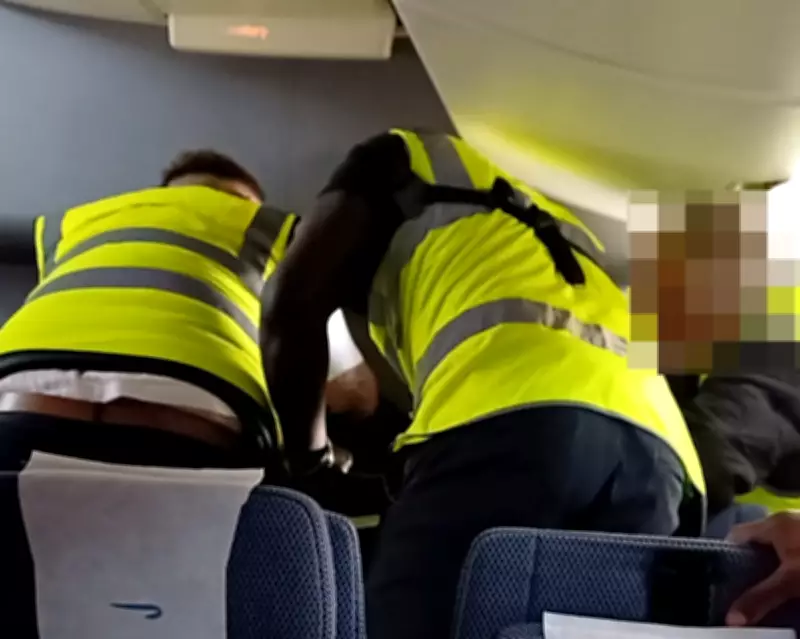
On the runway at Gatwick airport, mid-afternoon, a brutal struggle unfolded aboard a Boeing 777, exposing the visceral reality of the UK's deportation policy. A large man, screaming "Murdaar, murdaaaaar," fought desperately against a team of security guards in hi-vis yellow jackets as they attempted to pin him into a seat. "Me caaan go back a Jamaica," he hollered, his voice reverberating through the cabin. "Dem kill me bredda. Dem a go kill me."
The Struggle and Passenger Reaction
Five or six security guards, all of substantial build, struggled to bundle the hysterical man into an economy-sized seat. He possessed remarkable strength, temporarily confounding their efforts. One guard leaned forward and applied a headlock, prompting gasps and shrieks from fellow passengers. Many pulled out their phones to film the scene, ignoring a flight attendant's pleas to remain seated. Others drifted rearwards, drawn to the macabre spectacle.
A fraught stalemate ensued as the deportation team met the immovable object of the would-be deportee. During this noisy standoff, a mini mutiny began. "We can't fly like this," declared an angry passenger. "It's not safe," protested another. The flight attendant assured them, "He'll calm down," but no one believed her, given the ongoing pulling, pushing, and wrestling.
The scene escalated with screams from the man, loud pleas from guards, and outraged protests from the public. Suddenly, retreat: "OK, you're not going," said a guard as they wrenched the man out of the seat and hustled his writhing frame through the exit. His screams receded, and he was gone. The hubbub died down, and an exasperated guard grabbed travel bags from the overhead locker. Observers took their seats, relieved the storm had passed. Soon, doors closed, and the plane moved.
Democracy and Deportation
This incident highlights an abstract quality of democracy: we vote for action but rarely witness its implementation. When policy involves harshness and distress, we enjoy the luxury of knowing someone else does the dirty work. Forced deportations sit at the heart of the government's immigration policy, parading as a mark of effectiveness. In February, the Home Office reported that almost 60,000 unauthorised migrants and convicted criminals had been removed or deported since Labour took office.
The practice appeals to right and far-right supporters who want it bigger and faster, but few ever have to force a non-compliant, brawling man into a seat or listen to his pitiful cries. It raises questions: how would Keir Starmer, Shabana Mahmood, Kemi Badenoch, or Nigel Farage greet a 10-hour flight in the closed vicinity of such a security operation? If it would be anathema to them, why is it acceptable for ordinary citizens on ordinary passenger flights? Outsourcing implementation to commercial airlines and beleaguered flight attendants distances ministers from the consequences.
Broader Implications
This could be a wheeze to make the public acutely aware of what they have voted for, but it likely plays out differently. Like the revolted passengers at Gatwick, many who feel migration policies are unworthy of a nation that prizes human dignity will see this as reinforcing their reservations. Those who support forced deportations might question their endorsement if they witnessed it firsthand. The scuffle recalls Jimmy Mubenga, the Angolan asylum seeker who died in 2010 after being restrained on a deportation flight at Heathrow.
Many forced deportation attempts on passenger flights follow this pattern: struggle, combat, outrage, retreat. No case is made for that deportee; his background is unknown. He might have a terrible track record, but the point here is the how, not the why. Democratic decisions made at arm's length place responsibility on all who argue for and implement them. Meeting the repercussions face to face sharpens our appreciation of that fact.