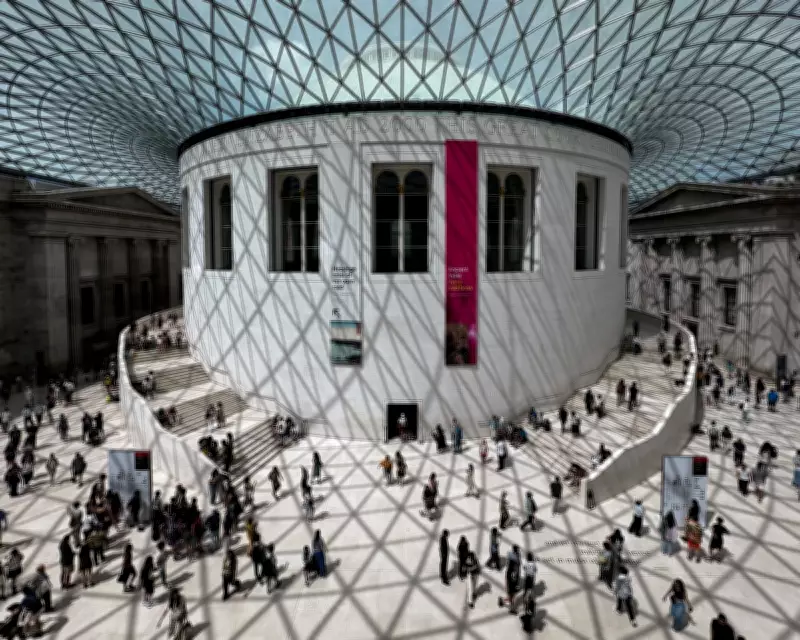
The director of the British Museum, Nicholas Cullinan, has defended the decision to postpone a Jewish culture month lecture, warning that cultural institutions are increasingly caught between opposing political pressures. The talk, which was due to be delivered by Dr Paul Collins, the keeper of the museum's Middle East department, on the ancient kingdoms of Israel and Judah, was postponed less than 24 hours before it was scheduled to take place over fears it would be disrupted by protesters.
Decision Sparks Criticism
The postponement drew criticism from prominent figures, including Conservative leader Kemi Badenoch, shadow attorney general David Wolfson, and historians Simon Schama and Simon Sebag Montefiore. The museum stated that it had received credible information that between 25% and 50% of ticket holders intended to disrupt the event.
In a lengthy statement on the British Museum website, Cullinan said the museum faced competing obligations, noting that thousands of visitors, including school groups, would have been in the building at the time. He emphasized that attendees had a reasonable expectation to hear the lecture without being made a captive audience for another purpose, and that the curator had a right to deliver it without organized attempts to silence him.

Balancing Responsibilities
"Balancing those responsibilities is not censorship; it is stewardship," Cullinan wrote. He added that the deeper issue extends beyond a single lecture, as cultural institutions across Britain increasingly find themselves caught between opposing political pressures. He urged against interpreting every operational decision through an ideological lens, stating that not every decision is political.
The museum has confirmed that the rescheduled lecture will take place later this month and will be livestreamed. The event is part of the first Jewish culture month in the UK, running until 16 June, and is expected to examine the archaeology and history of the ancient kingdoms of Israel and Judah through artefacts held by the museum.
Political Reactions
Badenoch called on the government to intervene, arguing that the decision undermines the aims of Jewish culture month. She stated, "The government says it wants to combat antisemitism; it needs to tell publicly funded institutions like the British Museum to do what's necessary to put this event on."
Cullinan acknowledged that a public talk that should have been unremarkable became a flashpoint in a wider national argument about protest, intimidation, and the limits of free expression. He stressed that the event was postponed, not cancelled, and that this distinction matters.
Protest vs. Disruption
Cullinan noted that the British Museum is accustomed to protest, which he described as a healthy feature of democratic life. However, he distinguished between protest outside an event and organized disruption within it intended to silence and overwhelm, especially at a difficult moment for the Jewish community in the UK.
Earlier this year, the museum faced criticism for removing the word "Palestine" from some gallery labels. Last week, Jewish Artists for Palestine, a network of anti-Zionist Jewish artists and culture workers, argued that it was legitimate to expect a publicly funded museum to host conversations reflecting different points of view, and suggested that treating debate as a security concern pointed to the event being a pro-Zionist propaganda exercise.
Conclusion
Cullinan concluded that we live in uneasy times, when historical subjects are often drawn into contemporary conflicts. He said the answer cannot be to abandon difficult conversations, but to protect the conditions in which they can take place.