Berlin's mayor, Kai Wegner, is under intense pressure to resign following revelations he played a game of tennis just hours after a devastating arson attack plunged large parts of the German capital into darkness. The incident, which has been dubbed 'Tennis-Gate', has sparked outrage and raised serious questions about leadership during a crisis.
The Sabotage Attack and Its Impact
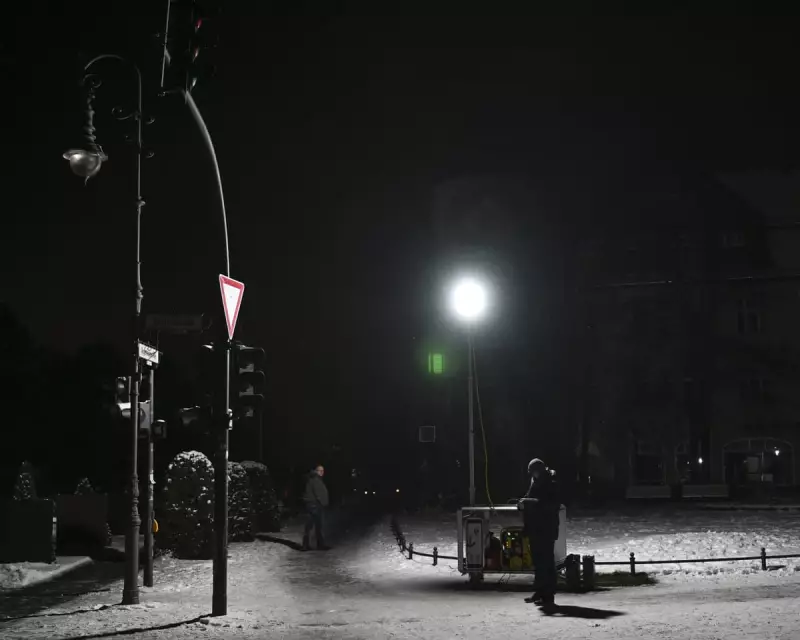
The political firestorm was ignited by a deliberate act of sabotage on the city's power infrastructure. Leftwing militants claimed responsibility for the attack, which triggered the longest blackout in Berlin since the Second World War. The consequences were severe, with electricity cut to approximately 45,000 households and more than 2,000 businesses in south-western districts of the city.
For days, residents were left without power, with some city squares only illuminated by portable lamps. The extended outage not only caused major disruption but also highlighted troubling vulnerabilities, leading to urgent questions about Germany's readiness to deal with acts of sabotage on critical national infrastructure.

'Tennis-Gate': A Crisis of Leadership
The scandal erupted when German public broadcaster RBB reported that Mayor Wegner, a member of the conservative Christian Democratic Union (CDU), had been on a tennis court with his partner, Berlin's education minister Katharina Günther-Wünsch, between 1pm and 2pm on the day of the attack.
This revelation directly contradicted Wegner's earlier statements. On Sunday, he had told reporters he was working "round the clock" to manage the crisis, claiming he had "literally locked myself in my office at home" and was "on the phone all day trying to coordinate".
Faced with the evidence, Wegner later admitted his choice of words had been "sub-par". He offered a defence, stating: "Looking back, I should have said on Sunday what I did on Saturday. Yes, at some point I said: 'I need a short break, I need to clear my head.' And the best way for me to do that is with sport."
Mounting Political Fallout and Calls to Resign
The mayor's actions have triggered a fierce backlash from across the political spectrum, with many declaring he has lost the moral authority to govern. The controversy comes just eight months before a key regional election in which Wegner is expected to stand again.
The far-right Alternative für Deutschland (AfD) was scathing in its criticism. Kristin Brinker, the AfD's regional parliamentary group leader, accused Wegner of lying "to the people of Berlin's faces" and said it was "bad enough" he did not cancel his match during a terrorist attack on city infrastructure.
Criticism also came from within Wegner's own ruling coalition. Steffen Krach, the mayoral candidate from the junior coalition partner, the Social Democrats (SPD), called the mayor's behaviour "unacceptable" and "unworthy" of his office.
The affair has drawn comparisons to other political missteps, such as the resignation of Valencia's president Carlos Mazón after he was seen having a long lunch during deadly floods, and CDU chancellor candidate Armin Laschet's ill-timed joking during the 2021 flood disaster.
On social media, the incident was widely mocked. Greens MP Ricarda Lang noted pointedly on X: "At least Kai Wegner had a net on Saturday." The comment played on the German word 'Netz', which means both a tennis net and a mobile phone signal—something thousands of Berliners lacked for days. Another meme, inspired by the famous 'Lettuce vs Liz Truss' stunt, juxtaposed a picture of the mayor with a tennis ball, asking if he could outlast it.
As power slowly returned to Berlin's affected districts, Mayor Wegner met with CDU lawmakers to ask for their support, acknowledging the "extremely difficult situation in the press". However, with public trust eroded and political allies distancing themselves, his future as mayor of Berlin hangs in the balance.