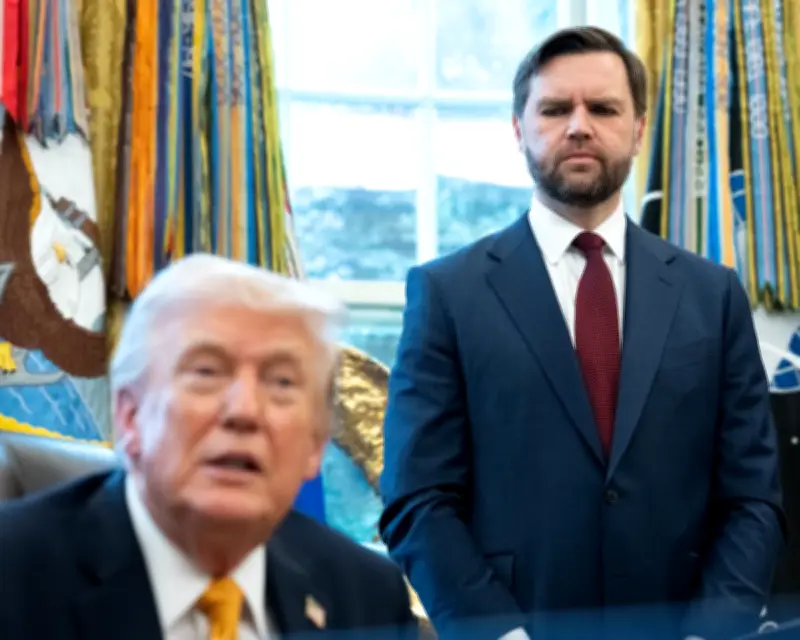
The Atlantic on Saturday republished a JD Vance essay that dismissed Donald Trump as “cultural heroin” exactly 10 years earlier, bringing back to the fore his evolution from a critic of the president to his vice-president.
Magazine invites readers to judge Vance’s assessment
In an editor’s note, the magazine said it was republishing the essay on the occasion of its 10th anniversary – and the US’s semiquincentennial – “so that our readers can judge for themselves how well his assessment [of Trump] … has stood the test of time”. The original essay was published during Trump’s first victorious presidential run, when Mike Pence was his running mate and before Vance entered politics. At the time, Vance worked at Mithril Capital Management, Peter Thiel’s venture capital firm, and had just published Hillbilly Elegy, a bestselling memoir of his upbringing in the Rust belt that also served as a social commentary on the white working class.
Vance’s 2015 critique of Trump
In the essay, Vance said many Americans turned to Trump as a “pain reliever” in the midst of a social crisis in which mounting distrust in the government and economic decline were coming to a head. He invoked the phrase “cultural heroin” to describe Trump’s political appeal at the time – and said his supporters would eventually realize he was not the answer to their problems. Trump offered “an easy escape from the pain”, Vance wrote. “To every complex problem, he promises a simple solution. He never offers details for how these plans will work, because he can’t. Trump’s promises are the needle in America’s collective vein.” Vance continued: “He makes some feel better for a bit. But he cannot fix what ails them, and one day they’ll realize it.”

Trump’s current standing and Vance’s reversal
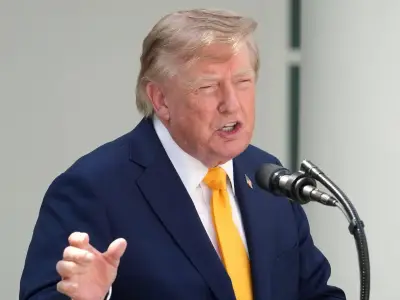
That day appears to have arrived, with Trump’s approval near historic lows amid his unpopular mass deportation campaign, a failure to reduce prices as promised, and his helping launch war in Iran alongside Israel after pledging to avoid new wars, among other issues. Trump nonetheless marked the 250th anniversary of the US’s declaration of independence from the UK on Saturday with a speech declaring the nation was experiencing a “golden age”. That was one day after attacking what he called the US’s brewing “communist menace” as a democratic socialist political movement gained ground at the polls ahead of November’s midterm elections, building on Zohran Mamdani’s becoming New York City mayor in January.
Vance’s political transformation
Beside the essay republished by the Atlantic on Saturday, which quickly achieved virality online, Vance had once openly described himself as a self-described “never Trump guy” and had even called him “America’s Hitler”. He said Trump was “unfit” for office and was “leading the white working class to a very dark place”. Then he went on to change his tune dramatically when he ran for the US Senate in Ohio in 2022 and won with Trump’s backing. He then became Trump’s running mate for his winning 2024 White House campaign, with Vance saying he had a change of heart having witnessed the results of Trump’s policies before his first presidency ended in defeat to Joe Biden. Now a ferocious defender of the president, Vance is widely expected to vie to become Trump’s successor, alongside the US secretary of state, Marco Rubio.
Commentary from Atlantic editor
David Frum, a senior Atlantic editor who knew Vance early on in his political career, told NPR in 2024 that the limits that politicians set for themselves and don’t cross for the sake of their careers are telling. “I think he walked across it,” Frum said of Vance during the election that year. “I think he told us in advance what it was. It was Donald Trump, and he walked across it.”