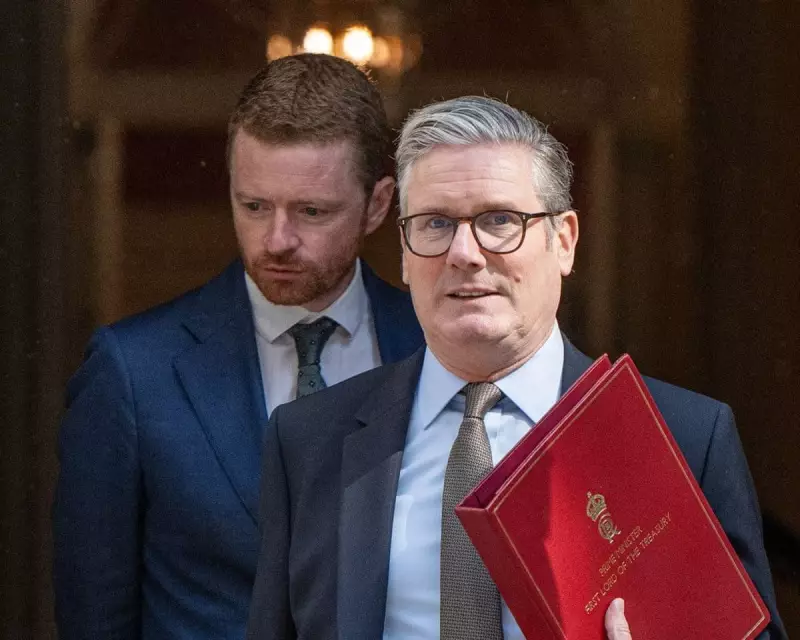
Sir Keir Starmer has rallied his cabinet for the "fight of our lives" against Nigel Farage's Reform UK, as his top aide delivered a stark warning that the government lacks an emotional connection with the British public.
The 'Three Es' Prescription for Reconnection
In a crucial cabinet meeting on Tuesday, the Prime Minister's chief of staff, Morgan McSweeney, presented an analysis urging ministers to regain voters' trust through what sources termed the 'three Es': emotion, empathy, and evidence. One insider revealed that McSweeney highlighted a significant "deficit in emotion" in the government's current public engagement, though a Downing Street source later contested the specific use of that phrase.
The presentation came against a backdrop of alarming polling data. A recent YouGov survey placed the Conservatives ahead of Labour for the first time since the general election, with both traditional parties trailing behind Reform UK. Labour's support was recorded at a mere 17%.

A Battle on Two Fronts: Domestic Focus vs. Global Crises
Prime Minister Starmer emphasised the need for a relentless domestic focus on the cost of living, arguing this was the path to victory at the next election. However, his government's new year agenda has already been disrupted by international events, including the need to respond to former US President Donald Trump's raid on Venezuela and threats towards Greenland.
Starmer, who attended a "coalition of the willing" meeting on Ukraine in Paris on the same day, told his team: "A Labour government renewing the country or a Reform movement that feeds on grievance, decline and division. They want a weaker state, they want to inject bile into our communities, they want to appease Putin. This is the fight of our political lives and one that we must relish."
He sought to bolster morale, stating his strong faith in the cabinet and insisting that governments lose "when they lose belief or nerve," not simply when polls dip.
Shifting Strategy: From Attack to 'Incumbency First'
In a significant tactical shift, the Labour Party is moving to an "incumbency first" model to protect its sitting MPs at the next election, rather than targeting new seats. New deputy leader Lucy Powell, who attended cabinet, told a meeting of the Parliamentary Labour Party (PLP) that MPs must become "leaders in their communities" and learn to claim credit for government policies benefiting their constituents.
To facilitate this, Labour HQ will offer workshops for MPs on how to highlight local impacts of national policies, such as:
- Frozen rail and bus fares.
- Local community and high street funding.
- The extension of the warm home discount.
Powell warned MPs to end internal factional fighting and stated that "dark forces" did not want the Labour administration to succeed. She stressed the government must more directly communicate its achievements in tackling the cost of living and taking on vested interests.
The government will attempt to refocus attention on domestic action this Thursday, following the introduction of legislation to scrap the controversial two-child benefit cap—a key demand from Labour backbenchers expected to lift nearly half a million children out of poverty.