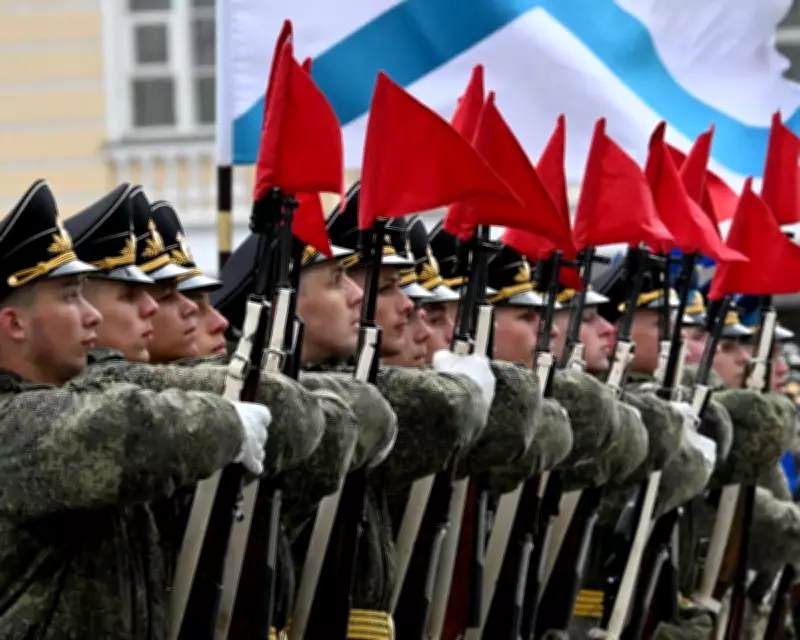
Russia to Hold Victory Day Parade Without Military Hardware for First Time in Two Decades
Russia's annual Victory Day parade, scheduled for 9 May on Red Square, will feature no armoured vehicles or missile systems for the first time in nearly 20 years, amid fears of long-range attacks by Ukrainian drones. The defence ministry cited 'the current operational situation' for the decision, which also excludes cadets from military schools and youth institutions.
The Kremlin attributed the changes to 'Ukrainian terrorist activity,' according to a statement on Wednesday. Russian military bloggers and analysts suggest that Moscow is concerned about potential Ukrainian long-range drone strikes targeting military hardware before or during the parade.
Ruslan Leviev, an independent analyst, told TV Rain: 'Equipment is vulnerable even during the preparation stage, as columns park and rehearse outside Moscow on open training grounds that are easy to hit with drones. Hitting soldiers in the city centre among tourists would not be so straightforward.'
Parade's Significance and Recent History
Since Russia's full-scale invasion of Ukraine in 2022, Victory Day parades have been scaled down, with fewer military displays and foreign guests. However, last year's 80th anniversary celebration was a notable exception, featuring at least 27 foreign heads of state and a full procession of tanks, rocket launchers, and drones across Red Square.
Under President Vladimir Putin, Victory Day has become a cornerstone of Russian national identity. Since the war began, the Kremlin's propaganda machine has used the event to justify the conflict, with Putin framing it as a continuation of the struggle against Nazism.
Ukraine's Drone Campaign
Ukrainian long-range drones continue to strike Russian territory almost daily, focusing on industrial and military sites such as oil infrastructure and logistics hubs. In the southern city of Tuapse, repeated drone strikes on a major oil refinery have caused massive fires, covering the city in toxic black rain and prompting authorities to advise residents to stay indoors.
Overnight, Ukrainian attack drones also struck an oil pumping station in Russia's Perm region, deep in the Urals. Ukrainian President Volodymyr Zelenskyy praised the 'precision' of Ukraine's Security Service, noting that targets were hit from over 930 miles (1,500 km) away. 'We will continue to extend these ranges,' he wrote on X, adding that each strike aims to reduce Russia's military industry, logistics, and oil exports.
Analysts caution against overstating the economic impact of these strikes. A surge in oil prices driven by the Middle East conflict has kept Russia's energy revenues high, allowing Moscow to reap billions despite ongoing attacks on its refineries.