New South Wales' political landscape is shifting back into gear after a period of sombre unity, with the state's opposition unveiling a renewed team in a bid to chart a course back to power.
A New-Look Team for a Long Road Back
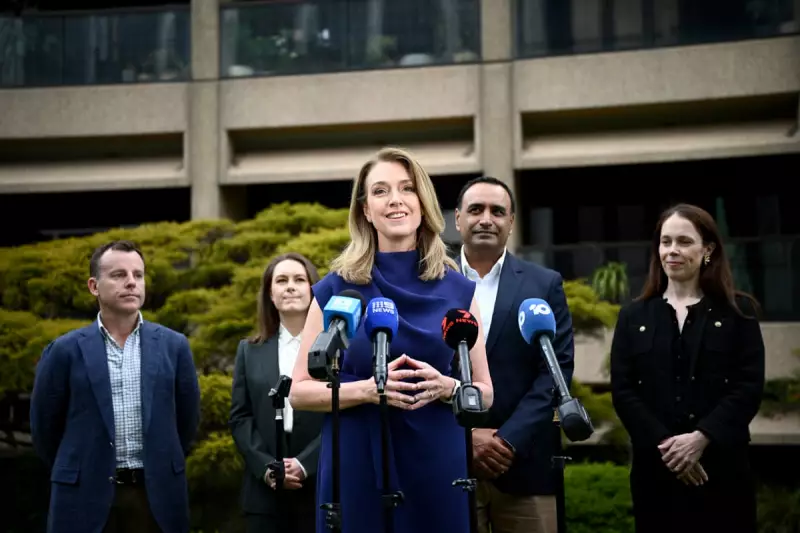
Liberal leader Kellie Sloane has announced her new shadow cabinet lineup, a move delayed by the tragic Bondi massacre. The reshuffle introduces several new faces, signalling a strategy of renewal for the Coalition, which currently holds just 35 seats compared to Labor's 46.
The fresh appointments include Monica Tudehope, who becomes shadow attorney general, Jacqui Munro in a junior environment and science role, and James Wallace taking on the critical industrial relations portfolio. Chris Rath assumes the crucial housing brief.

On the Nationals side, Brendan Moylan, a lawyer from Moree, steps into the agriculture portfolio. This injection of new blood is designed to contrast with a Labor government that observers say lacks a strong pipeline of new talent.
The Uphill Battle: Polls, Policy, and Cohesion
The scale of the challenge facing Sloane's team is stark. Recent Resolve Strategic polling indicates a primary vote of just 28% for the Coalition, a figure mirrored in internal party surveys. If replicated at an election, this could see the loss of a further 10 seats, potentially locking the Coalition out of government for multiple terms.
Beyond the numbers, significant policy hurdles loom. The Coalition must overhaul its stance on sensitive issues including climate change, forestry, and national parks management. Divisions between the Liberals and Nationals have surfaced publicly on key topics, such as the net zero target—which the Nationals now oppose—and the size of the proposed Great Koala National Park.
These splits, while manageable in opposition, raise fundamental questions about what a future Coalition government would stand for. Would it weaken recently strengthened gun laws? Would it shrink conservation areas? And would it continue the state's energy roadmap guiding the renewable transition?
The Road Ahead: Defining a Vision
Leader Kellie Sloane now faces the arduous task of policy development and defining a clear, cohesive vision. A major complication is the dissonance with federal colleagues; convincing the NSW public of a commitment to climate action is harder when federal Liberals in Canberra are dismissive of the strategy.
Financial pressures add another layer of difficulty. With gross state debt projected to hit $177.2 billion by June 2026, the opposition may need to advocate for further privatisation—potentially including existing metro assets—to fund future infrastructure.
Meanwhile, Premier Chris Minns has seen his stature grow following his handling of the Bondi tragedy, promising a royal commission and taking swift, pragmatic action. For Sloane and her renewed team, the next 15 months until the state election will be a critical test of whether fresh faces can be matched with fresh ideas that resonate with voters.