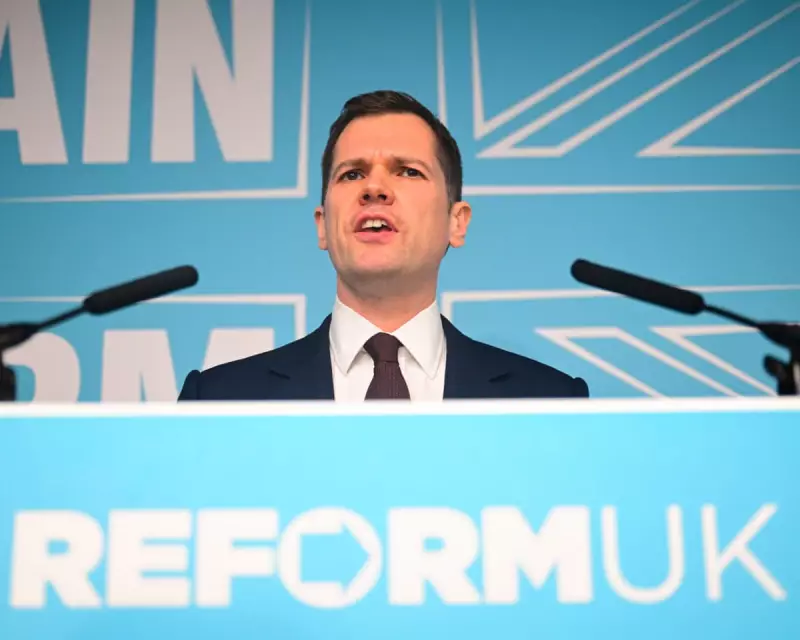
The political landscape in Britain has been jolted by the high-profile defection of former Conservative minister Robert Jenrick to Nigel Farage's Reform UK party. Announcing his move on the 15th of January 2026, Jenrick positioned his new political home as the true champion of the worker, declaring a new divide in British politics: "Reform's workers party versus the Tory posh party."
The Posh Populist Paradox
Jenrick's rhetoric paints the Conservatives as out-of-touch toffs, no longer representing working people or provincial Britain. Political analyst Professor Tim Bale acknowledges the claim has some weight, noting that Reform can present itself as a disproportionately working-class party. This presents a stark irony, given Jenrick's own background as a privately-educated Cambridge graduate and former director of Christie's auction house, and Reform's origins as a project founded by wealthy financiers.
This highlights a persistent mystery in politics: why do parties led by and for the very wealthy often attract significant support from low-paid and working-class voters? Bale points out that Conservative power historically relied on backing from around a third of working-class voters, a bloc Reform now aggressively courts.

Labour's Class Conundrum
The resurgence of class as a political battleground presents a profound challenge for the Labour Party. According to the doyen of psephologists, Professor Sir John Curtice, Labour's core vote is now young, middle-class professionals in London. This is a difficult pill to swallow for many in the party who see themselves as champions of the working class, a self-image brutally challenged by the Brexit referendum when many of their traditional supporters marched in the opposite direction.
Despite this shift, Labour's founding mission to fight inequality remains critically urgent. A new report from the National Centre for Social Research underscores that education has become a powerful proxy for class and voting intention. It finds that a person with education below A-levels had about twice the odds of voting for the Conservatives or Reform UK than a university graduate. This educational divide is a long-standing trend, but the gap is pressing when the top 10% owns five times the wealth of the entire bottom half of the country.
A Battle on Labour's Turf
Reform's strategy, masterfully demonstrated by Nigel Farage's "blokeish" pub-centric campaigning, is to wage a cultural class war. However, analysts suggest this may be a fading force. Curtice notes that Reform's voters are significantly older, often nostalgic for a bygone era, with Brexit representing their "last hurrah." Unless the party finds a way to attract the young, its rebellion may be a dying gasp rather than a rising tide.
For Labour, the path forward involves doubling down on its historic mission to narrow the class gap through policy. Its focus on early years education, further education, and apprenticeships is a direct attempt to tackle disadvantage at its roots. While the party's voter base may have evolved, the fight against gross inequality is the terrain it was built to contest. If Reform wants to make class the battleground, it is ultimately stepping onto Labour's home turf.