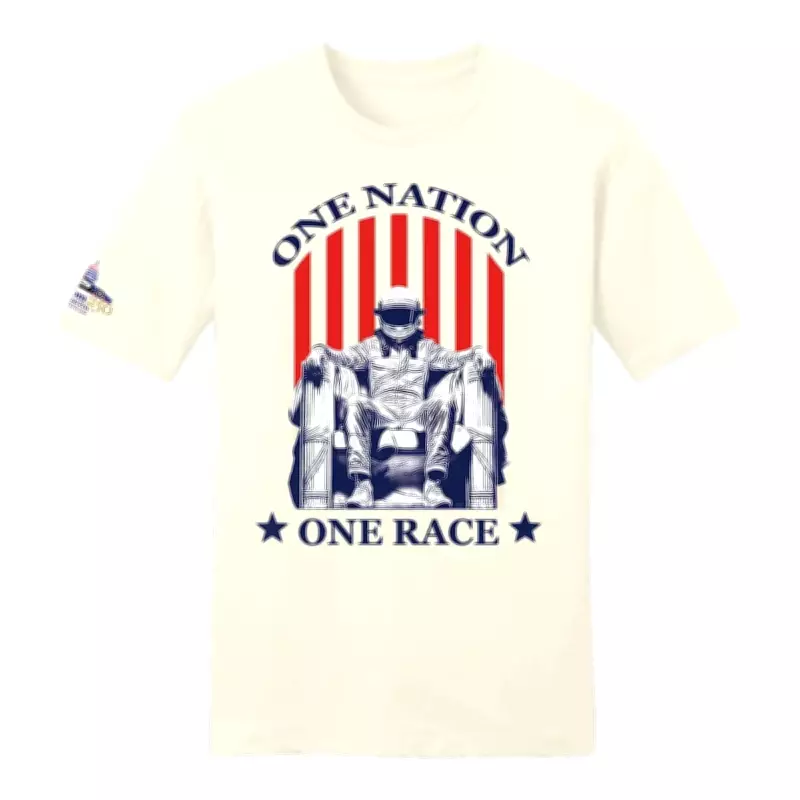
IndyCar has found itself at the center of a controversy after releasing a T-shirt that many deemed inflammatory. The shirt, which featured the phrase 'One Nation, One Race' alongside imagery reminiscent of the Lincoln Memorial, was quickly pulled from the series' online store following widespread backlash. In a statement, IndyCar acknowledged that 'some individuals found its phrasing concerning' and noted that it is 'reviewing its approval process related to event apparel.' However, the series has yet to explain who approved the design or how it made it to market.
A Pattern of Political Drift
For many observers, the shirt incident is not an isolated misstep but part of a broader trend. Since Roger Penske, the 89-year-old transportation magnate and longtime friend of Donald Trump, purchased IndyCar in 2019, the series has increasingly aligned itself with right-wing politics. Penske's political contributions have exceeded $4 million, including $1.1 million to pro-Trump groups, and he has appeared alongside Trump at White House events. The Freedom 250, a Washington DC street race sanctioned by a Trump executive order, further cements this association.
Historical Context
Under the Hulman-George family, which owned the Indianapolis Motor Speedway for decades, IndyCar maintained a veneer of political neutrality, focusing on patriotic pageantry rather than explicit partisanship. The family treated the Indy 500 as a national institution, complete with military flyovers and red-white-and-blue ceremonies. Penske's tenure, however, has seen a more overt embrace of conservative politics, drawing comparisons to Nascar's longstanding alignment with conservative values.

Reactions and Implications
The shirt's design, which included a white racing driver and Roman fasces iconography, was criticized as 'incredibly insensitive and inflammatory' by automotive journalist Ryan Erik King. The controversy is particularly striking given IndyCar's diverse roster: nearly 70% of full-time drivers are from outside the United States, including Mexican driver Pato O'Ward, whose car number was used in a Department of Homeland Security post promoting an immigration detention facility. O'Ward expressed shock at the coincidence, saying, 'I don't think it made a lot of people proud.'
While IndyCar has historically rejected political sponsorship, such as a Trump/RFK Jr car livery for the 2023 Indy 500, the Penske era marks a shift. As the series strives to compete with Formula One and Nascar, its political entanglements risk alienating fans and drivers alike. The shirt controversy, though quickly addressed, highlights the challenges IndyCar faces in balancing growth with its identity as a global sport.