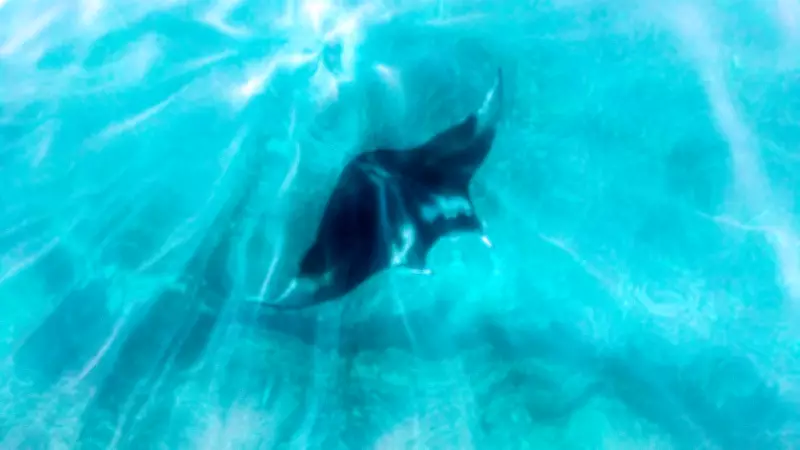
Wildlife officials in Florida will continue to allow threatened giant manta rays to be taken from the ocean, but have tightened their policies after a viral video showed a captured ray in severe distress, and a bipartisan group of politicians called for an end to the controversial practice.
Members of the Florida Fish and Wildlife Conservation Commission (FWC) voted on Wednesday to adopt an amended final rule reserving the right to say when and where rays can be captured for "responsible exhibition" in the United States. The decision follows an outpouring of public concern and political pressure.
Political Pressure for a Ban
A group of 18 politicians, including Republican congressman Brian Mast, Democratic state senator Jason Pizzo, and Florida House and Senate members from both parties, had pressed for an outright ban. In a letter to the FWC chair, Rodney Barreto, they argued that permitting manta ray capture prioritizes the interests of the captive marine animal entertainment industry over the protection of a threatened species.
Their outrage was provoked by a video posted to social media last summer by a tour boat captain in Panama City Beach. The footage showed five men roughly hauling an upside-down ray in a net onto an unmarked private boat. The capture was authorized by a "special activity license" (SAL) issued by the FWC, and the ray was destined for display at SeaWorld Abu Dhabi. It was one of three taken from Florida waters for the United Arab Emirates theme park in two years, one of which died soon after capture. According to the Tampa Bay Times, 25 licenses for manta rays have been issued since 2019, with 75% intended for international aquariums.
New Rule Details
The commission discussed the concerns this week but approved a rule that still allows manta ray capture with the commission's direct prior consent. Notably, rays can no longer be captured and sent to aquariums overseas. Any US entity seeking to exhibit a manta ray must now prove an educational reason. Atlanta's Georgia Aquarium, which has research and conservation programs, is currently the only facility in the country able to house and display the threatened species, which can reach a span of 26 feet (eight meters) and a weight of 5,300 pounds (2,400 kilograms).
Reactions to the Decision
Lindsay Cross, a Democratic state representative, letter signatory, and sponsor of the Marine and Aquatic Native Threatened Animal (Manta) Protection Act in the Florida legislature, called the commission's move "a step forward in protecting Florida's marine wildlife." Her bill, which died at committee stage in March, would have introduced an outright ban on capturing threatened or endangered marine species from Florida waters. While she sought a complete ban, she acknowledged that the amended rule prohibits international export of federally threatened or endangered species for exhibition or education, and improves transparency by requiring commission approval for new SALs.
Alicia Prygoski, strategic legislative affairs manager for the Animal Legal Defense Fund (ALDF), praised the commission for a "meaningful step" but expressed concern that the final rule removed a proposed cap of one manta ray every two years. "Giant manta rays are threatened for a reason, and they deserve that highest level of protection," she said. However, she noted that the outright prohibition on international export was a strong response to the viral video and stakeholder outreach. She added that the removal of the limit does not create an immediate risk since only one US aquarium is equipped to house them.
FWC Chair Rodney Barreto stated that the panel was mindful of concerns but weighed them against the need for education about vulnerable species. "FWC is committed to the responsible conservation of endangered and threatened species," he said. "We recognize the role public aquariums play in building support for conservation. The actions we took will ensure the highest level of oversight for the collection of marine threatened species for responsible exhibition in the US."
The new rule takes effect on July 1.