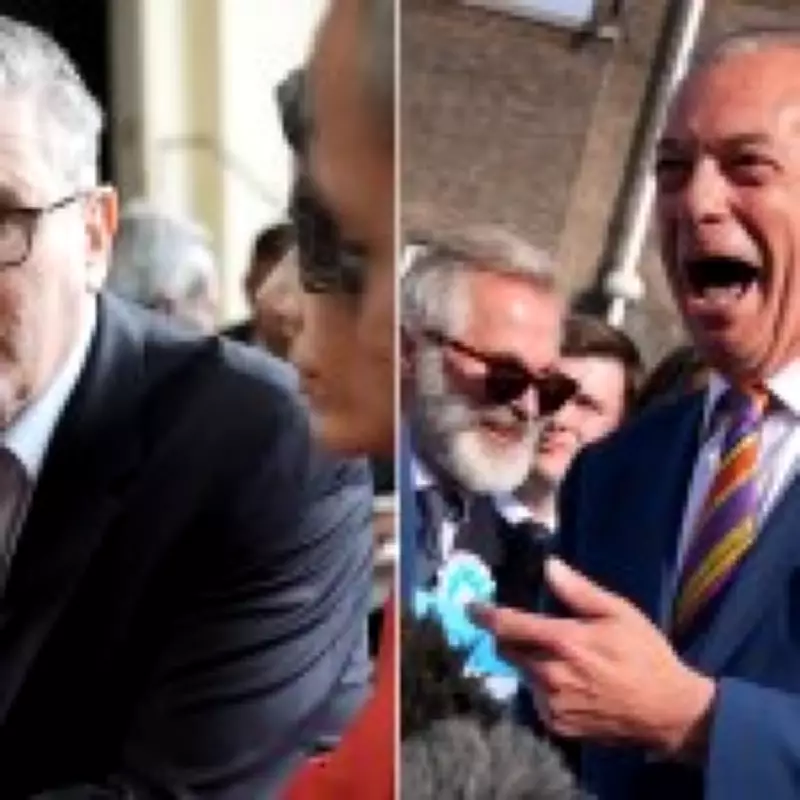
If you had asked me last week to write down some predictions for today's local elections results coverage then place them in a sealed envelope, I would have got a couple spot on. Nigel Farage with a big grin on his face, standing outside some town hall with a group of newly elected Reform councillors: tick. Keir Starmer wearing a very serious expression, vowing to stay on as Prime Minister and deliver the changes this country needs: tick.
We have been here before – in fact, we were here almost exactly a year ago, the last time England voted in a round of local elections. On May 2 2025, the morning after Labour lost the Gorton and Denton by-election, Farage was hailing a 'huge night for Reform' while Starmer vowed to go 'further and faster on the change that people want to see'. Labour MPs might be asking where exactly the government is going further and faster compared to last May, and whether voters are paying any attention.
The Shifting Political Landscape
But something is different this time round. According to Politico's poll aggregator of UK voting intention, Reform were sailing at an average of around 30% at the time of the by-election, while Labour was around 22%. Since then, Reform has dropped to 25% and Labour has fallen almost as far, to 18%. It is joined in the high teens by the post-Polanski bounce Green Party and the Tories, while the Lib Dems are not too far behind.

If 2025 was the moment Reform shattered the old party duopoly, we might remember 2026 as the moment the British quintopoly arrived. At these elections, Reform will complete the process of 'bedding in' at a local level which it began last year, and the Greens will likely begin that same process.
A Volatile Electorate
Has British politics become 'volatile'? 'We are living in a mood where the public are extremely pessimistic and they are looking for change, and they are extremely volatile with who they are voting for,' said Kieran Hurley, director of politics at polling firm Ipsos. 'So, if I was going to describe politics in Britain in one word, it is “volatile”. That does mean that if there is a general election in 2029 only a fool would predict it with any degree of certainty.'
Reform is also going to upset established systems in Scotland, where the party is vying with Labour for second place in the Holyrood election, and Wales, which has a surging Plaid Cymru in the mix too. All this means we are likely going to have to get used to a very different UK political landscape – one more similar to continental Europe, where it is rare for any single party to get a majority in parliament.
Is a Multi-Party System Inevitable?
Kieran Hurley said: '[The landscape] will take time to change, but it can change.' He added: 'It is possible that if there was a sustained period of political stability, and also economic progress, then you do see times when the public mood improves. David Cameron was very effective at leveraging this in run-up to the 2015 general election, where economic optimism improved as we got closer to the polls.'
However, it will not be news to anyone that the current economic picture is not looking particularly rosy. Some of that will be down to the Labour government's decisions, and some of it will not. Kieran continued: 'When we look at the wider geopolitical environment and the potential economic ramifications that are still being unwound about the conflict in the Middle East, it does not seem like it is going to change anytime soon.'
With the arrival of this new reality, we will need to get used to a perpetual feeling of uncertainty. That is the thing about political earthquakes – they rarely make the ground more stable.