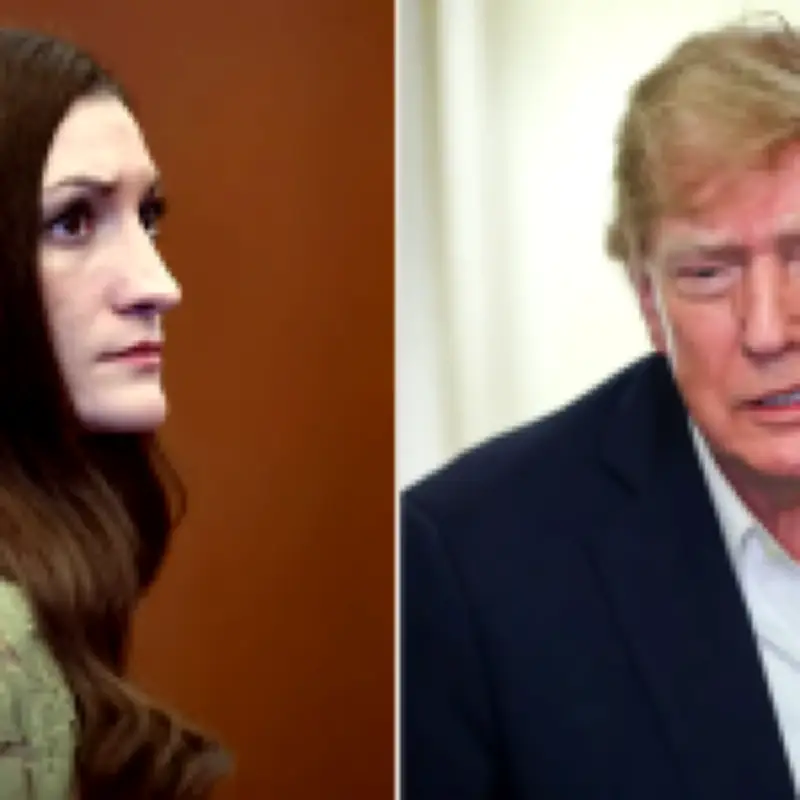
President Donald Trump has indicated he is unlikely to grant a pardon to Lindsay Clancy, the Massachusetts mother whose trial for the deaths of her three children ended in a hung jury. Speaking to reporters on Sunday, Trump called the situation "very sad" and noted the limitations of his authority in the case.
Trump's Remarks on the Clancy Case
"It's a very sad situation," Trump said, according to the New York Post. "I certainly heard that, but look, it's very sad. There is no winner there. There's no win no matter what you do. Three children are dead."
Clancy, 36, was on trial for the January 2023 killings of her children: Cora, five, Dawson, three, and Callan, eight months. After six weeks of proceedings, 35 hours of jury deliberation, and testimony from over 80 witnesses, the jury could not reach a unanimous decision, resulting in a mistrial.

Legal Boundaries of a Presidential Pardon
The defense lawyer, Kevin Reddington, had publicly appealed to Trump to consider a pardon, citing one juror who could not be swayed toward a not-guilty verdict. However, the Clancy case falls under state jurisdiction, not federal, meaning the president lacks the legal authority to issue a pardon.
Speaking on CBS Boston, Reddington acknowledged the legal constraints but emphasized Trump's influence: "If President Trump feels that this is a case that warrants that type of intervention from the executive branch, if you will — even though, legally, it's not a federal case — he certainly has an awful lot of clout. I think any type of help that we can get is helpful."
Defense Strategy and Prosecution Claims
Clancy has not denied strangling her children before attempting to take her own life, which left her paralyzed from the waist down. Her defense argues she was suffering from postpartum psychosis at the time, rendering her not criminally responsible. Symptoms of postpartum psychosis, treated as a medical emergency, include insomnia, delusions, hallucinations, severe confusion, and dangerous thoughts regarding self-harm or harming the infant.
She has pleaded not guilty by reason of insanity. The prosecution, however, contends that while Clancy had depression, she made a calculated decision to kill her children. They also alleged she deliberately sent her ex-husband, Patrick Clancy, on an errand to be free to commit the acts.
Potential Retrial and Next Steps
Before the mistrial, Trump had called the case "hard not to follow" and a "horrible tragedy." He added, "Look, she did a horrible, horrible thing. Can't be worse, but you'll find out what the price to pay is. But I guess they gotta go through another trial. It's too bad."
It remains unknown whether prosecutors will retry the case. If found not guilty by reason of insanity, Clancy could face years in a state-run hospital. Trump noted he believes Reddington is "a very good attorney" and expressed hope that those involved in the case "can work something out."