Century-Long Analysis Reveals Dramatic Rightward Shift in Immigration Rhetoric
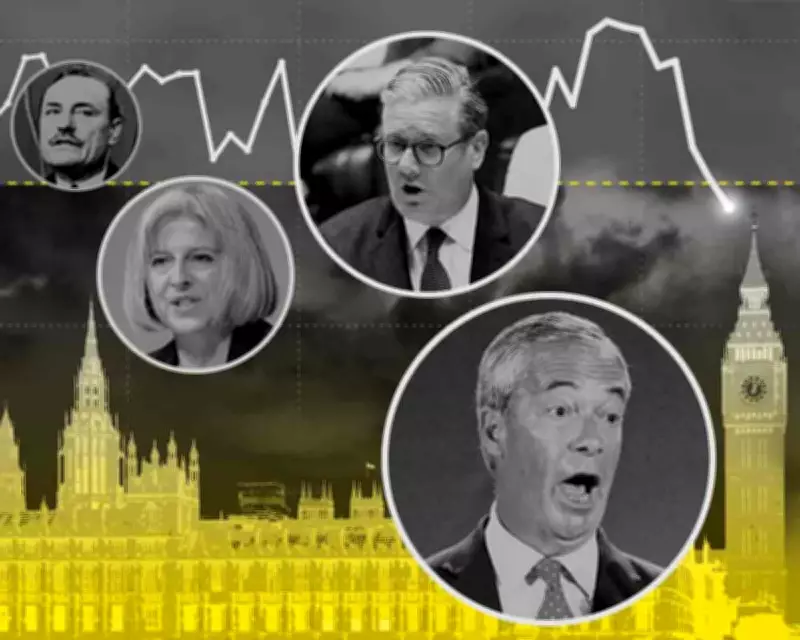
A groundbreaking investigation by The Guardian has uncovered a dramatic rightward shift in parliamentary rhetoric on immigration over the past century. The unprecedented analysis of 100 years of speeches in the House of Commons reveals that political debate on immigration has reached its most hostile level ever recorded, with the steepest swing occurring in just the past five years.
Evidence of Hardening Political Language
The findings demonstrate that both Labour and Conservative MPs are now speaking about immigration in more hostile terms than at almost any point in the past hundred years. Researchers suggest politicians from the two main parties appear increasingly locked in competition over who can sound toughest on immigration, particularly following the rise of Nigel Farage's Reform UK party.
Carmen Aguilar García, The Guardian's data projects editor who worked on the investigation, noted the significant change in tone. "When I returned from maternity leave and reconnected with the project, Keir Starmer delivered the 'island of strangers' speech. That felt like a shock to me," she said. "I remember thinking that something has changed here."
The Ebb and Flow of Historical Sentiment
The investigation reveals fascinating historical patterns in parliamentary rhetoric on immigration:
- Positive sentiment reached an all-time high in 2018, possibly marking a moment of quiet following Brexit and national support for Windrush scandal victims
- The 1950s began with welcoming attitudes toward Irish migrants, the Windrush generation, and south Asian migrants as Britain needed workers for post-war reconstruction
- Toward the end of the 1950s, negativity increased following the Notting Hill and Nottingham riots
- The 1920s and 1930s saw Britain actively encouraging citizens to move across the Empire while simultaneously restricting immigration into Britain itself
"What was also very interesting was the swing," Carmen explained. "We reached an all-time high in positive rhetoric around 2018, and now we are at one of the most negative moments again. So in just six or seven years, the tone moved dramatically."
Labour's Changing Trajectory
The analysis identifies two specific moments when Labour's rhetoric on immigration hardened significantly. The first occurred in the 2000s under Tony Blair's premiership, possibly in response to rising refugee arrivals and EU expansion. The second shift happened after 2020, several years after Keir Starmer became Labour leader.
Although Starmer initially ran on a progressive platform, many of those commitments were gradually scaled back while Labour was in opposition and later in government. While supporters welcomed the abolition of the Rwanda scheme, many Labour voters became uneasy at the hardening tone emerging from the party's frontbench and its reluctance to directly challenge Reform UK's increasingly hostile rhetoric.
Methodology Behind the Groundbreaking Analysis
The investigation represents an extraordinary undertaking that took nearly two years to complete. The Guardian's data projects team collaborated with its data science team and members of University College London to build a bespoke machine learning model specifically designed to measure sentiment toward immigration in parliament.
"We realized you can't simply take an existing sentiment model and apply it to parliamentary debates about immigration," Carmen explained. "So we built a completely bespoke model designed specifically to measure sentiment toward immigration in parliament."
The team gathered all debates from the House of Commons and broke them down into fragments of roughly five sentences each. After extensive annotation involving a Large Language Model and a team of 12 people manually classifying fragments as positive, negative, or neutral, the expanded dataset was used to train the supervised machine learning model.
Contemporary Echoes of Historical Rhetoric
One of the most striking findings was how contemporary historical rhetoric sounds today. "One striking thing was reading fragments from 20, 30, even 40 years ago that sounded completely contemporary," Carmen noted. "If you removed the date, you could easily believe they were spoken last year."
The investigation reveals that despite progressive parties such as the Green Party and Liberal Democrats continuing to push a more positive narrative, they have had far less influence on the overall political tone than Reform UK. Despite existing for only five years, the party's strong polling performance appears to have exerted an outsized effect on mainstream political rhetoric.
"Even though Reform had only five MPs in the period of analysis we studied, their influence on political language is quite significant," Carmen explained. "Labour and the Conservatives appear to be reacting to that pressure."
The research provides concrete evidence for what many have long suspected: British political debate on immigration has reached unprecedented levels of hostility, with the language increasingly framing migrants as criminals rather than focusing on Britain's proud tradition of welcoming refugees.